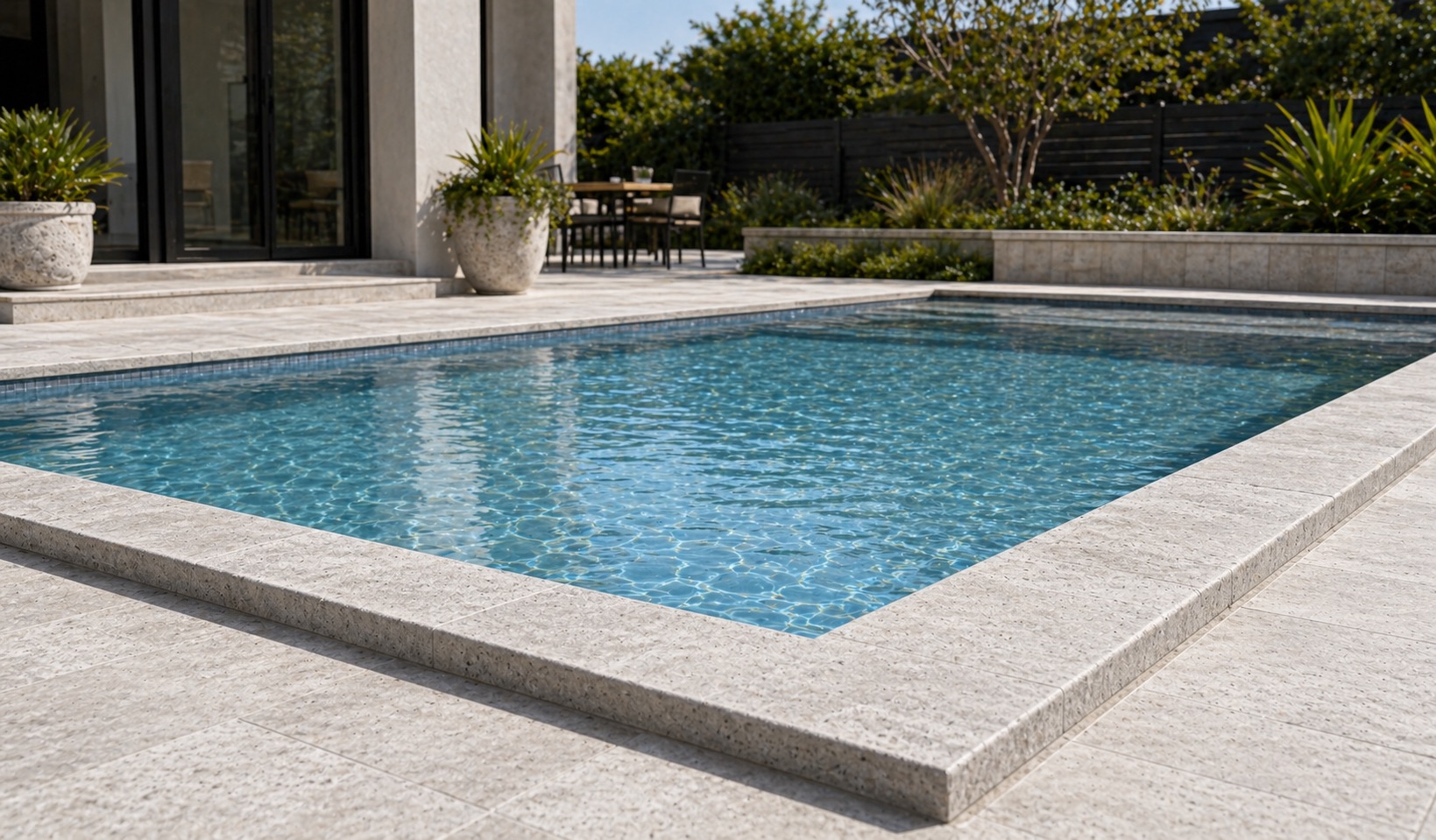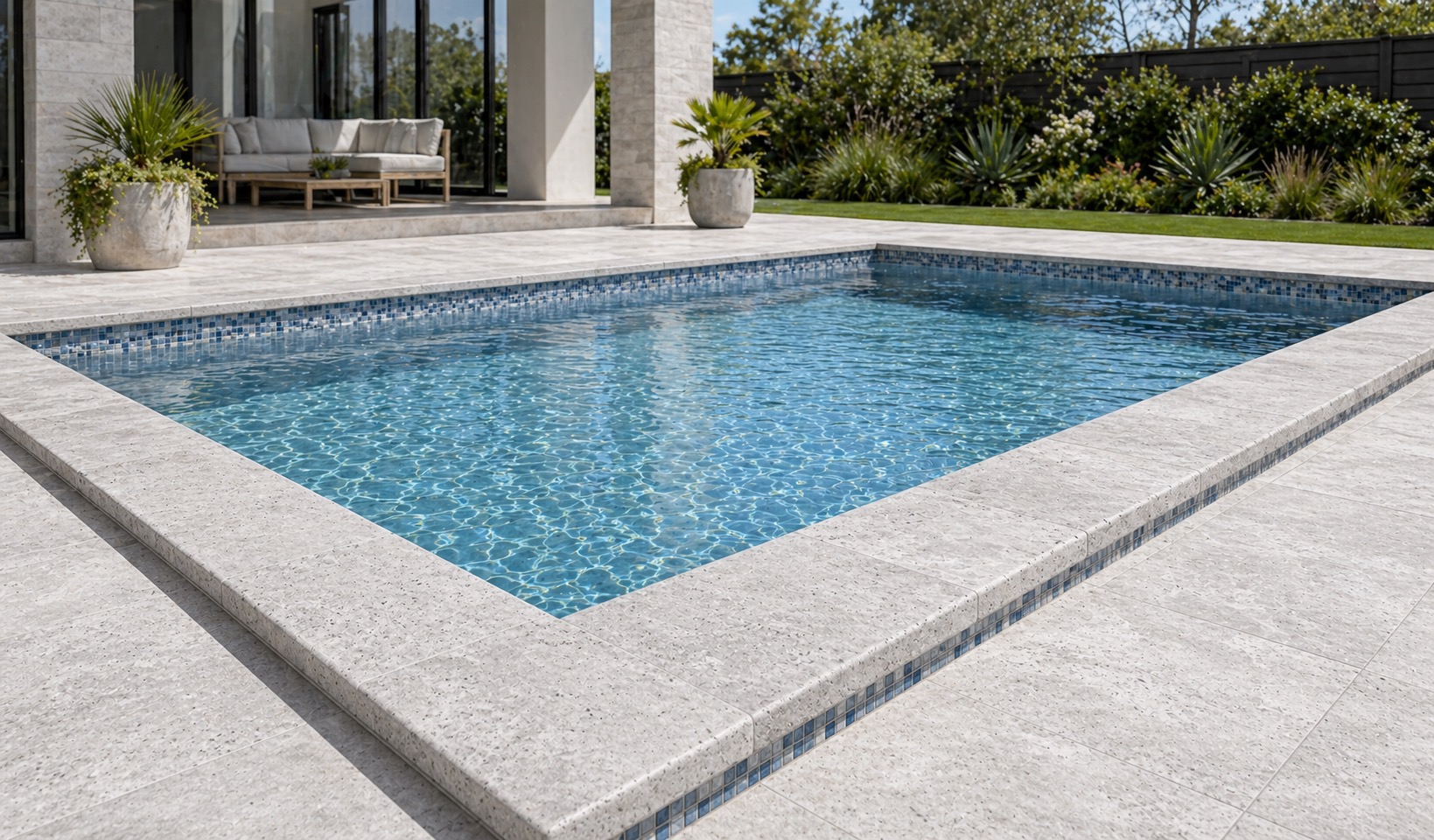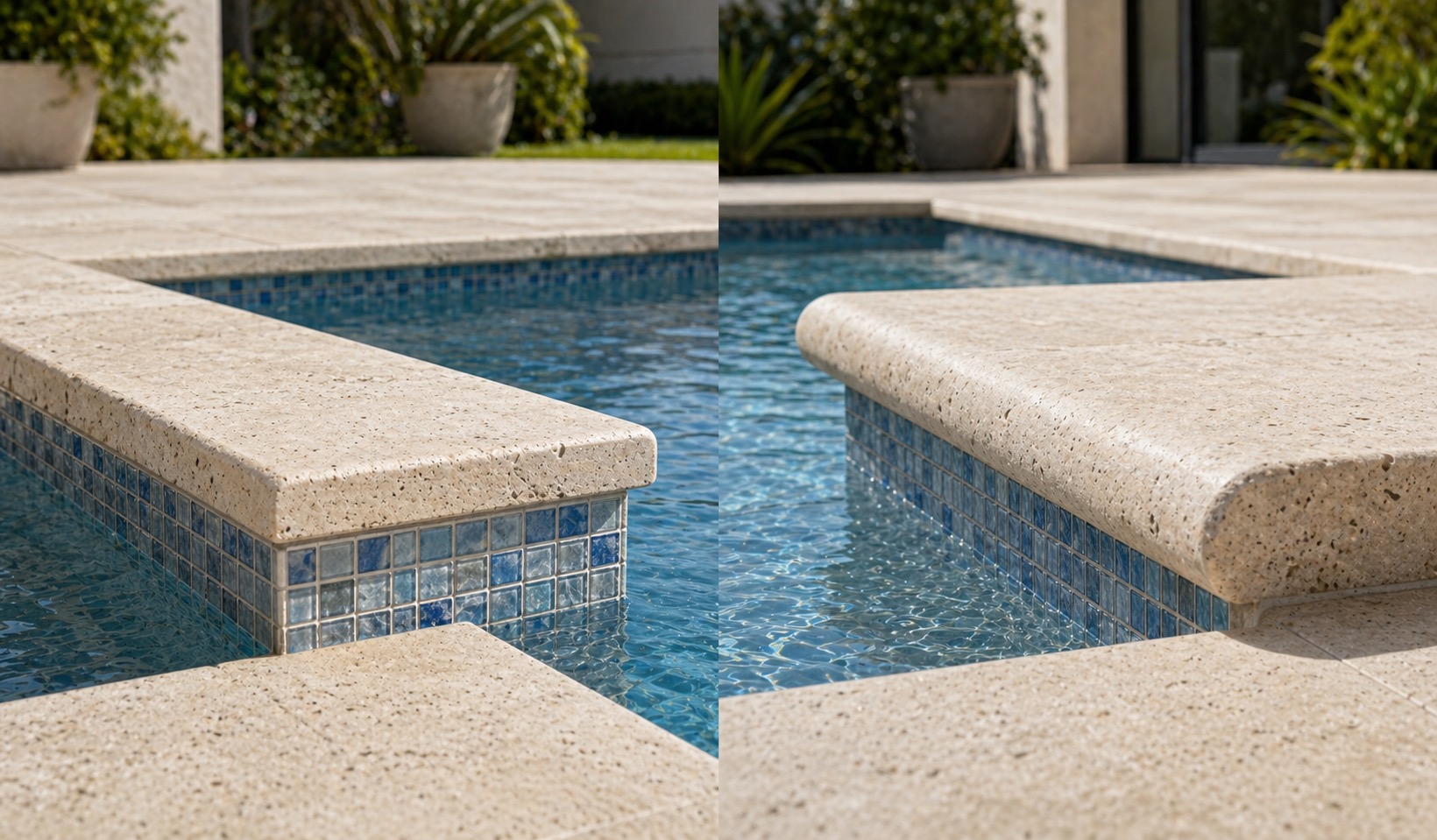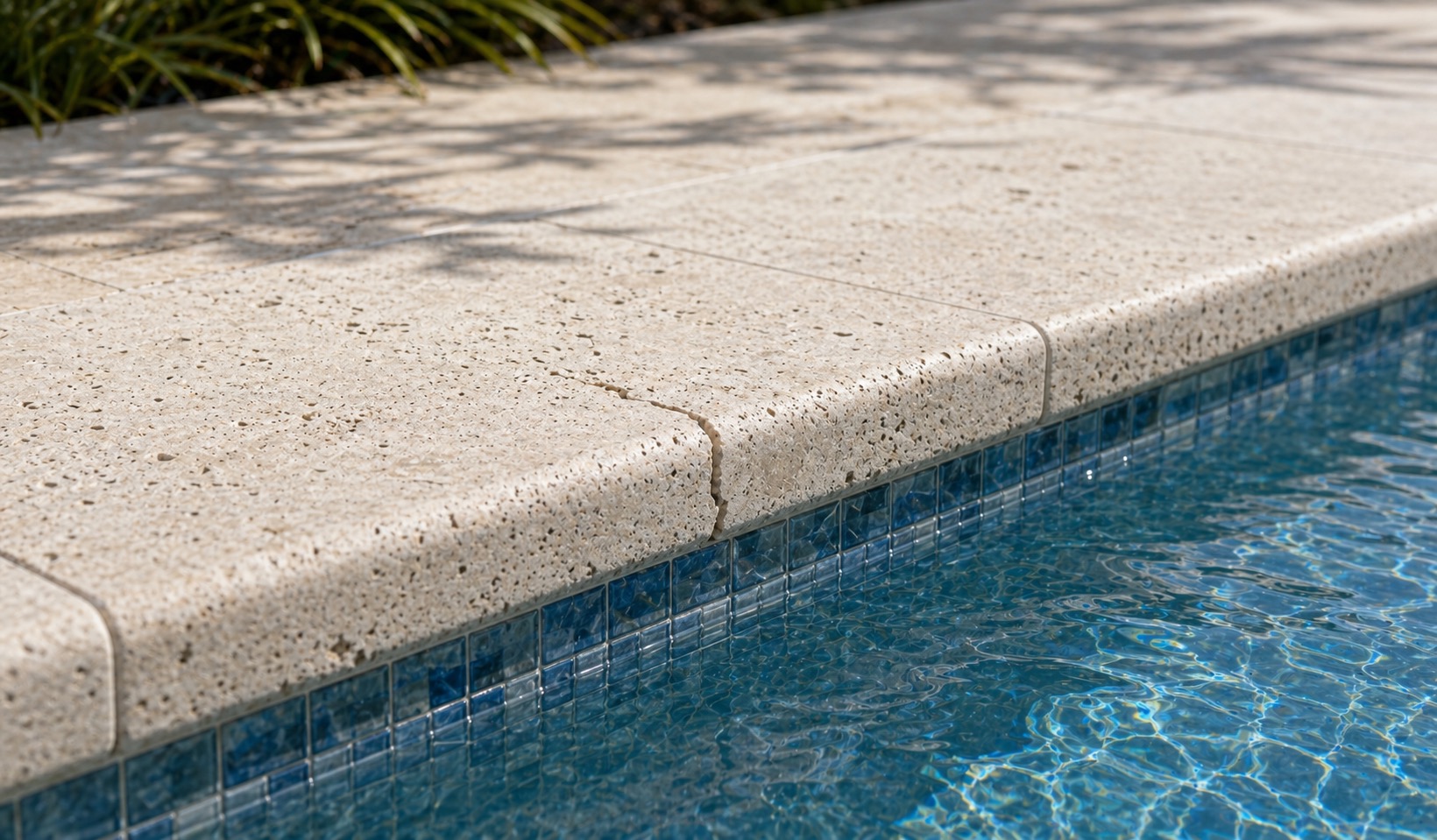
Cracked, chipped, or loose travertine coping usually looks like a stone problem at first. In reality, the visible damage is often the end result of something deeper: weak support, beam movement, poor drainage, or coping that was undersized for the edge condition.
That is why the smartest repair decision is rarely “fill it and hope.” The real job is to identify what failed, decide whether the stone can be saved, and stop the same issue from repeating after the repair.
Key Takeaways
| Question | Quick Answer |
|---|---|
| What causes most coping cracks? | Voids under the stone, structural movement, freeze-thaw cycling, and coping that is too thin for the span. |
| Are chips always structural? | No. Small chips can be cosmetic, but deeper damage creates easier paths for moisture infiltration. |
| Can loose coping be reset? | Usually yes, if the stone is intact and the substrate can be cleaned and rebuilt correctly. |
| When is replacement necessary? | Full-thickness cracks, repeated movement, broken profiles, or substrate failure usually justify replacement. |
| What else should be checked? | Thickness, drainage, joint condition, and the bond beam below the coping line. |
Why Travertine Coping Fails
Travertine coping is one of the most exposed parts of the pool perimeter. It handles wet feet, sun, water chemistry, thermal expansion, and edge loading every day. If the beam below it moves or the bed underneath it is inconsistent, the coping is often the first material to show distress.
Common root causes include:
- incomplete mortar or thinset support
- movement at the pool beam
- trapped moisture and freeze-thaw cycling
- coping pieces that are too thin for the overhang or span
- failing joints that allow more water into the system
If replacement becomes part of the conversation, how to choose the right coping thickness for pools is one of the most useful companion reads because thin or mismatched coping is a repeat-failure risk.
Hairline Cracks: Cosmetic or Structural?
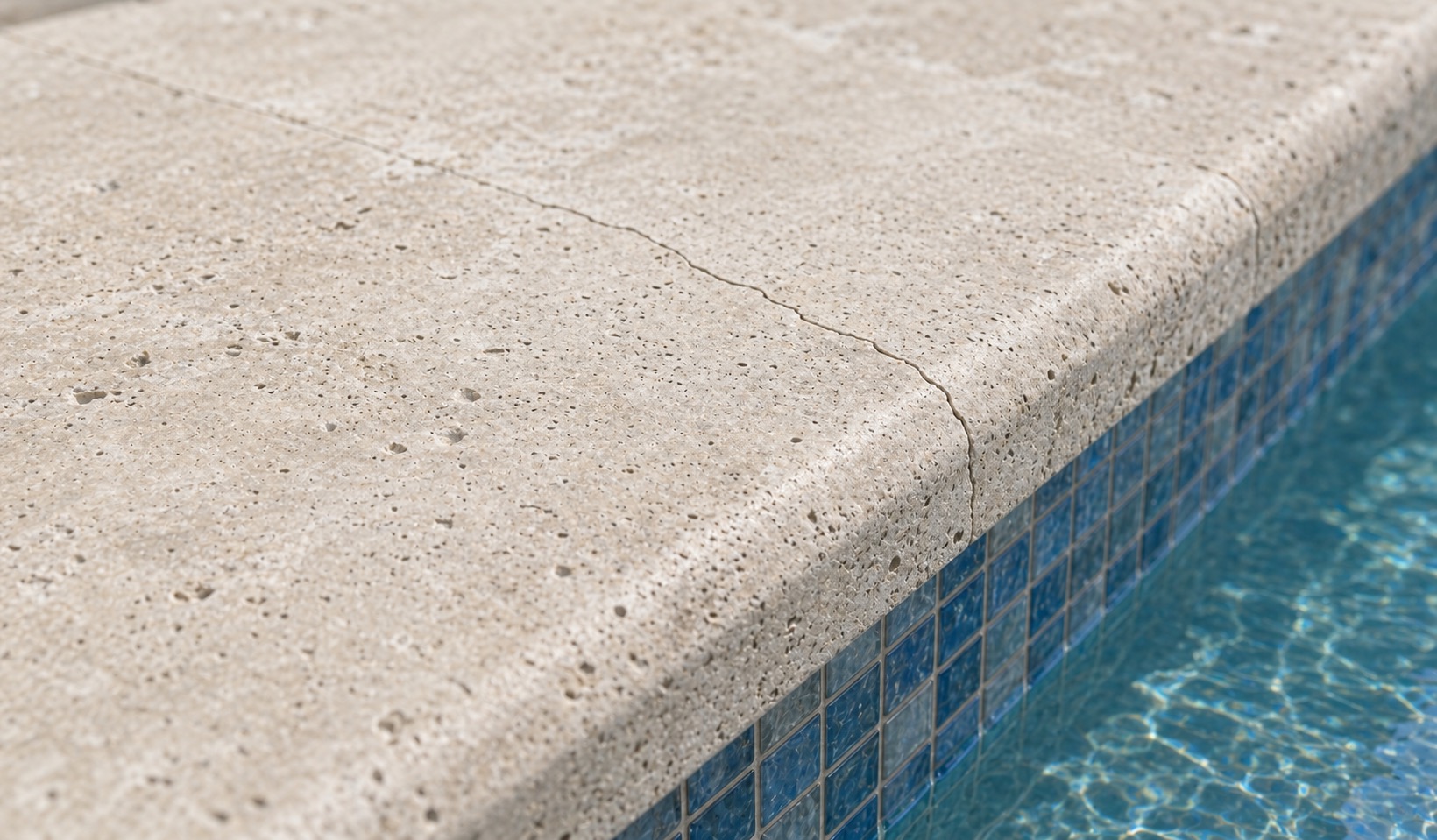
Hairline cracking is one of the most misunderstood repair categories. Some hairline cracks stay stable and can be filled successfully. Others are the first visible sign that the stone is bridging a void or flexing over movement below.
As a rule:
- a shallow, stable surface crack may be repairable
- a crack that sounds hollow underneath or continues through the piece usually points toward replacement
That distinction matters because filler does not solve movement. It only hides the symptom for a while.
Chipped Edges and Broken Noses
The exposed front edge of the coping takes impact and wear first. Bullnose edges can chip at the nose, and eased or straight edges can fracture where the stone is unsupported at the lip.
Minor edge damage may be repaired with a color-matched filler if:
- the chip is shallow
- the profile still reads cleanly
- the piece is otherwise stable
If the chip breaks the visual line of the perimeter or reaches deep into the stone, replacement is usually the better-looking and longer-lasting result. This gets even more important if the pool design depends on profile clarity, such as the edge styles discussed in eased edge vs bullnose travertine pool copings.
Loose Coping: The Failure Type to Address Fastest
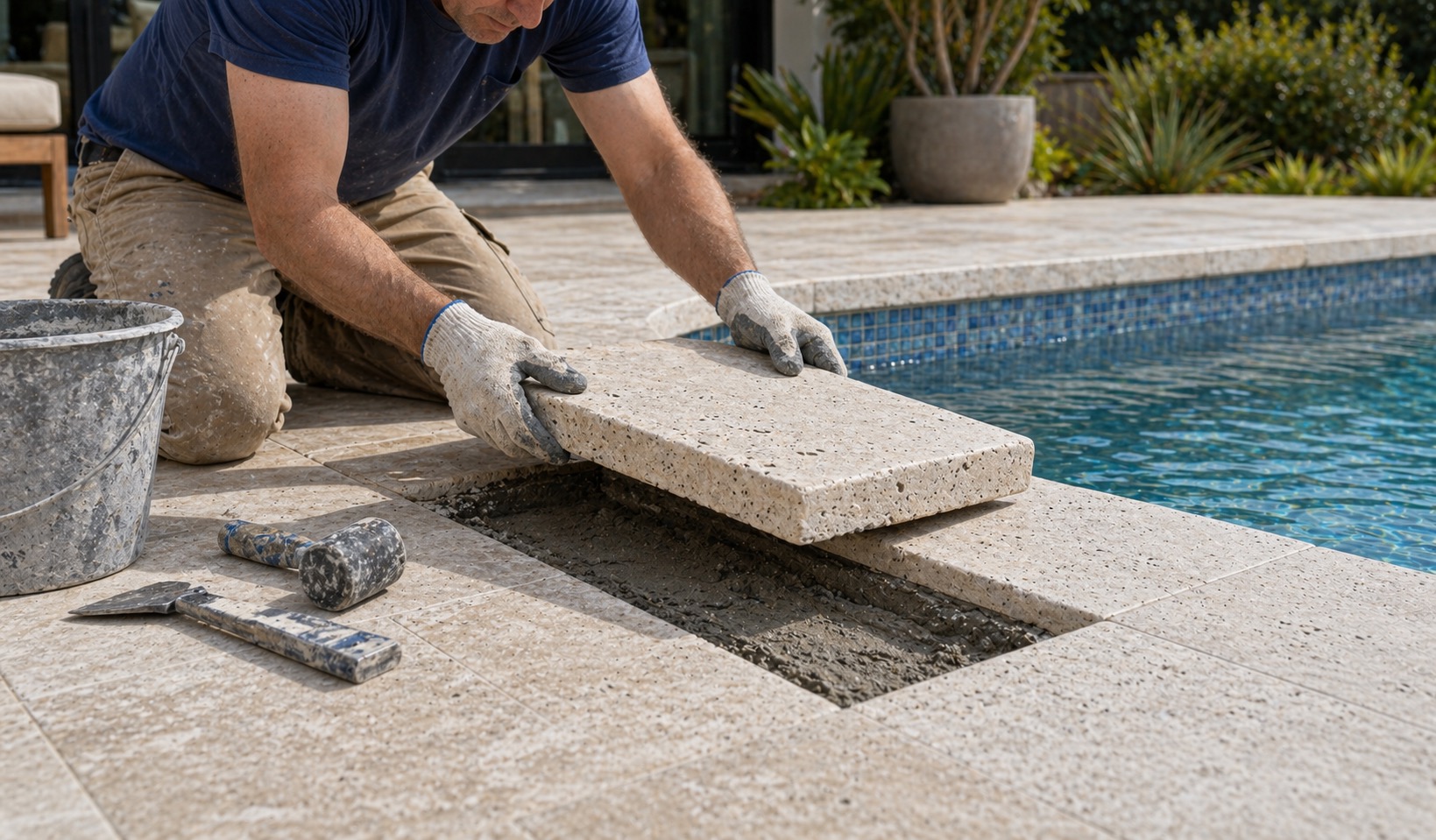
Loose or rocking coping is the one condition that should rarely be postponed. Once the stone starts moving, it pumps water into the bond line every time it is stepped on. That increases both the repair cost and the chance of adjacent pieces starting to fail.
A proper reset usually includes:
- lifting the stone carefully
- removing all failed mortar and debris
- checking the support below for cracks or moisture problems
- rebuilding the bond with full coverage
- re-leveling the stone to the surrounding coping
Resetting can be effective, but only if the problem underneath the stone is actually corrected.
Efflorescence and Staining Are Different Problems
White residue or discoloration can make homeowners think the stone is structurally failing when the actual problem is moisture movement or surface contamination. Efflorescence is usually a moisture-management issue. Surface staining is often a maintenance or sealer issue.
That means the right solution may be:
- cleaning with a stone-safe product
- adjusting water management
- resealing appropriately
not replacing otherwise sound coping.
When Replacement Is the Better Choice
Replacement is usually the right move when:
- the coping is cracked through its full thickness
- the profile is broken badly enough to disrupt the perimeter line
- the same piece keeps moving after past repairs
- multiple adjacent pieces are failing from the same support issue
At that point, the goal shifts from “save this stone” to “rebuild this edge correctly.”
Cost Expectations in 2026
Repair pricing varies by access, profile, and local labor, but homeowners can usually think in these ranges:
| Repair Type | Typical 2026 Range |
|---|---|
| Crack filling | $5 to $15 per linear foot |
| Chip repair | $10 to $25 per piece |
| Resetting loose coping | $20 to $40 per linear foot |
| Full replacement | $30 to $50 per linear foot |
The reason the replacement range matters is that once multiple pieces fail from the same cause, piecemeal repair can stop being the cheaper path.
Final Recommendation
The best travertine coping repair is the one that fixes the cause, not just the visible damage. If the stone is stable and the issue is truly cosmetic, repair can make sense. If the coping is moving, cracked through, or tied to support failure below, replacement is usually the better long-term decision.
For most homeowners, early action is the real cost control. Small failures tend to stay affordable only when they are handled before movement and moisture spread down the perimeter.