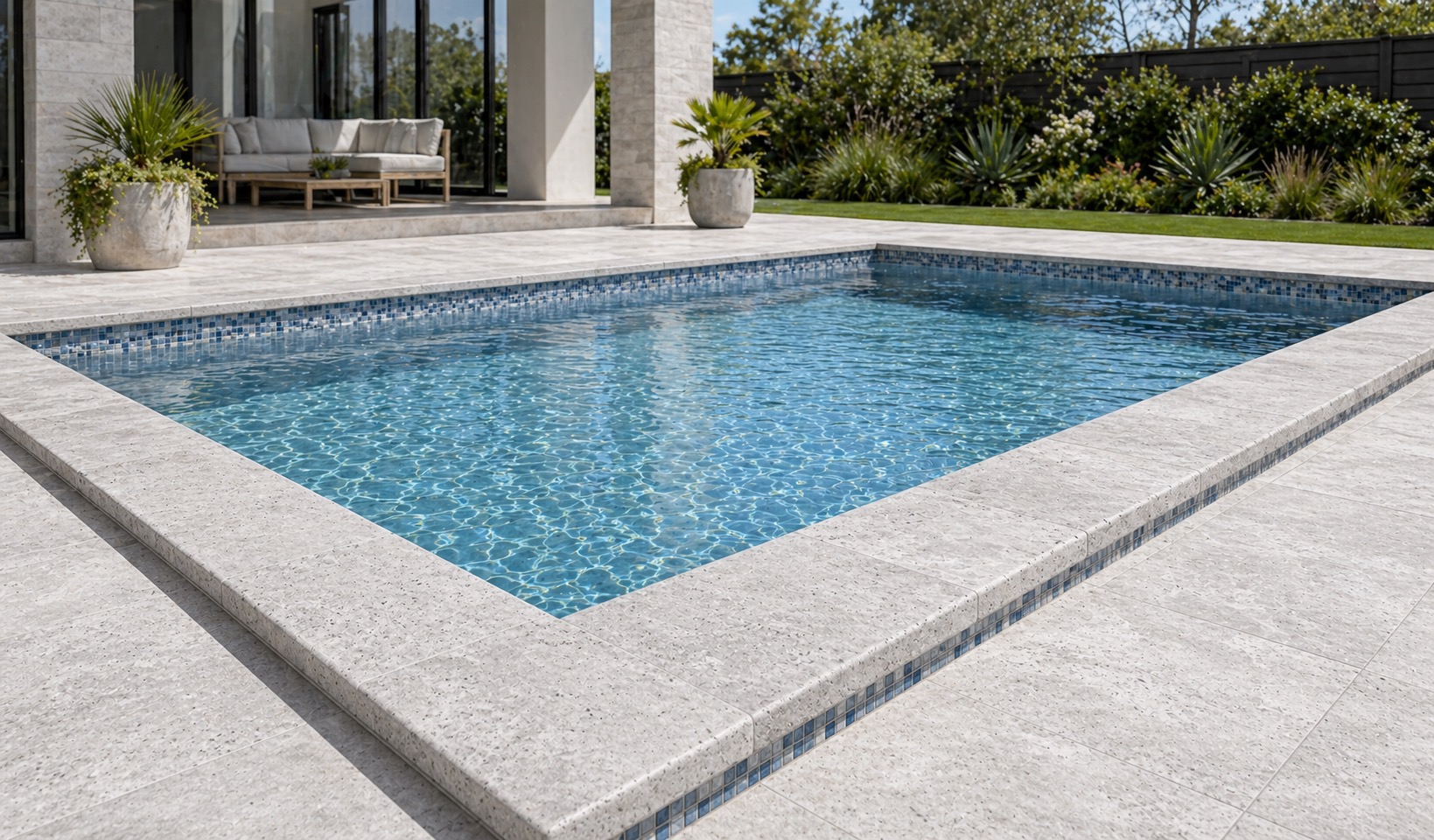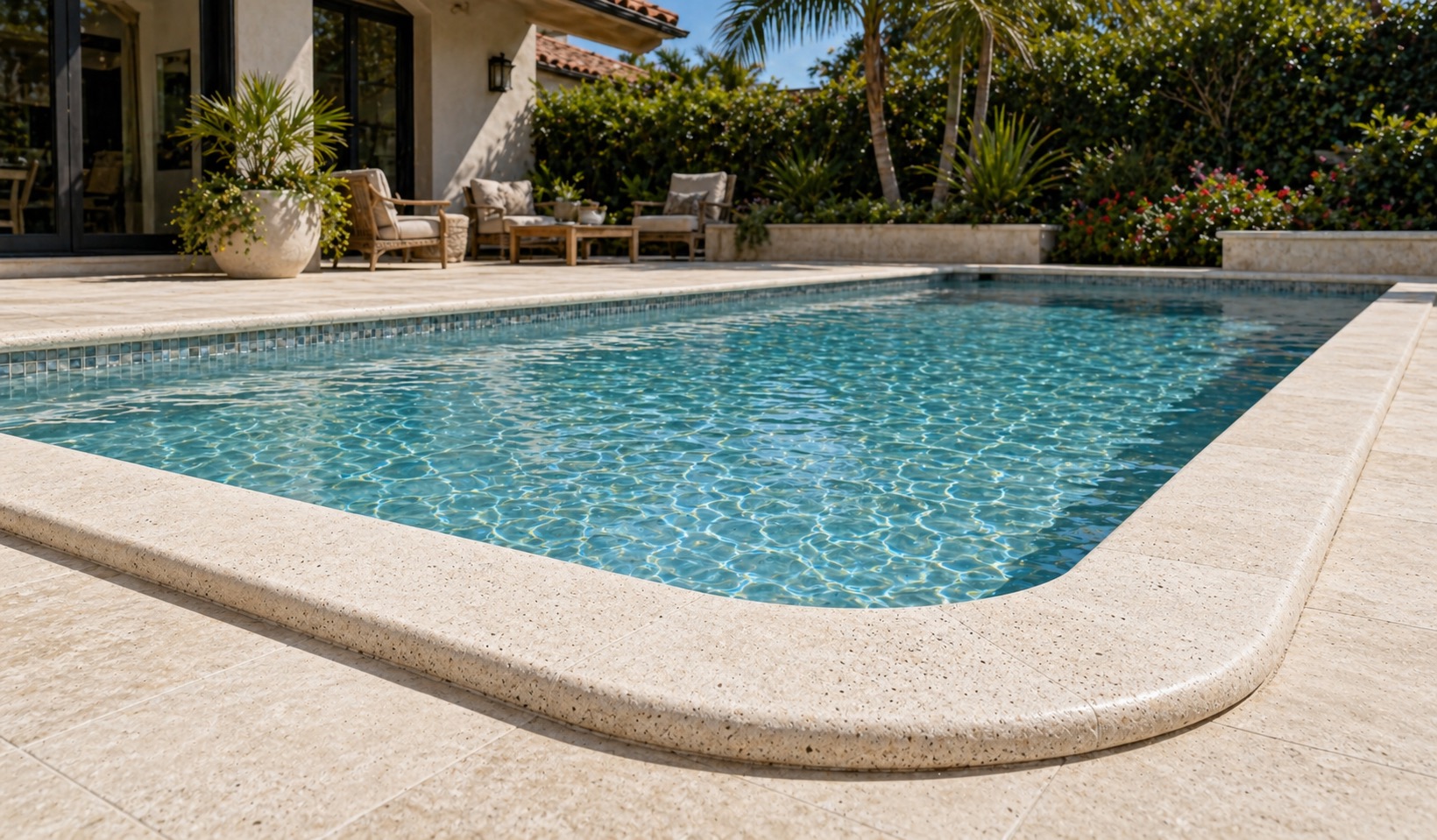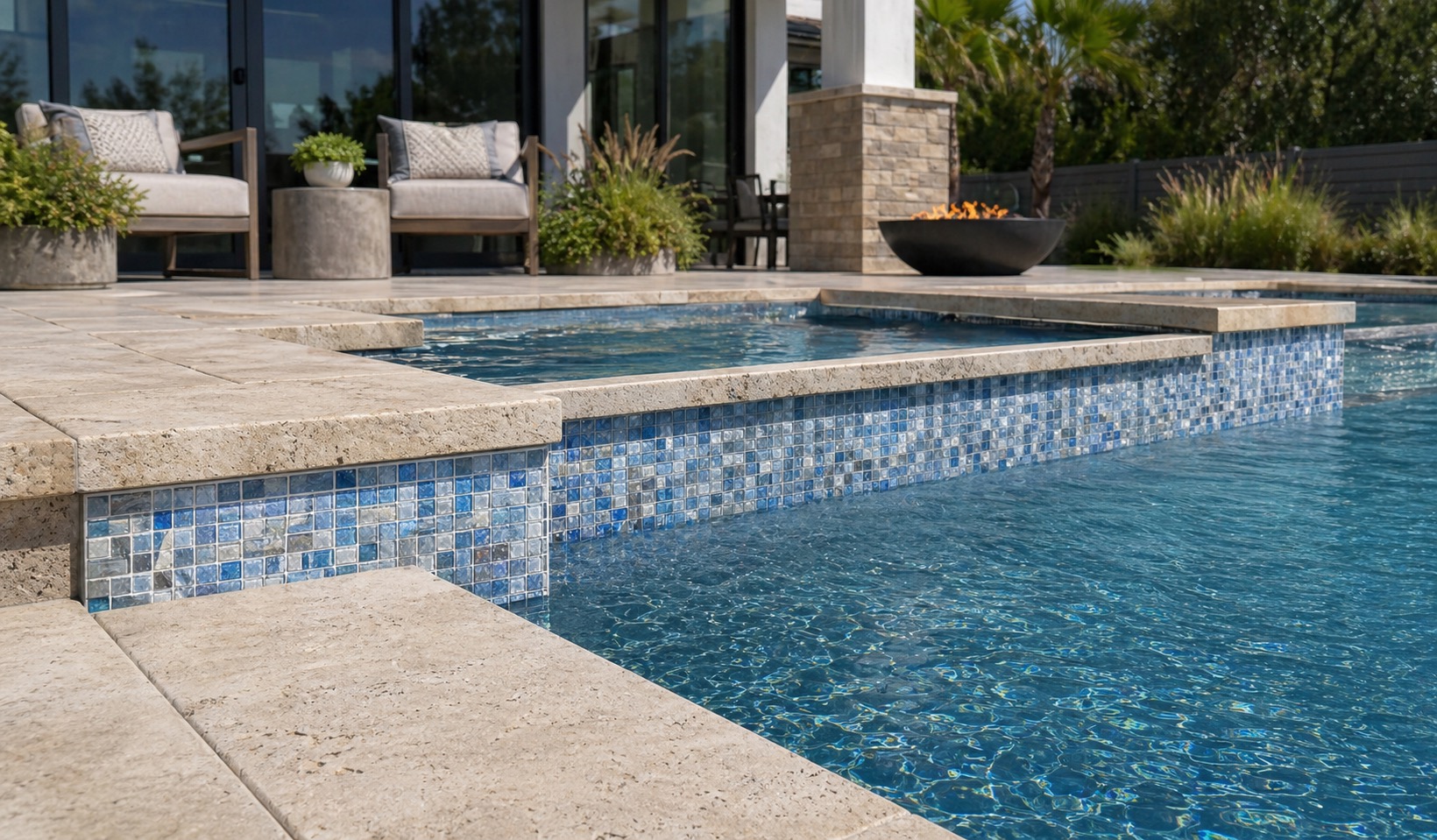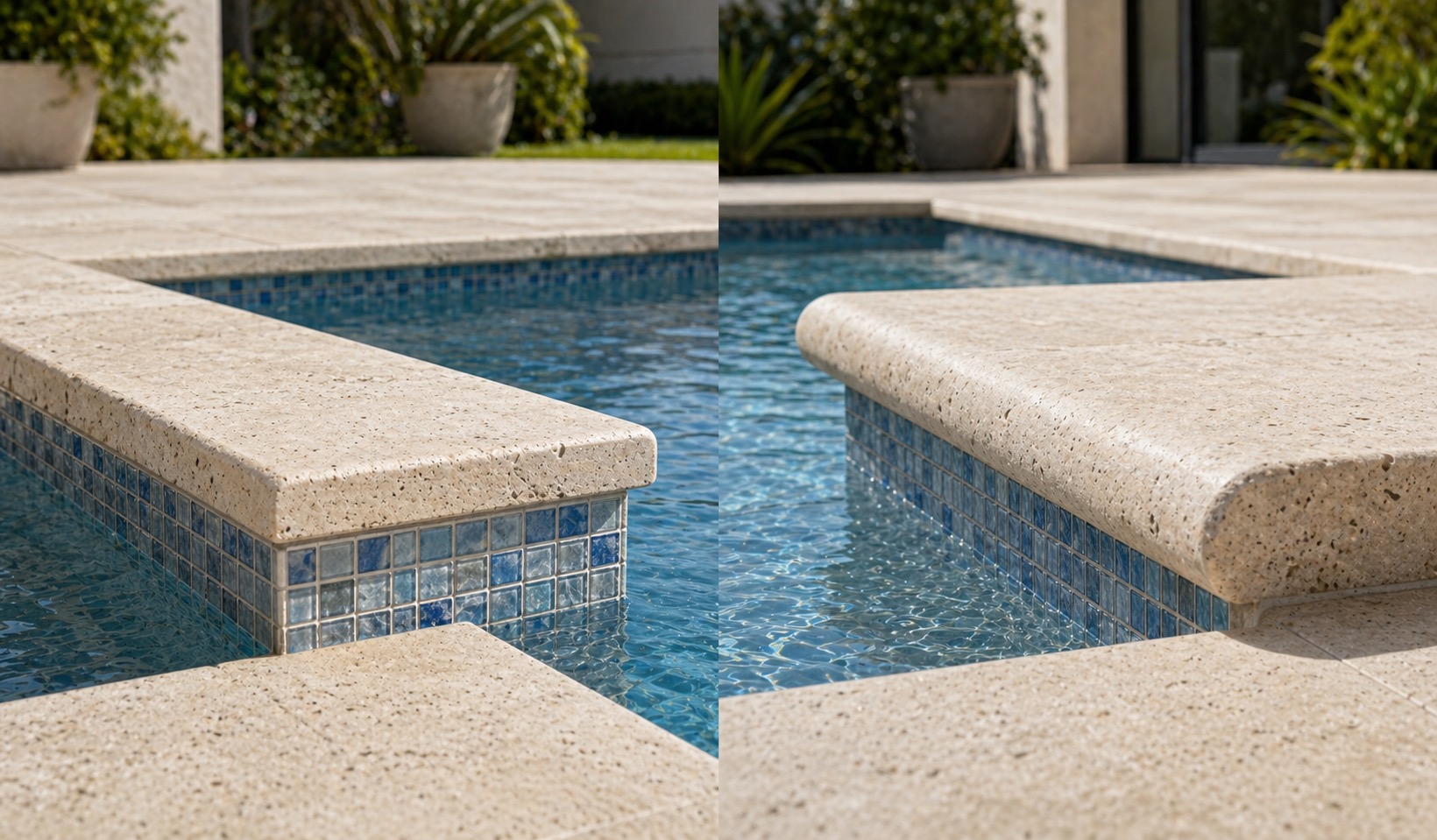
Eased edge and bullnose coping do the same basic job, but they create very different pool edges. One reads crisp and contemporary. The other reads softer and more traditional. That difference is visible from across the yard, and it is also something people feel every time they step onto the pool perimeter.
For most homeowners, the real question is not which profile is universally better. It is which profile fits the pool layout, the surrounding deck, and the comfort level they want from the edge.
Key Takeaways
| Question | Eased Edge | Bullnose |
|---|---|---|
| How does it look? | Straighter, cleaner, more contemporary. | Softer, rounder, more traditional. |
| How does it feel? | More controlled and architectural at the front line. | More forgiving and comfort-forward at the front edge. |
| Best fit? | Modern rectangular pools and cleaner deck geometry. | Family-oriented, classic, or softer perimeter designs. |
| Which shows installation issues faster? | Eased edge usually does because the line is sharper. | Bullnose is slightly more forgiving visually. |
| Which is safer? | Both can work well when specified and installed correctly. | Both can work well when specified and installed correctly. |
What Changes When You Change the Profile
The biggest difference between eased edge and bullnose is the front geometry of the coping.
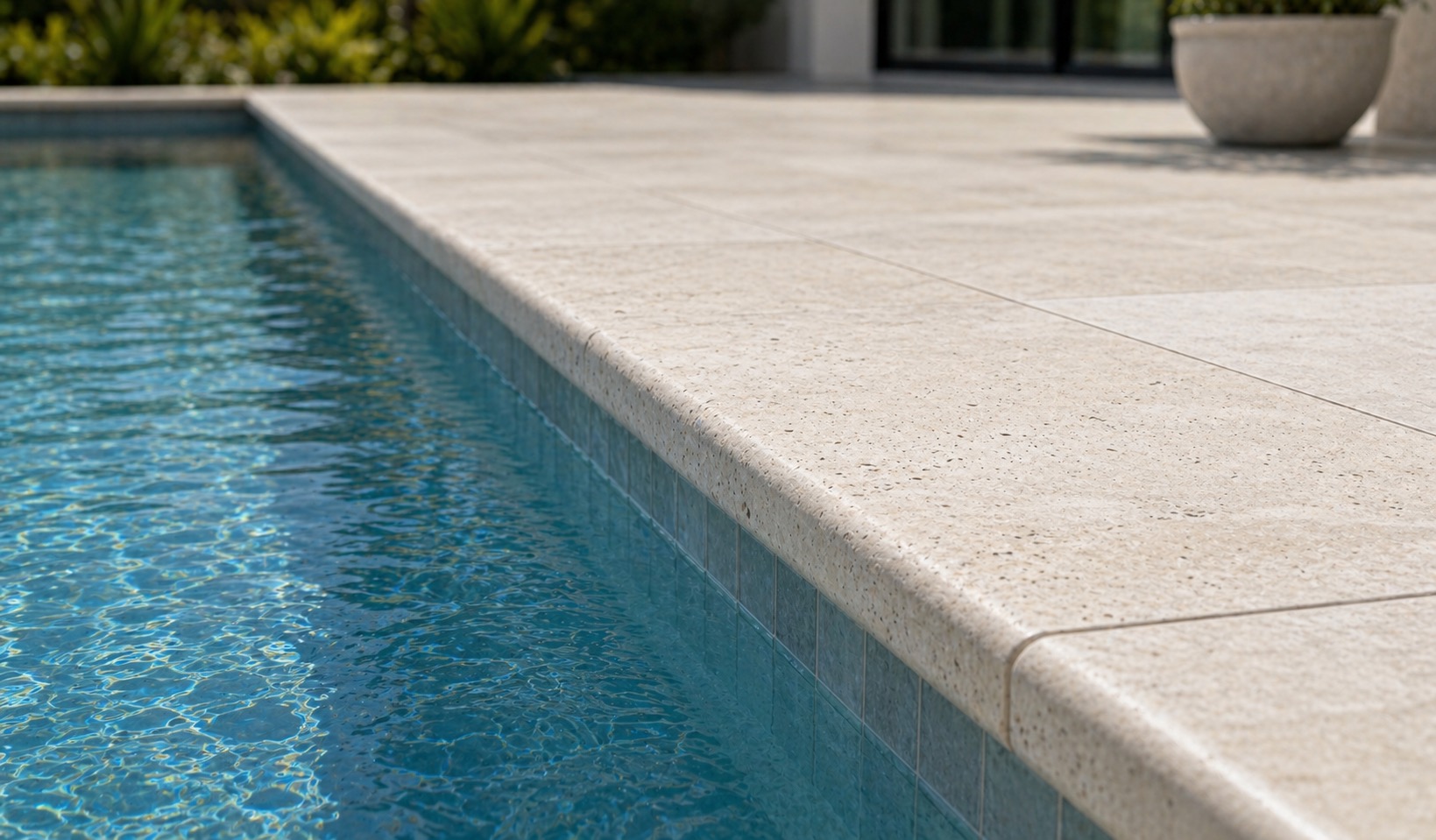
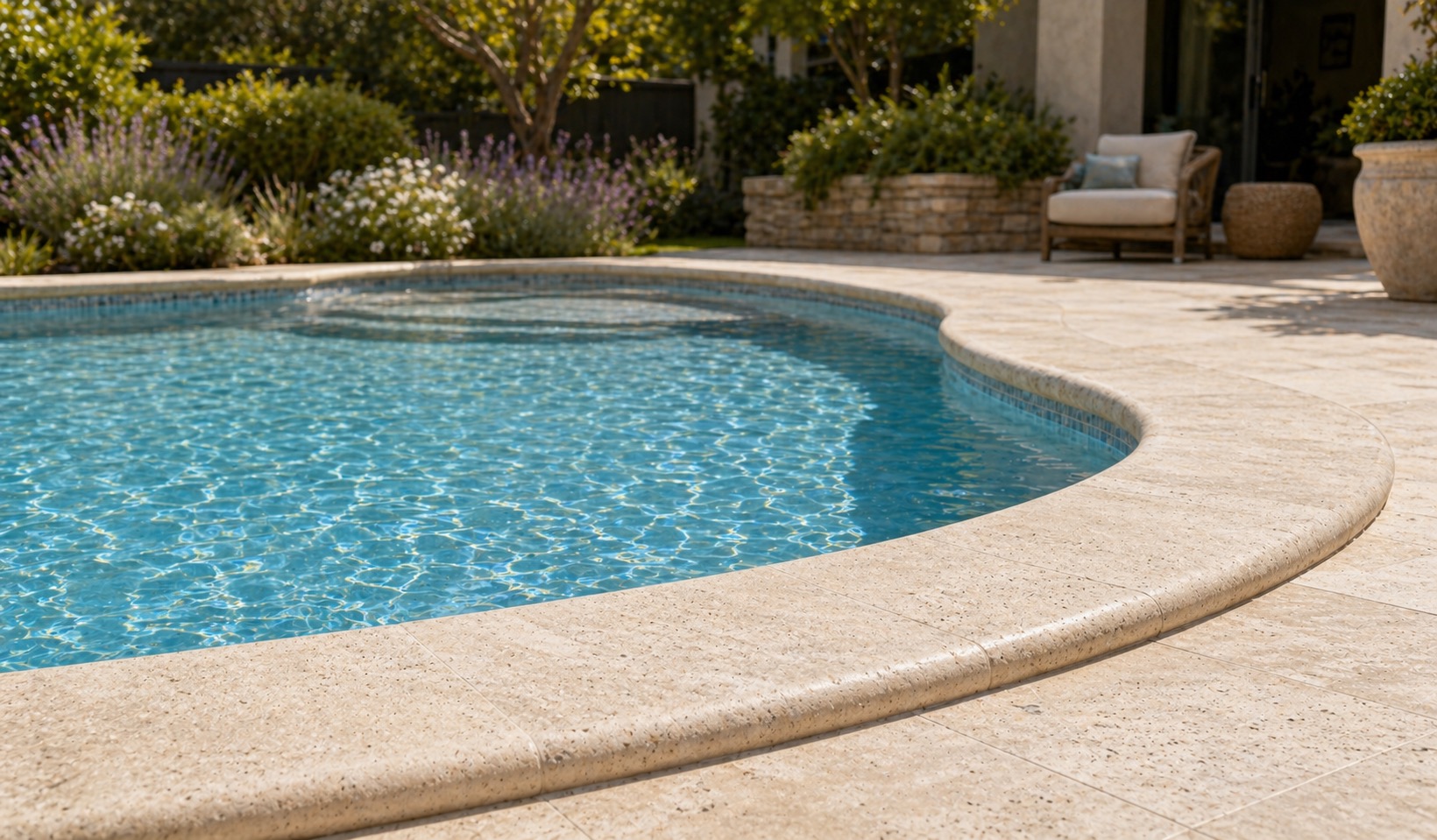
Eased edgekeeps a flatter, cleaner line while softening the sharpness of the top edge.Bullnoserounds the leading face more visibly and gives the pool a softer perimeter.
That may sound subtle, but it changes the whole personality of the pool. A contemporary backyard with straight pavers and glass tile usually looks more resolved with eased or straight-edged coping. A more traditional patio or family-focused pool often feels more natural with bullnose.
When Eased Edge Makes More Sense
Eased edge coping usually works best when the design is trying to feel controlled, minimal, or architectural.
It is often the stronger choice when:
- the pool is rectangular or highly geometric
- the deck pattern is quiet and consistent
- the project uses cooler or more modern material tones
- the homeowner wants the perimeter to look cleaner rather than softer
If you are already leaning contemporary, eased edge often overlaps naturally with modern straight edge travertine coping for minimalist decks and cooler stone choices like those in best silver travertine coping for modern pool designs 2026.
When Bullnose Makes More Sense
Bullnose coping is usually the better fit when comfort and softness matter more than a perfectly crisp line. The rounded front edge gives the pool perimeter a more classic feel and can be a better stylistic match for curvier layouts or more traditional patios.
Bullnose is often the stronger choice when:
- the pool design is more traditional than minimalist
- the pool gets heavy family use
- the project already includes softer detailing elsewhere
- the homeowner wants the coping line to feel less sharp visually
That does not make bullnose old-fashioned. It just makes it a different design language.
Comfort, Safety, and Real Use
Profile affects feel, but safety is not decided by profile alone. Finish, maintenance, drainage, and installation quality matter just as much. Both eased edge and bullnose can work well around a pool when the surface finish and support are specified correctly.
What profile does affect is the way the transition feels:
- eased edge tends to feel more precise
- bullnose tends to feel more forgiving
That is why some homeowners prefer bullnose in family-heavy pool zones, while others still choose eased edge because they care more about the architectural line and are comfortable managing the sharper visual geometry.
Thickness Planning Matters With Both
The cleaner the profile, the more important the thickness and support planning become. Thin or poorly supported eased-edge coping can look weak fast because the line is so visually strict. Bullnose can hide slight visual imperfections better, but it still needs proper support to avoid movement and cracking.
If you are deciding profile and thickness together, how to choose the right coping thickness for pools should be part of the same decision, not a later one.
Match the Profile to the Rest of the Pool
The best profile usually becomes obvious once you step back and evaluate the whole perimeter:
- pool shape
- deck layout
- waterline tile style
- coping color
- house architecture
For example, a bright modern pool with cooler tones may look more resolved with eased-edge or straight-edge coping, especially if the material direction is close to what we cover in travertine pool coping colors and design ideas 2026 bullnose eased edges and sty. A warmer backyard with softer landscaping may feel more natural with bullnose.
Final Recommendation
Choose eased edge when you want the pool to read cleaner, sharper, and more contemporary. Choose bullnose when you want the perimeter to feel softer, more relaxed, and more traditional. Neither profile is inherently better. The better one is the one that supports the rest of the pool design and still feels right in daily use.
In 2026, the best projects are not choosing profile in isolation. They are matching profile, thickness, color, and deck geometry as one coordinated edge system.
Related Reading
- Travertine Pool Coping Colors and Design Ideas (2026): Best Picks for Bullnose, Eased Edge, and Cohesive Pool Edge Stone
- 2026 Resort-Style Edges: Pairing Travertine Coping With Glass Pool Tile and Contemporary Layouts
- Travertine Pool Decking and Copings Pros and Cons (2026): What to Expect Before You Choose