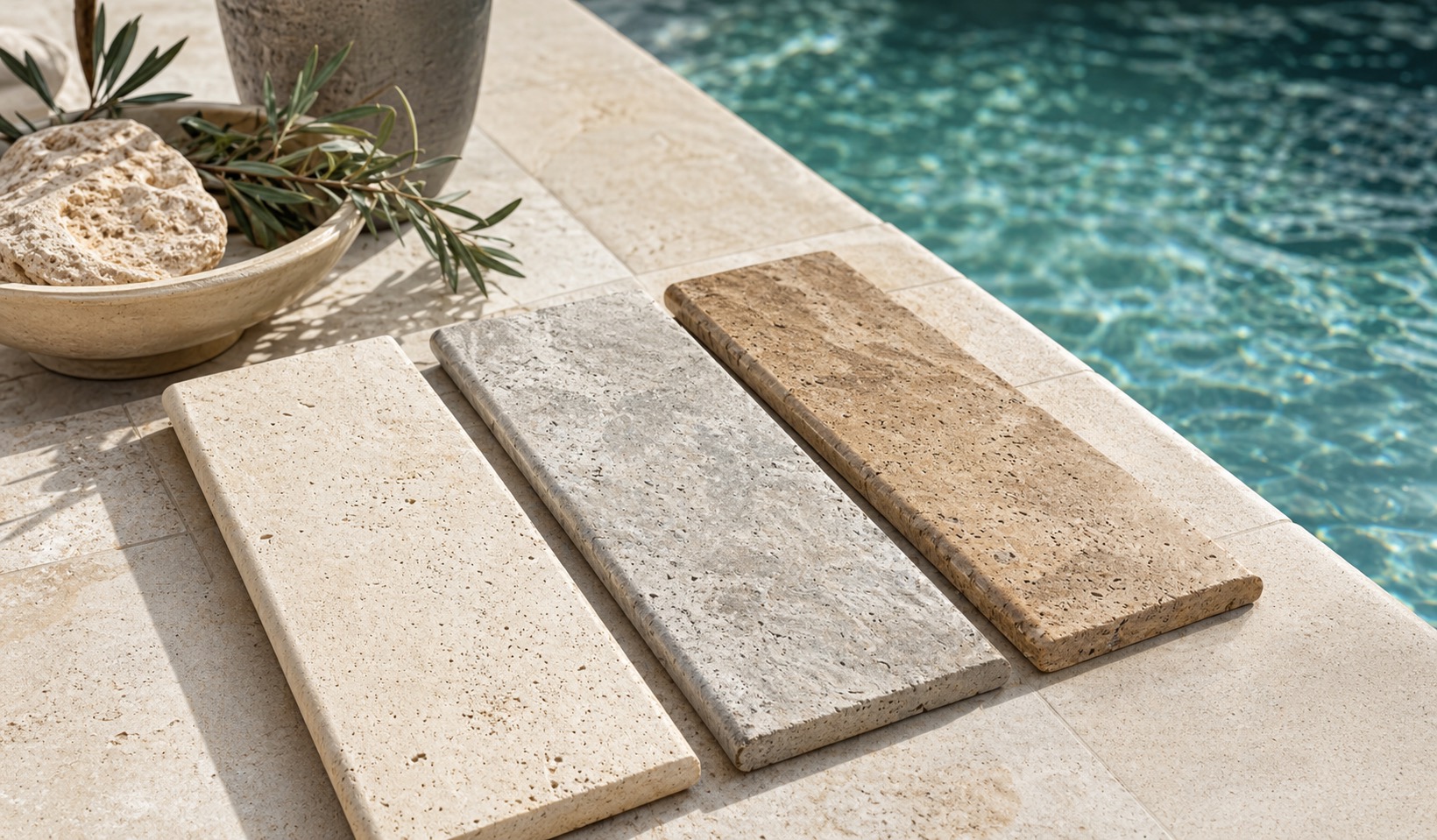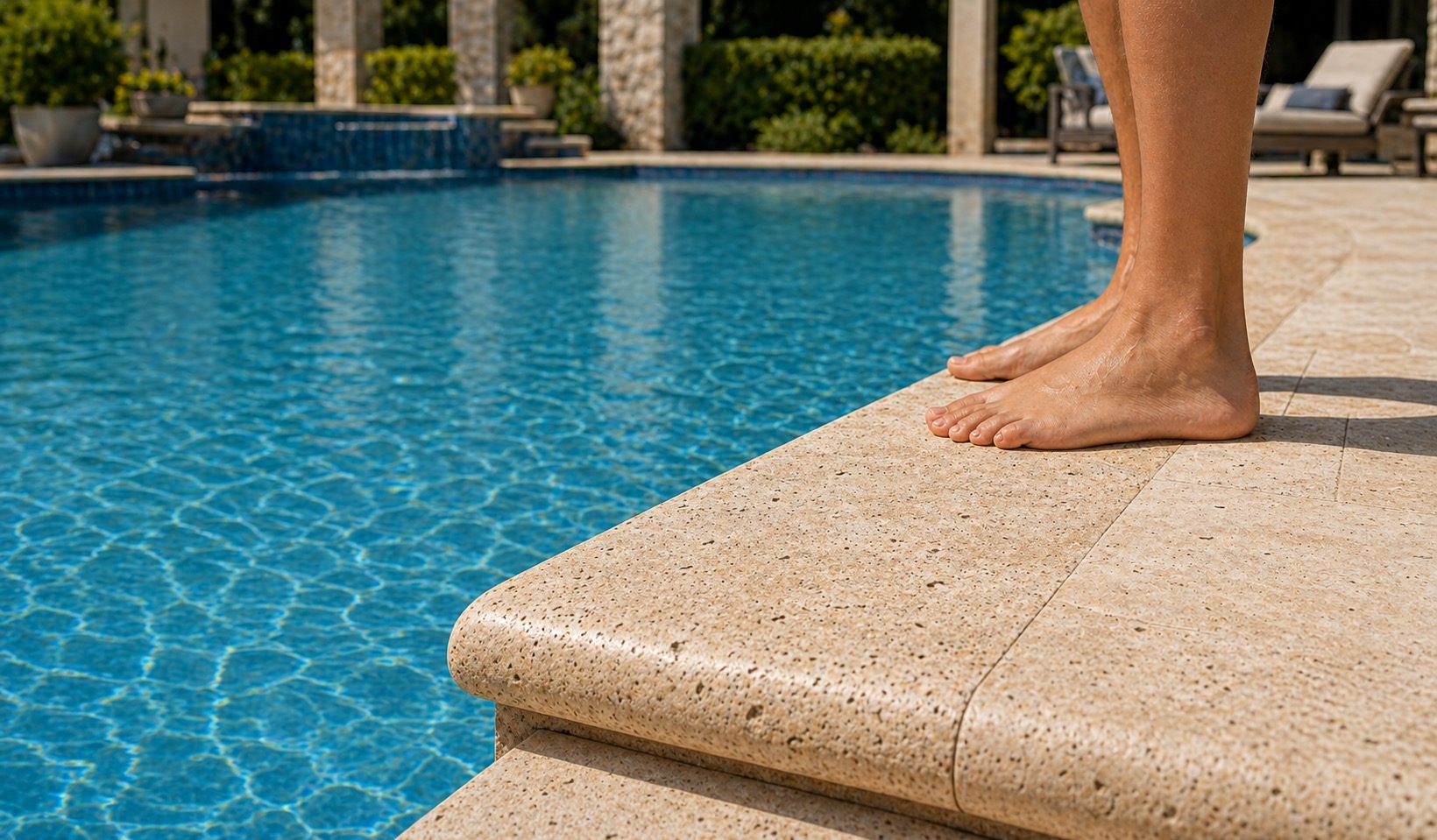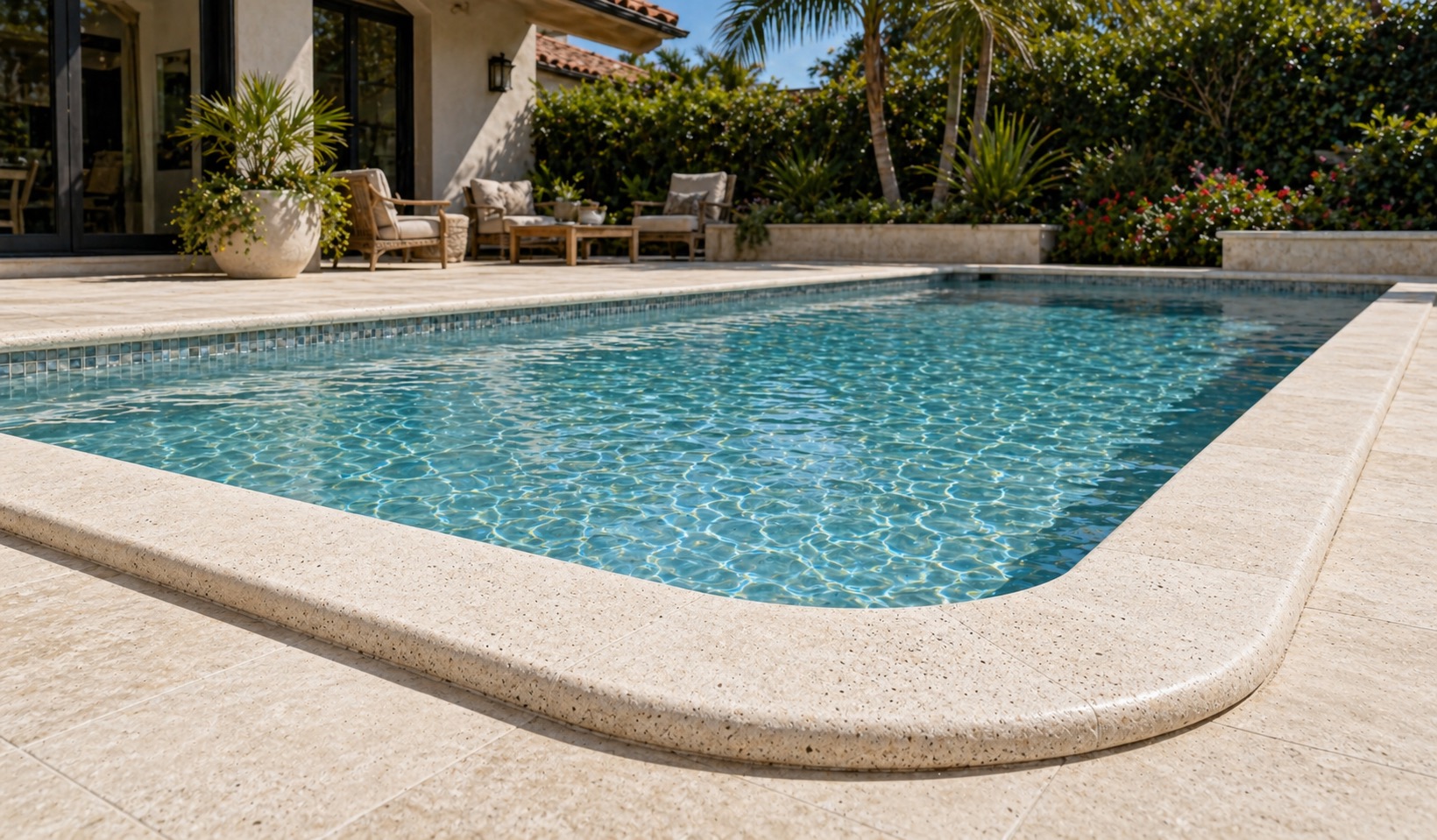
Ivory travertine remains one of the easiest ways to give a backyard pool a lighter, more welcoming perimeter. It works with both traditional and modern patios, reflects heat more gently than many darker surfaces, and gives the pool edge a cleaner visual frame than busier mixed-color stone.
The reason it keeps winning in 2026 is flexibility. Ivory travertine is not one fixed style. The coping profile you choose changes how the pool reads, from classic rounded comfort to more tailored contemporary lines.
Key Takeaways
| Option | Best For |
|---|---|
| Classic bullnose | Homeowners who want a timeless, comfortable perimeter. |
| Double bullnose | Pools that need more visual weight and a stronger frame. |
| Three-piece systems | More tailored builds where edge detailing matters. |
| Beveled or cleaner edges | More contemporary patios and sharper sightlines. |
| Waterfall-style edges | Feature-driven pools with a stronger resort aesthetic. |
Why Ivory Travertine Keeps Working
Ivory travertine makes the pool perimeter feel brighter without pushing the design into stark white territory. That makes it unusually adaptable. It can support a coastal-modern backyard, a more Mediterranean patio, or a transitional outdoor living area that mixes natural textures with cleaner hardscape lines.
It also overlaps naturally with some of the concerns in does travertine coping get hot in the sun, because lighter stone families are often the first place homeowners look when comfort in hot weather matters.
1. Classic Bullnose Ivory Coping
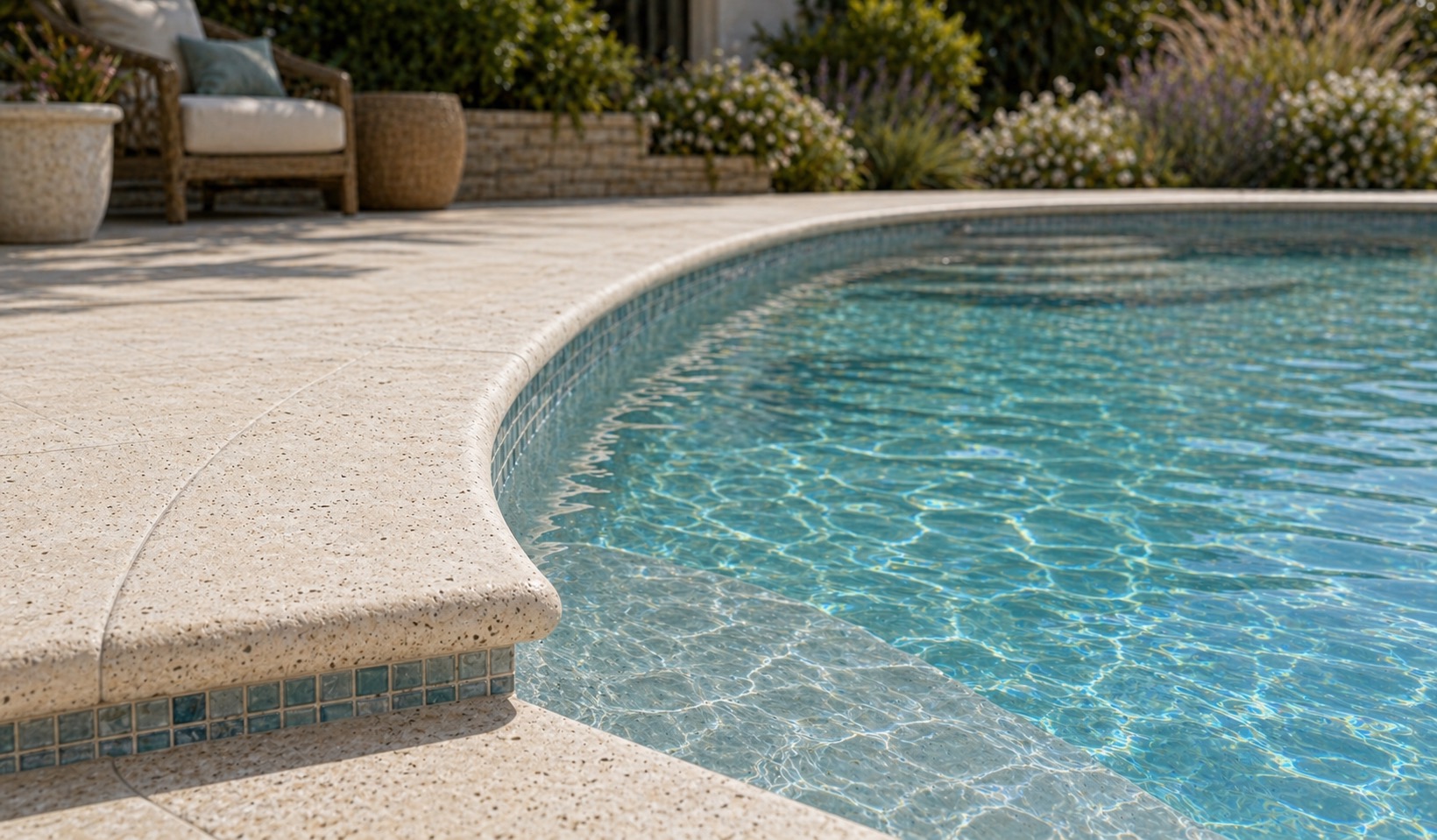
Classic bullnose remains the safest all-around ivory coping choice. The rounded front edge is comfortable, familiar, and easy to integrate with a wide range of patios. If the project needs a clean perimeter without trying too hard to look modern, bullnose is usually the strongest starting point.
It works best for:
- family-oriented pools
- transitional or traditional patios
- homeowners who want comfort and timelessness over sharp edge geometry
2. Double Bullnose Ivory Coping
Double bullnose takes the same softer edge logic and gives it more presence. It is useful when the pool perimeter needs more visual weight or when the homeowner wants the border to feel more premium and pronounced from across the yard.
This is often a better fit for:
- larger pools
- more formal backyard layouts
- designs where the coping itself should read as a stronger frame
3. Three-Piece Ivory Coping Systems
Three-piece coping systems are useful when the project needs more controlled detailing at the edge. They can help create a more tailored look and can make sense where the pool perimeter changes direction or detail frequently.
These systems are often best for:
- design-driven custom builds
- patios with more deliberate edge geometry
- projects where water management and joint control are high priorities
4. Beveled or Cleaner Contemporary Ivory Edges
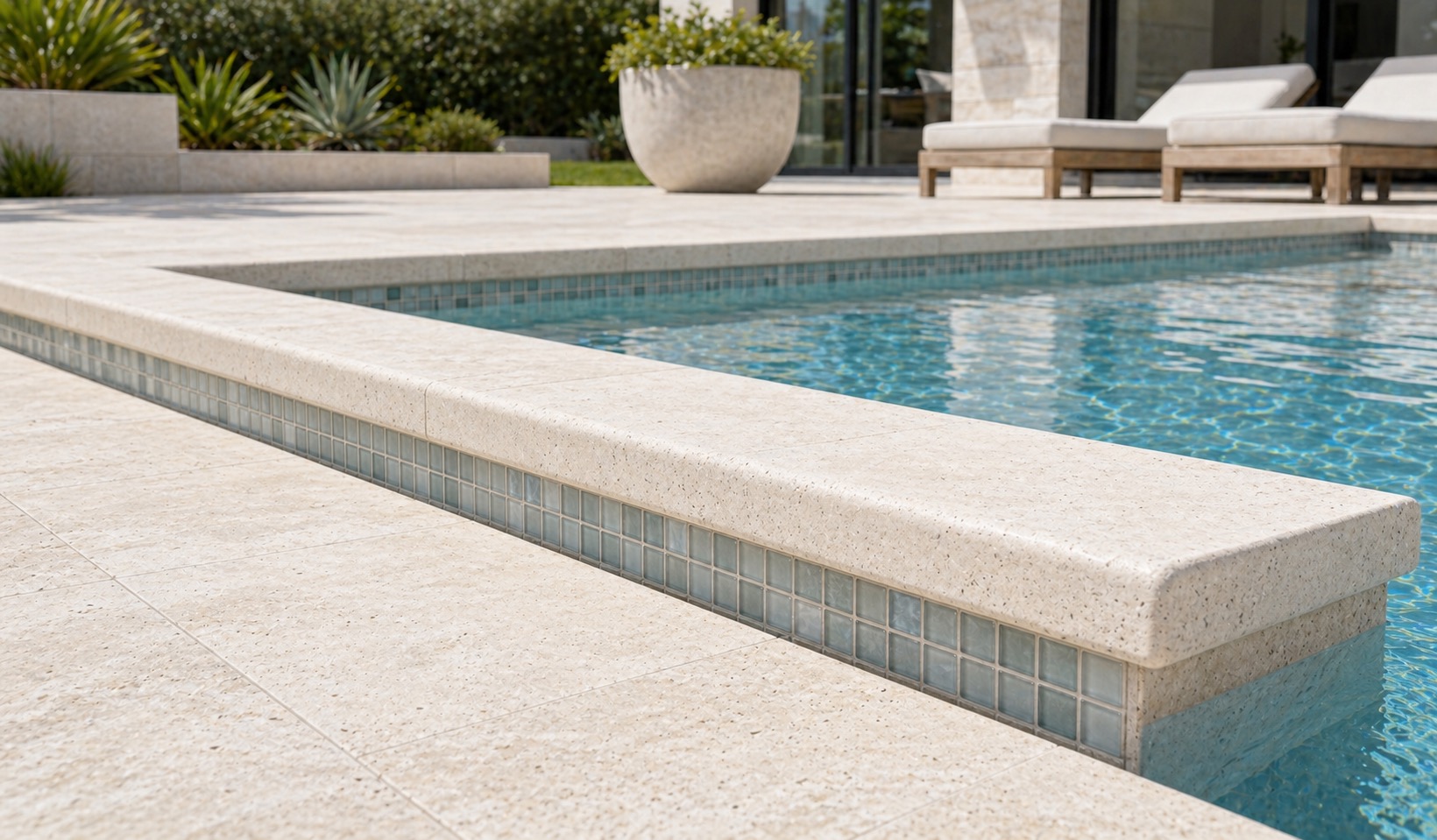
Not every ivory coping project needs to look traditional. Lighter travertine also works well with cleaner, more contemporary profiles. When homeowners want a brighter stone but a sharper perimeter, beveled or cleaner-edge options often bridge the gap.
That makes them useful for:
- minimalist or modern patios
- rectangular pools
- backyards where ivory is preferred over cooler silver but softness is not
This is also where modern straight edge travertine coping for minimalist decks becomes a useful comparison if the design is moving further toward straight-edge geometry.
5. Waterfall-Style Ivory Coping
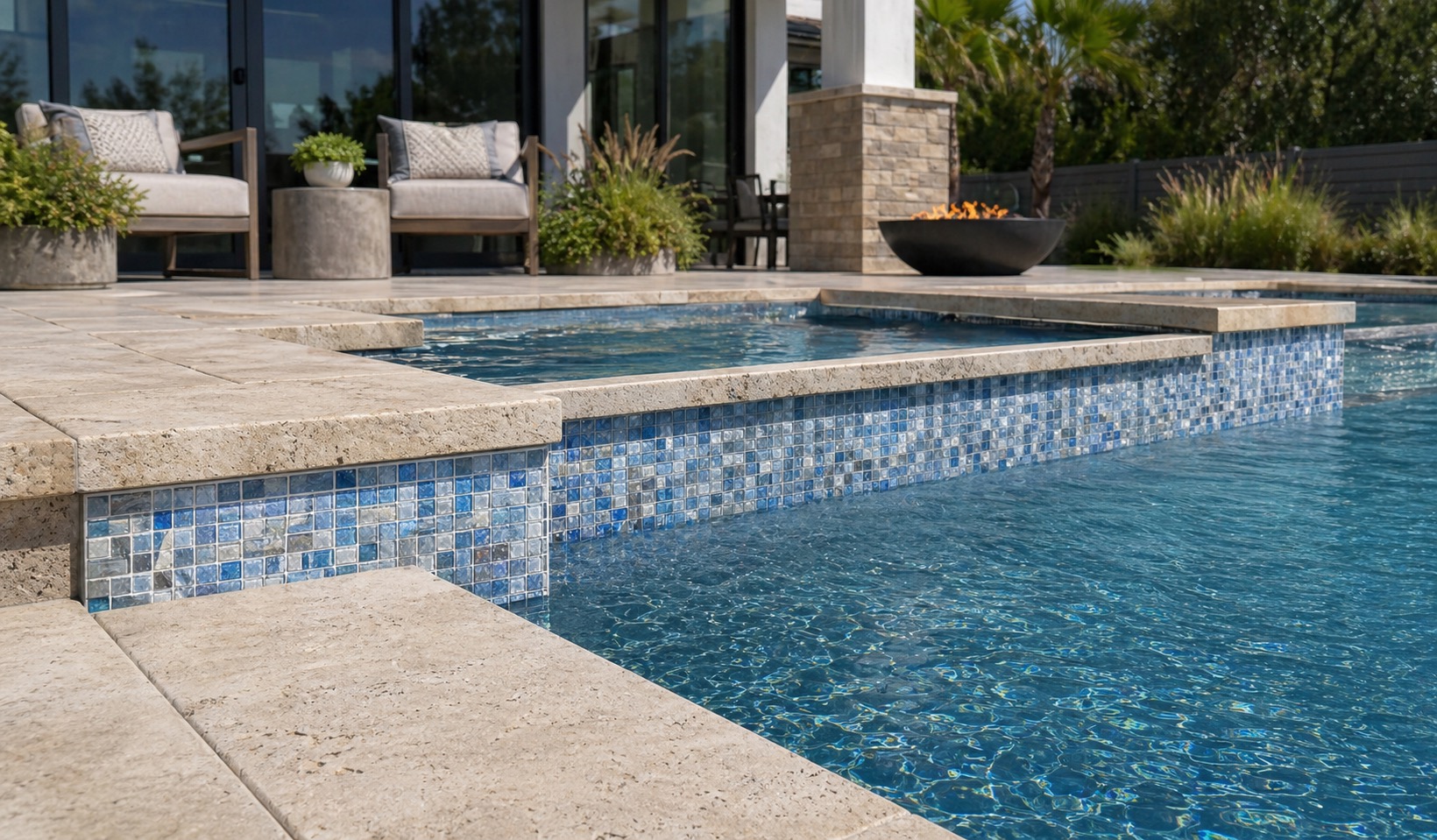
Waterfall-style coping makes the edge feel more feature-oriented. It is usually the most dramatic of the ivory coping directions and works best when the pool is already being treated as a centerpiece.
It tends to fit:
- resort-inspired patios
- pools with strong focal points
- projects that want a more layered or elevated edge treatment
If the pool is also using tile and a more designed perimeter composition, 2026 resort style edges pairing travertine coping with glass pool tile and contemporary layouts is a useful related guide.
How to Choose Among the Five
The best option usually depends on what you want the pool edge to communicate:
bullnosefor comfort and timelessnessdouble bullnosefor more visual presencethree-piecefor tailored detailingcleaner beveled edgesfor brighter contemporary designwaterfall-style edgesfor a stronger feature look
Color alone will not decide the result. Profile, deck layout, and overall pool style still have to agree with the same visual direction.
Final Recommendation
Ivory travertine stays at the top of the list because it can adapt to more backyard styles than almost any other coping color family. The right option depends on whether you want the edge to feel softer, heavier, sharper, or more resort-like. In 2026, the strongest ivory coping projects are the ones where profile, color, and patio layout are chosen together instead of separately.