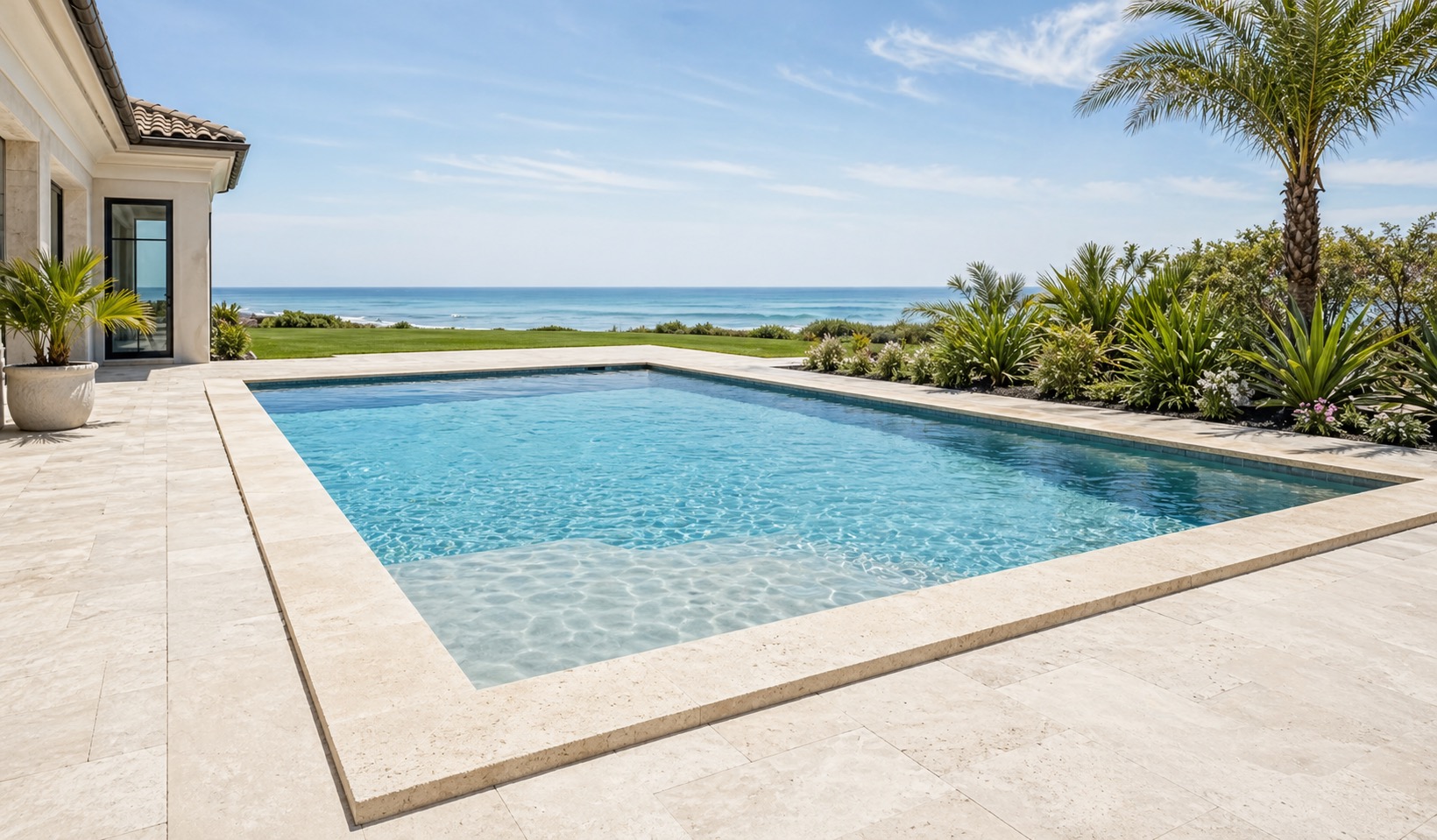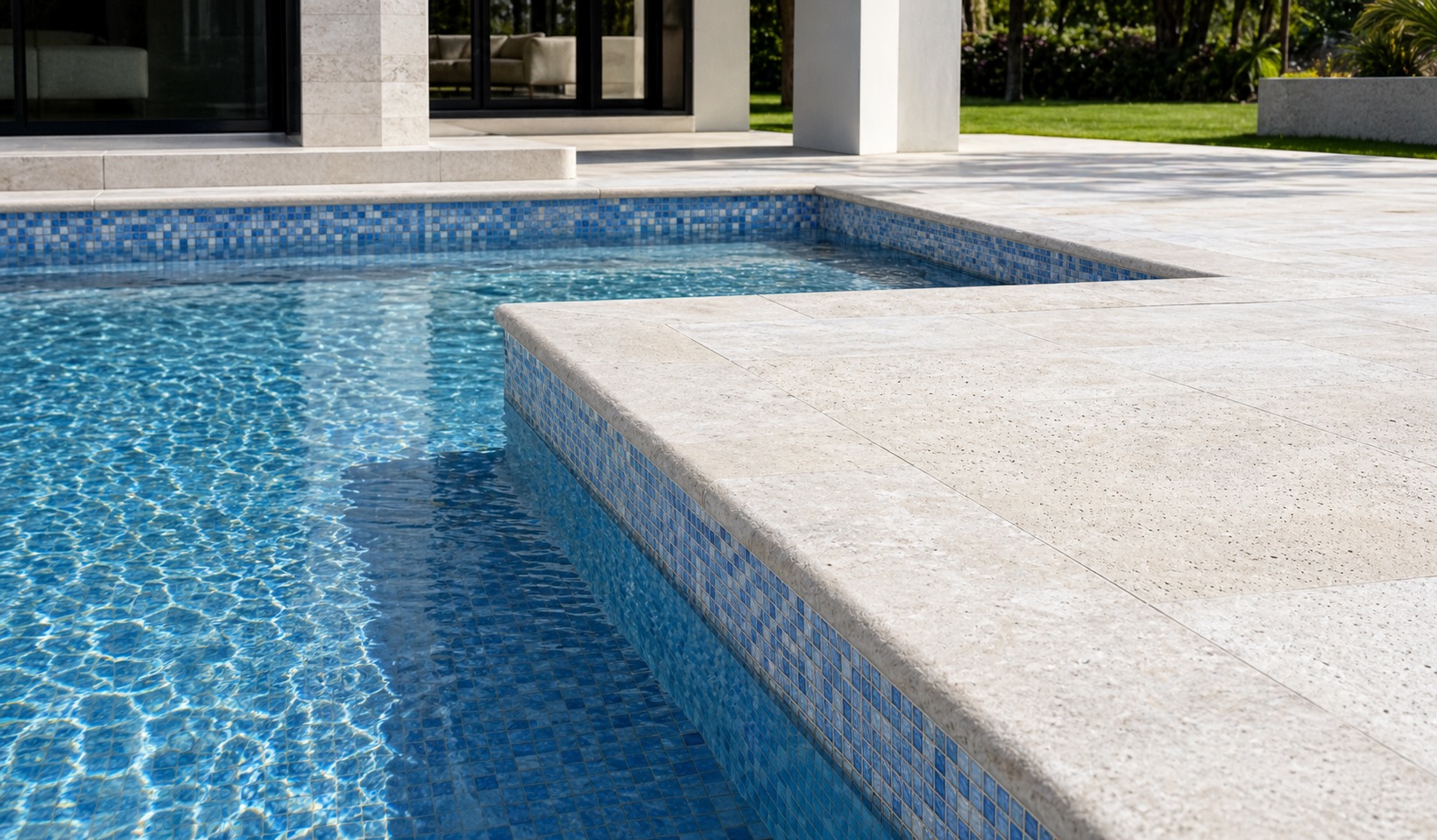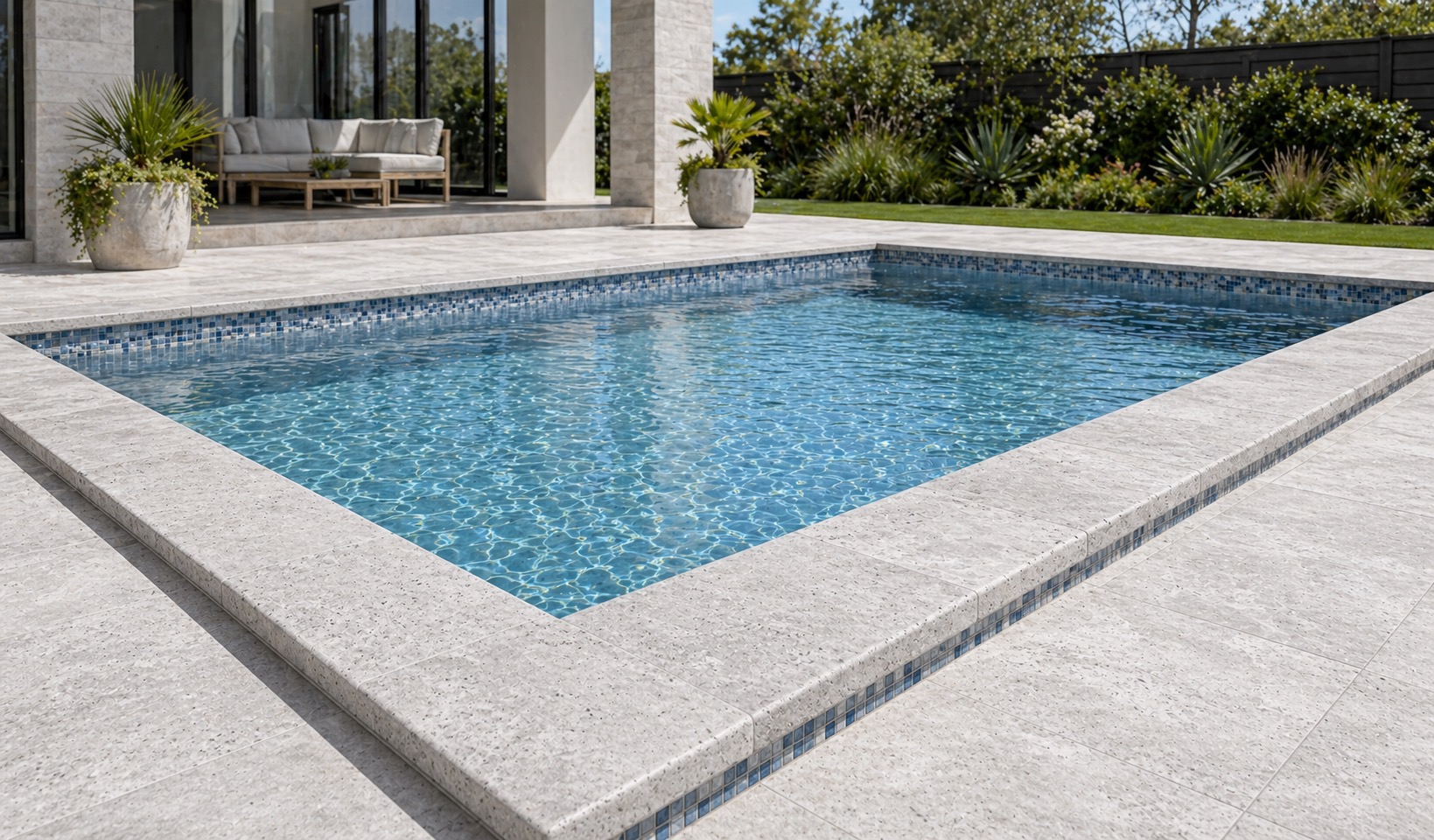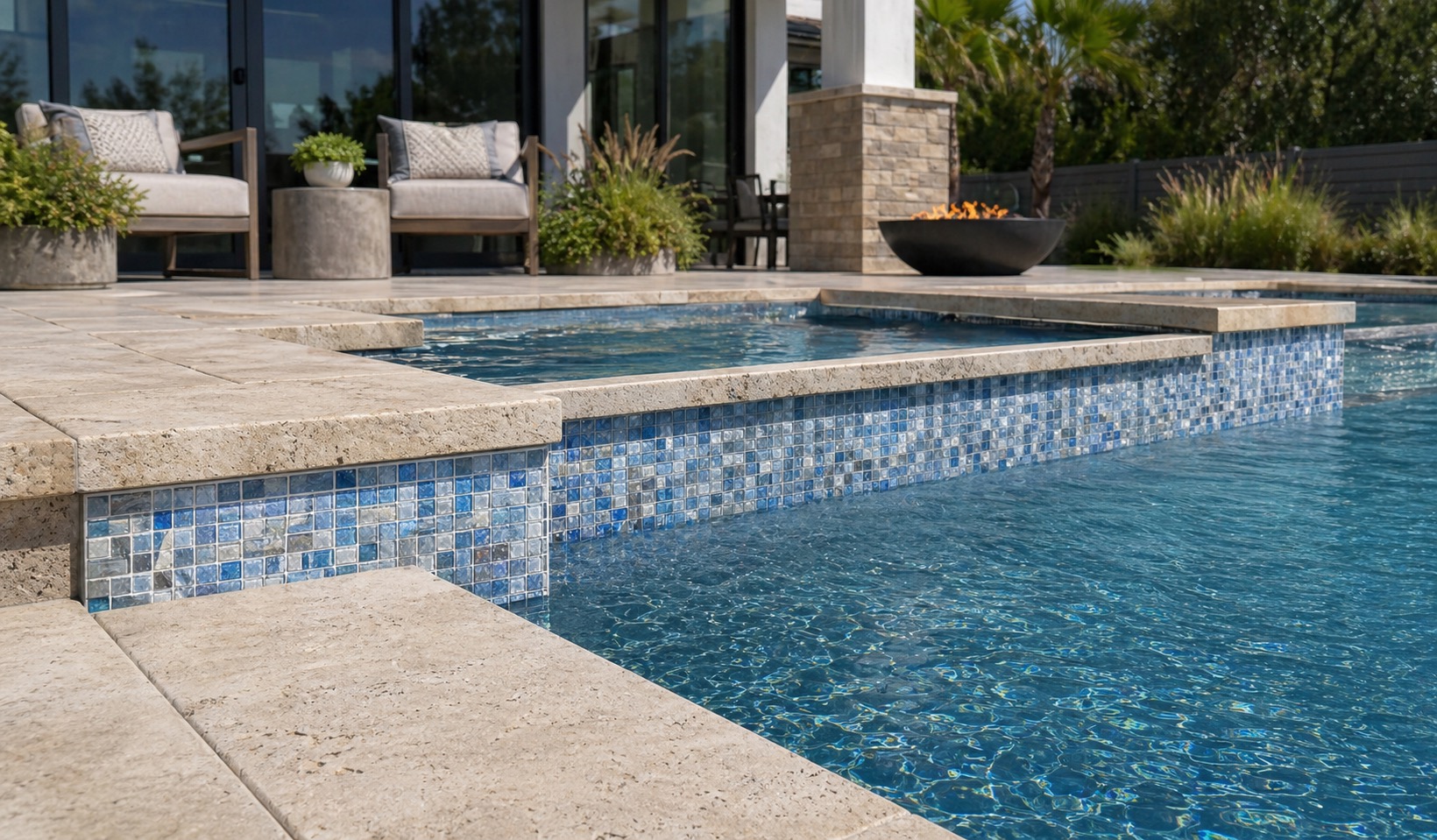
Travertine pool coping colors and design ideas matter more than most homeowners expect, because the coping is the visible transition between water, deck, and landscape. In 2026, we see more clients choosing travertine copings for projects that combine slip-resistant comfort with a coordinated, upscale look that stays consistent across every pool renovation and new pool build.
Key Takeaways
| Topic | Best for |
|---|---|
| Ivory travertine pool coping colors | Bright, coastal, and clean modern lines |
| Walnut mix travertine pool coping colors | Warm Mediterranean and earthy landscaping |
| Silver and cooler tones | Contemporary aesthetics and contrasting pool interiors |
| Bullnose vs. straight edge | Comfort-focused safety or crisp modern profiles |
| Matching patterns with coping | A cohesive pool tile pool edge stone look |
| Porosity and stain management | Lower long-term maintenance surprises (sealed properly) |
- Choose coping profiles for safety and style: Solidshape highlights bullnose coping and straight edge options for different aesthetics and comfort needs (travertine pool coping bullnose and square edge styles).
- Plan the color story, not just the stone: We recommend using coping that matches your travertine deck’s family, look, and tonal range (travertine pool coping guide for bullnose vs straight edge and color matching).
- Use the border concept for unity: Coordinating coping with tiles and pavers creates a continuous visual line (border travertine pool coping with matching tiles and pavers).
- Expect natural color variation: Plan around real-world tone movement, not “perfect” uniformity (travertine coping color variations, what should be expected).
Why travertine copings are important for pool renovations and new pool builds
When we review pool renovations or new pool builds, we treat coping as the finishing material that ties everything together. That includes the pool deck, the pool tile pool edge stone line, and the way waterline edges meet the rest of the patio.
Travertine copings earn their place because they offer the practical benefits that matter around pools: slip-resistant traction when finished correctly, and heat-resistance compared with many other hardscapes. At the same time, travertine’s natural surface character gives you real texture and tone depth, which is exactly why clients ask for Travertine pool coping colors and design ideas rather than “just a coping color.”
For homeowners, the big question is usually not whether travertine looks good, it is whether it performs and stays visually consistent during real usage. LandscapingNetwork summarizes both sides clearly, noting that travertine is popular for coping or decking, offering slip resistance and heat resistance, while also being porous and stain-prone if maintenance and sealing are not handled properly (Travertine Pool Decks & Coping – Pros & Cons).
Color palettes that work best: from ivory to walnut and silver tones
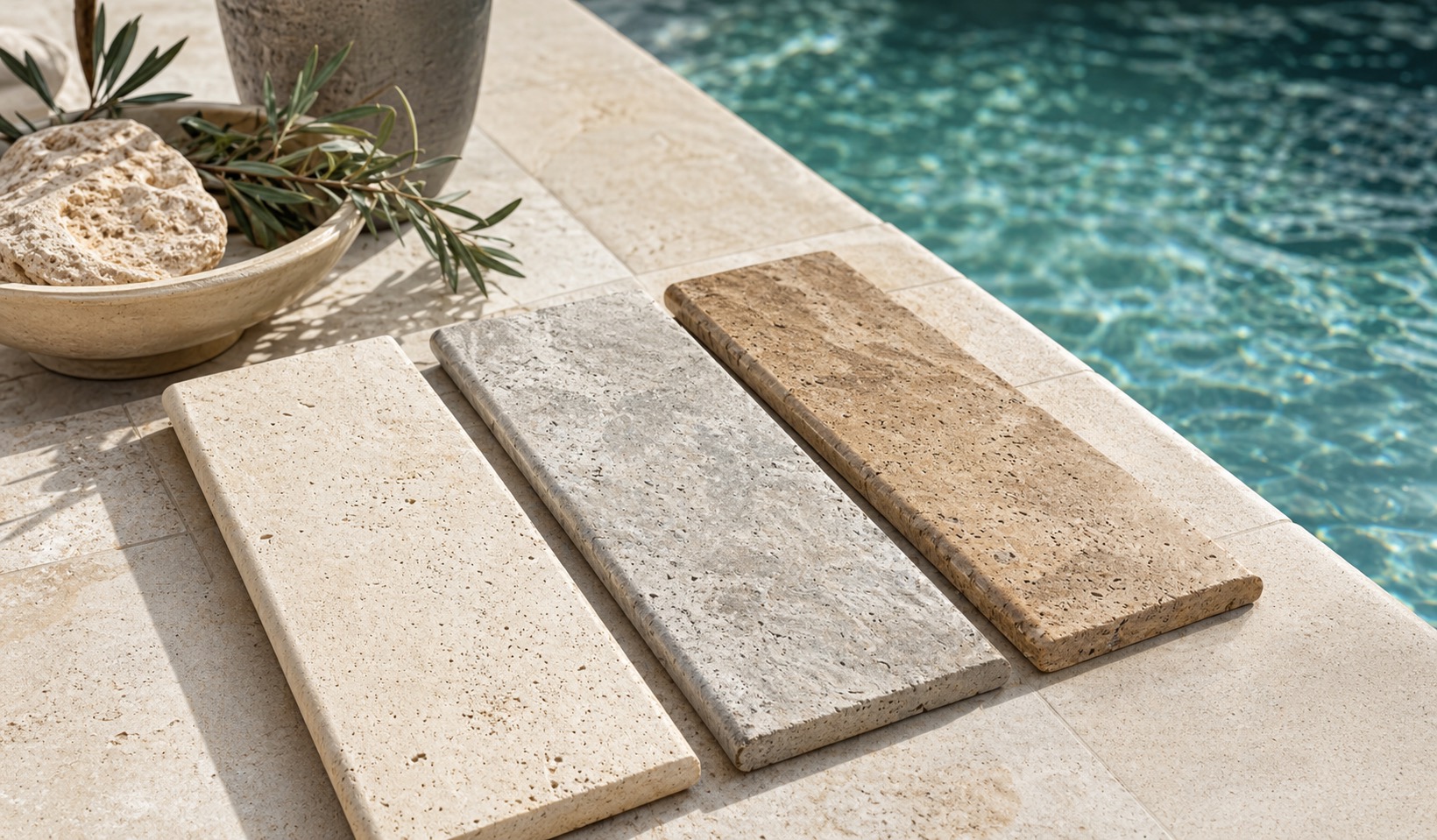
In 2026, most design decisions start with the pool deck color direction, then we select coping tones so the transition reads intentional. That is where Travertine pool coping colors and design ideas become a practical checklist, because a coping color that “almost matches” often looks off after installation under sun and reflected water.
Below are our most reliable coping color directions, including examples of travertine coping looks pulled from common product families.
Ivory: bright, coastal, and visually clean
Ivory coping is ideal when you want the pool edge to look crisp and open. It pairs well with lighter pavers, cool water finishes, and minimal landscaping so the deck stays the focal point.
Walnut mix: warm, earthy, and landscaping-friendly
Walnut mix tones bring depth without going dark. They help unify patios that include wood accents, stone retaining walls, and natural mulch areas.
Scabos, shellstone, and keykostone: “middle-of-the-map” travertine looks
For many projects, clients want travertine that sits between bright and dark. Distinct stone solutions describes coping color matching as part of the overall cohesive look, and its guide lists multiple available color directions including ivory, walnut, and other tones for pairing (travertine pool coping guide).
Coping profiles that change the look: bullnose, eased edge, and square edge
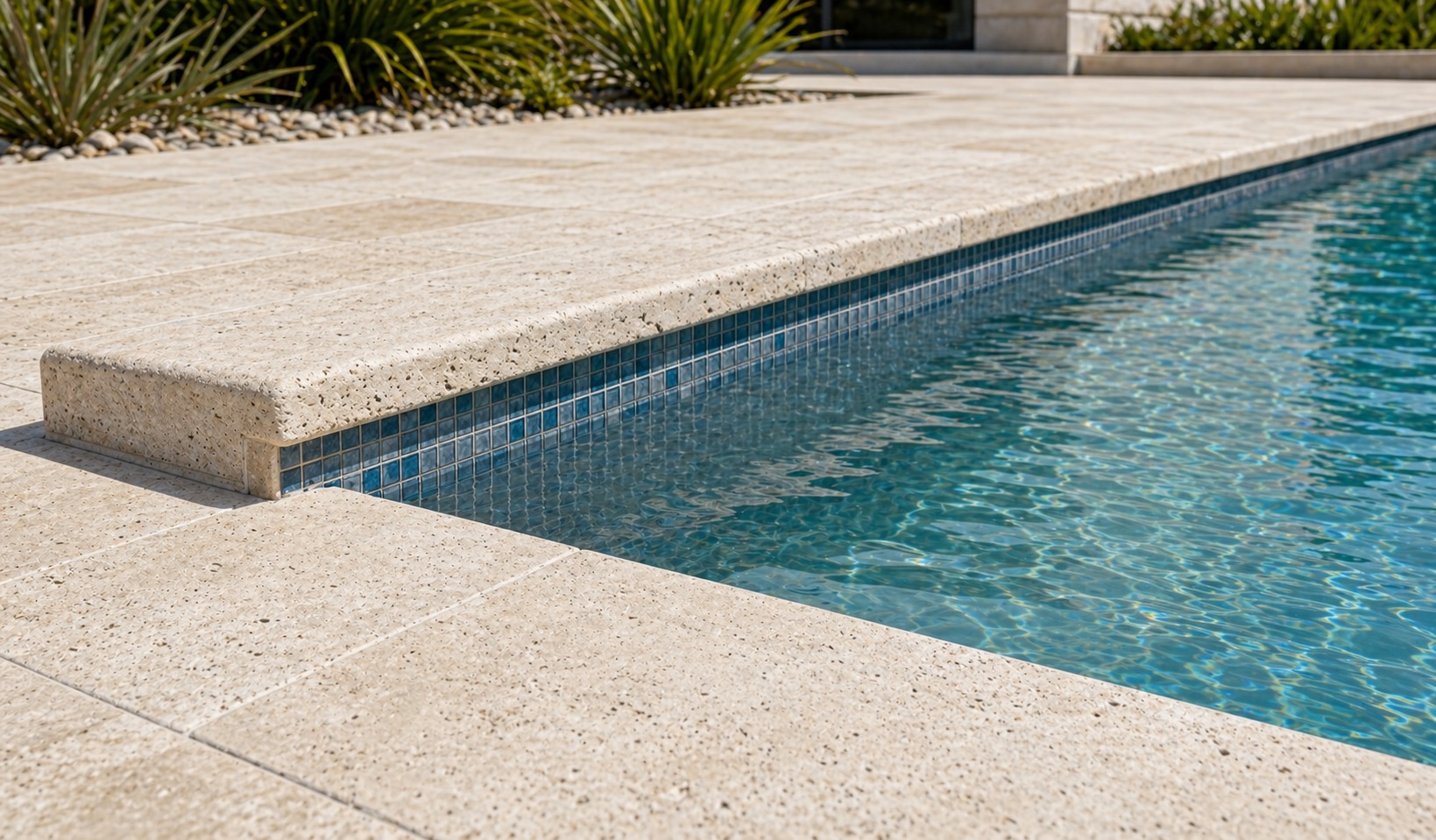
Travertine pool coping colors and design ideas are always paired with the coping profile. The profile controls both comfort and the line style, whether you want rounded softness or a clean architectural edge.
From a product-family standpoint, Solidshape’s travertine pool coping collection explicitly lists bullnose and straight edge options, including bullnose coping described as rounded edge coping and straight edge as modern squared edge coping, with mentions of tumbled and honed finishes for a slip-resistant, cool pool edge (travertine pool coping bullnose & square edge styles).
Bullnose coping: best for comfort and classic safety
Bullnose profiles soften the pool perimeter and feel comfortable when feet or hands meet the edge. We often recommend bullnose for families, high-traffic pool decks, and renovations where the goal is a timeless finish.
Straight edge (square edge): best for modern lines
Straight edge coping emphasizes geometry. If your pool renovation includes crisp patio borders, contemporary landscaping, or clean tile pool edge stone transitions, square-edge coping tends to look intentional rather than accidental.
Eased edge details: a middle option for visual refinement
While many homeowners use “eased edge” as a practical way to describe softened corners, it is also a visual choice. An eased edge can reduce harsh line breaks without committing to a fully rounded bullnose feel.
How to match travertine deck pavers and coping for a cohesive pool edge stone look
One of the most common mistakes we see in pool renovations is selecting a coping color that “matches the average.” Travertine reads through variation, and that is why we plan by pattern family and tonal range, not just name labels.
Distint stone solutions explains the core idea directly in its coping guide, emphasizing that coping matches your travertine paver line for a cohesive look, and listing available color directions such as ivory, walnut, and silver colors. That same page also compares bullnose and straight edge coping styles, reinforcing that profile choice and color matching work together (travertine pool coping guide for color matching).
- Pick your deck first: choose the travertine paver line or deck direction that you will live with daily.
- Choose coping from the same family: we aim for cohesive look by tonal behavior and pattern scale, not exact sameness.
- Plan for real-world color variation: travertine coping color variations are expected, so we verify against the overall pool lighting conditions.
For homeowners seeking reassurance, the Houzz discussion on travertine coping color variations - what should be expected reflects the reality of natural stone blending and variation across installed pieces (travertine coping color variations, what should be expected).
Best design ideas for travertine coping borders with tiles and pavers
When we design Travertine pool coping colors and design ideas for clients, we frequently use a “border” approach because it creates a deliberate frame. Instead of stopping at a perimeter coping line, we continue the travertine story across matching tiles and pavers so the pool edge reads as one system.
TravertineMart’s border-focused design idea shows how to border travertine pool coping with matching travertine tiles and pavers. The key concept is simple, colors and patterns drawn from the same travertine family produce a cohesive look rather than a patchwork effect (Using Travertine Pool Coping as a Border with Travertine Tiles and Pavers).
- Border with matching tone: select coping and tile pavers from the same travertine family so the eye reads continuity.
- Let the pattern scale stay consistent: avoid mixing very large-format pattern pieces with very small ones on the immediate pool edge.
- Use coping to anchor the pool edge stone line: the coping becomes the reference point that ties deck and waterline together.
What to expect from travertine coping in 2026, including porosity and maintenance
Design is only half the decision. Travertine copings are naturally porous, so sealing and realistic maintenance planning matter to keep colors looking even and to reduce stain risk around splashes, sunscreen, and pool chemicals.
LandscapingNetwork’s pros and cons summary is helpful because it names the performance tradeoffs clearly, noting slip resistance and heat resistance while also pointing out that travertine can be porous and stain-prone (Travertine Pool Decks & Coping – Pros & Cons). In 2026, we recommend treating that as part of the material selection process, not an afterthought.
Our renovation rule: if we are installing travertine pool coping colors and design ideas that look “perfect” in samples, we also plan how the surface will be protected so the installed look stays that way longer.
Practical steps we recommend
- Seal based on usage: choose a sealing approach that fits pool splash zones and patio traffic.
- Clean correctly: remove residue promptly so the stone does not hold onto staining agents.
- Reassess high-impact areas: the pool tile pool edge stone transition will show wear first, so we monitor it.
Best for specific looks: curated “choose-this-if” guidance
If you want a fast shortlist for Travertine pool coping colors and design ideas, use this matching logic. It is designed for both pool renovations and new builds, where coping becomes the frame for everything else.
| Your design goal | Best coping direction | Profile pairing |
|---|---|---|
| Bright and open patio | Ivory travertine coping tones | Bullnose for classic comfort |
| Warm Mediterranean look | Walnut mix travertine pool coping colors | Eased edge or bullnose for softer lines |
| Modern geometry | Cooler silver-leaning travertine directions | Square edge / straight edge |
| Unified border frame | Same family coping, deck, and tile choices | Any profile, but match the tone transition |
| Coordinated pool deck refresh | Deck and coping aligned by tonal range | Profile chosen for comfort and safety |
We also use design idea framing to keep decisions organized. For example, travertinepoolcoping’s Top Design Ideas for Travertine Pool Decks emphasizes the idea of pairing coping and deck coordination when you are renovating or building, since travertine’s durability and versatility make it a strong foundation for the entire outdoor space (Top Design Ideas for Travertine Pool Decks).
Conclusion
Travertine pool coping colors and design ideas work best when we treat coping as both a style element and a functional surface. In 2026, we see the strongest results when homeowners choose a color direction like ivory, walnut, or silver-leaning tones, then pair it with the correct profile, bullnose, eased edge, or square edge, for comfort and a clean pool edge stone line.
Most importantly, the coping should match the travertine deck and pool tile pool edge stone story by tonal range and pattern family. When that happens, your pool renovation or new pool build looks cohesive, and the edge stays visually consistent longer, with proper sealing and maintenance planning built into the project from the start.
Frequently Asked Questions
What are the best travertine pool coping colors for a modern look in 2026?
For modern designs in 2026, we usually steer clients toward cooler or neutral travertine pool coping colors, then pair them with a square edge or straight edge profile for crisp geometry. The goal is a consistent pool tile pool edge stone transition that looks intentional in full sun and reflected light.
Is bullnose coping better than a square edge for pool renovations?
Bullnose coping is often better for renovations when comfort and safety matter, especially around busy pool decks. Square edge coping works well if you want sharper lines, but bullnose typically feels more forgiving along the pool perimeter.
How do I match travertine coping to my deck and pool tiles?
We match travertine pool coping colors and design ideas by tonal range and travertine family so the deck and coping read cohesive rather than “almost matching.” A travertine pool coping guide can help you plan bullnose versus straight edge, and also focus on color matching for a unified look.
Should I expect color variations in travertine pool coping?
Yes, you should expect travertine coping color variations because natural stone never installs with perfect uniformity. We plan around that reality so your coping and deck coordinate naturally, even when pieces differ slightly.
Is travertine pool coping porous and does it stain easily?
Travertine can be porous, and that is why stain risk increases if sealing and cleaning are not managed. In 2026, we treat sealing as part of the travertine pool coping colors and design ideas decision, not something to do later after you notice discoloration.
What thickness should I choose for travertine pool coping, 3cm or 5cm?
Thickness depends on your pool construction and installation method. Many coping guides explain 3cm and 5cm as options, so we confirm which thickness supports your build requirements while keeping the edge profile aligned with the deck and pool tile pool edge stone line.
Can travertine coping be used as a border with travertine tiles and pavers?
Yes, and it is one of the most reliable Travertine pool coping colors and design ideas for creating a cohesive frame. When coping and border materials come from the same travertine family, the pool edge looks continuous instead of segmented.