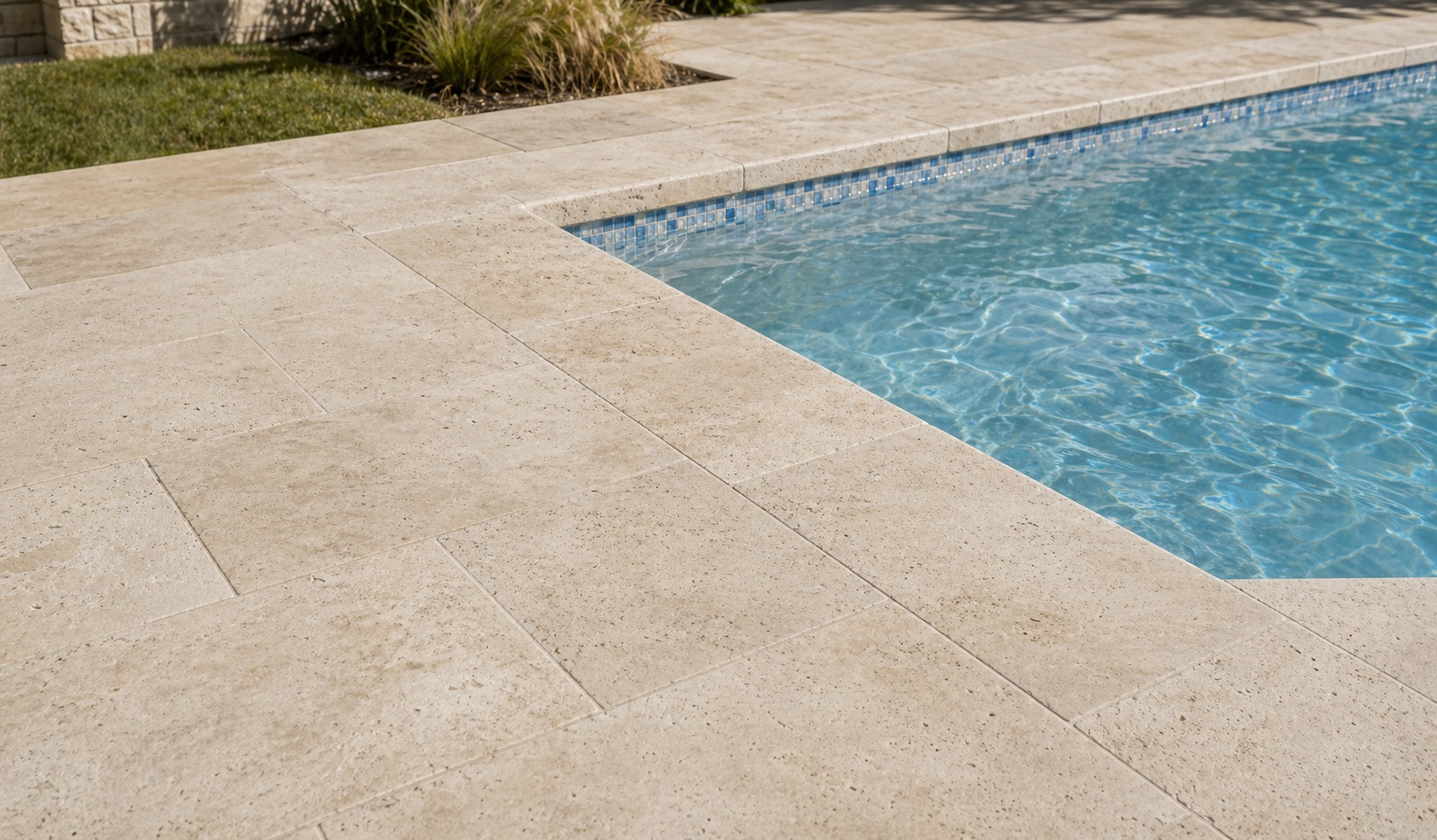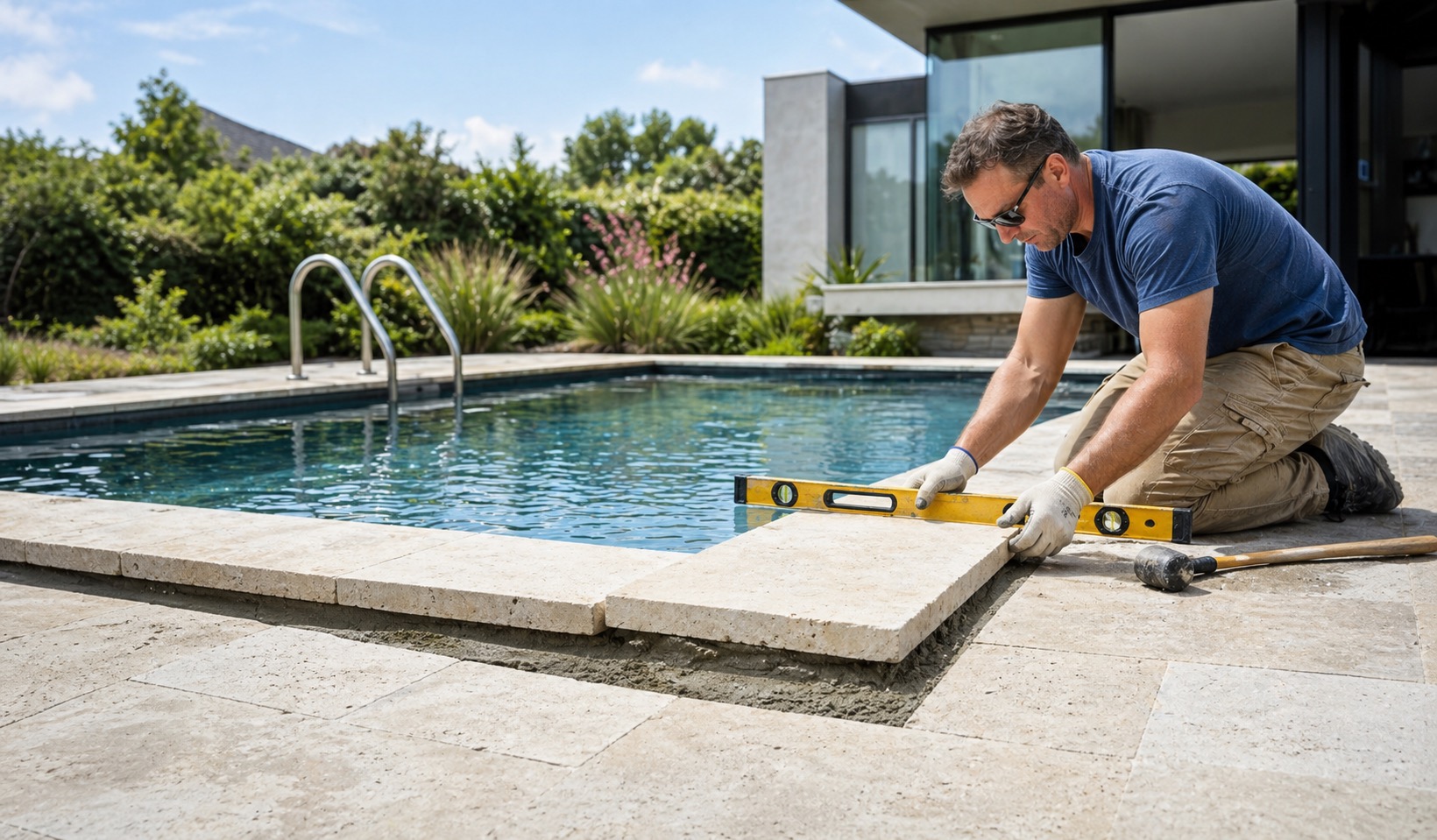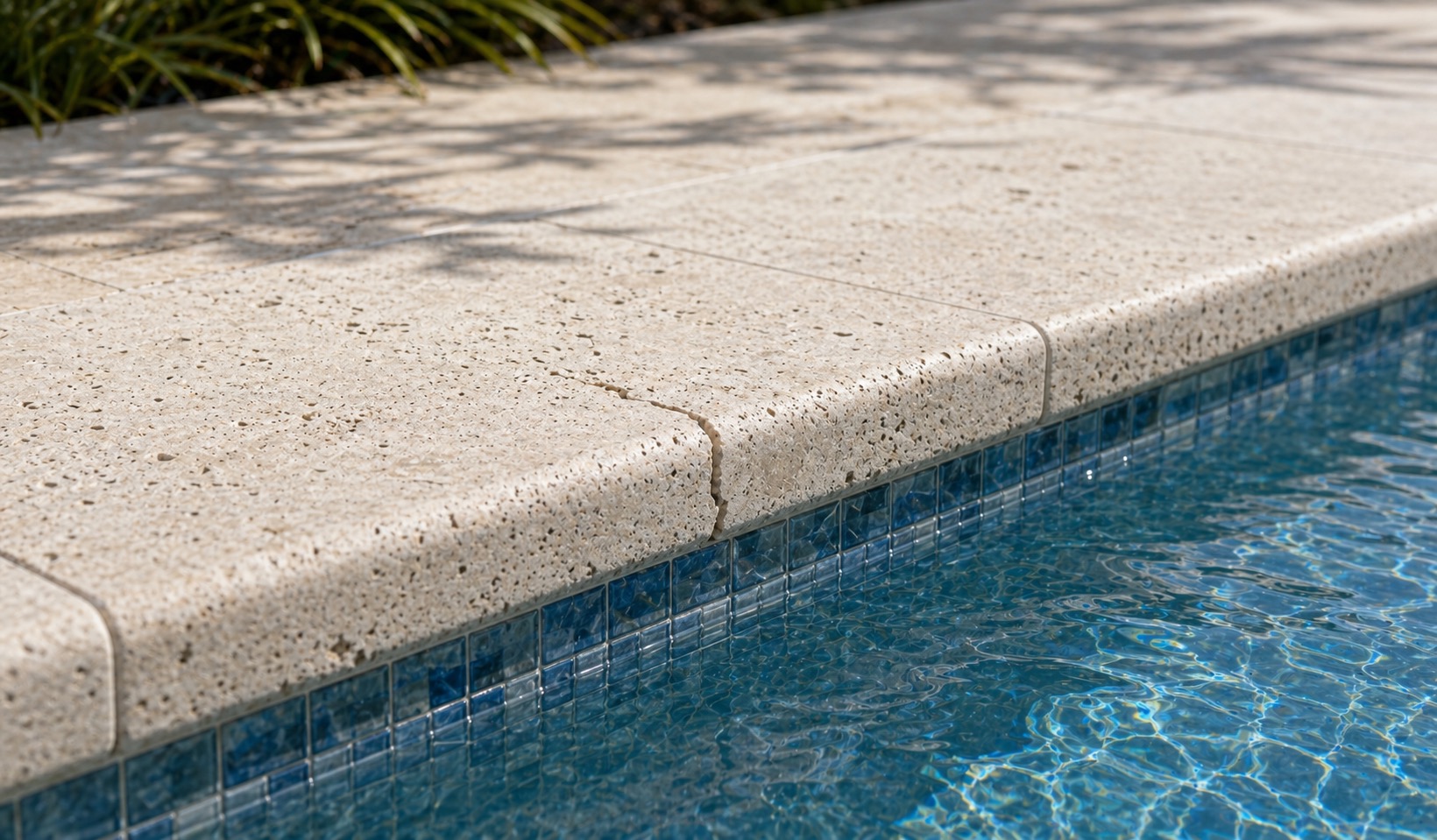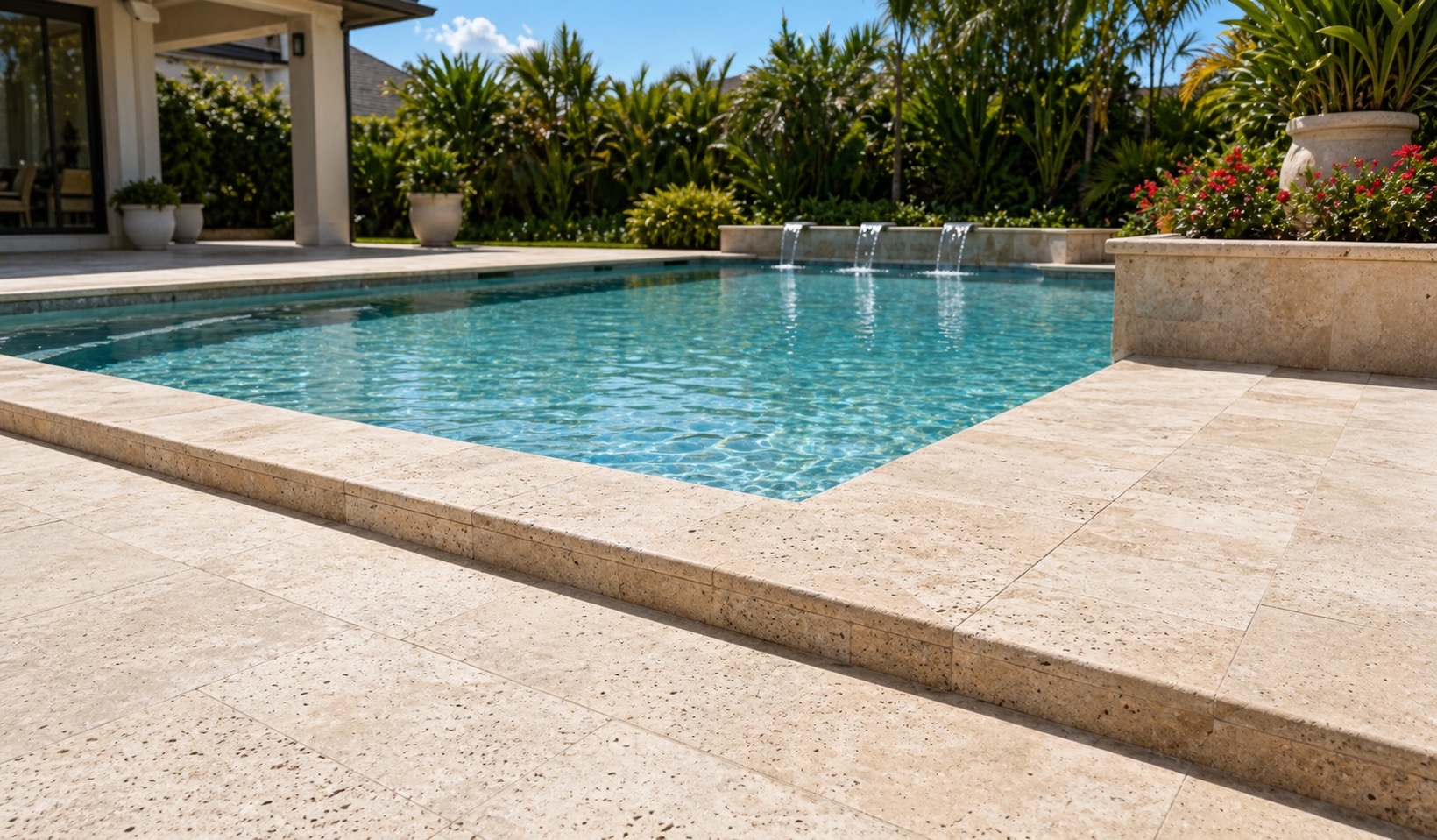
Travertine Pool Decking and Copings Pros and Cons come down to one practical question for homeowners in 2026: do you want the natural look and comfortable feel of travertine, and are you prepared for the sealing and maintenance that porous stone typically requires? In this guide, we explain the benefits, trade-offs, and what to plan for when you install travertine coping, travertine pool deck pavers, and pool-edge stone details.
Key Takeaways
| Category | Pros (Why people choose it in 2026) | Cons (What to plan for) |
|---|---|---|
| Slip resistance | Sealing and surface selection can support better traction around water. | If not properly sealed or maintained, travertine can become slick. |
| Barefoot comfort | Travertine is often described as cooler underfoot than some alternatives. | Finish and exposure still affect surface temperature. |
| Durability | It can last when installed correctly, including the coping details. | Porosity means staining risk if care routines are skipped. |
| Appearance | Natural variation, colors, and finishes create a high-end look. | Stone can show wear patterns that only sealing and cleaning can slow. |
| Maintenance | With a consistent care plan, it typically stays attractive longer. | You must seal travertine pool deck and coping surfaces, not just install them. |
- In 2026, travertine remains a popular pool-edge stone choice for natural beauty and a more comfortable feel for barefoot use.
- Sealing is the deciding factor for stain resistance and slip performance on travertine pool coping and decking.
- Porosity is the main downside, so we plan cleaning and resealing into the project.
- Fixes are possible if a surface becomes slippery, but prevention is simpler than repair.
- Budget clarity matters, as travertine pavers are commonly quoted in a wide range, while installation and sealing also affect total cost.
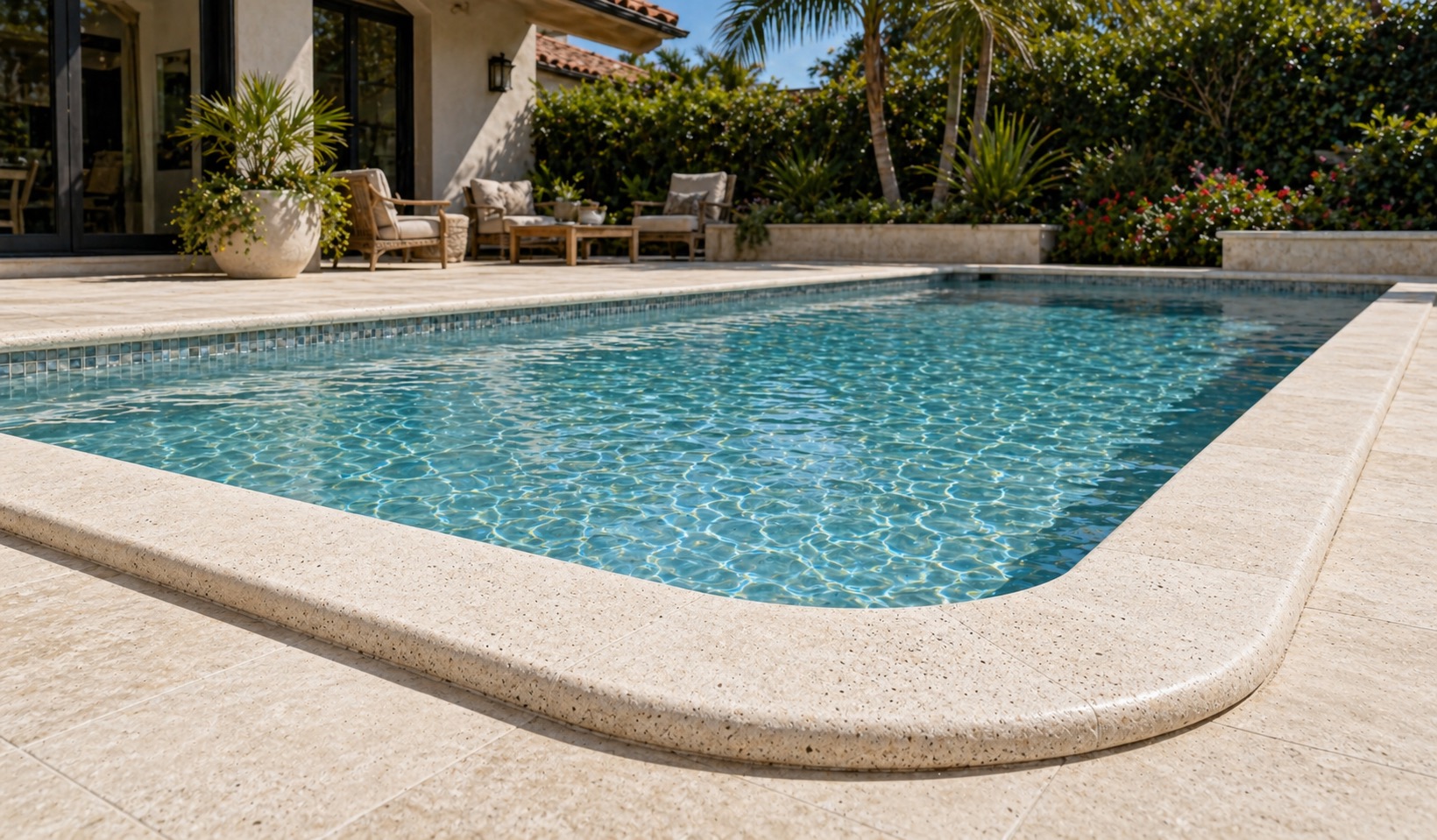
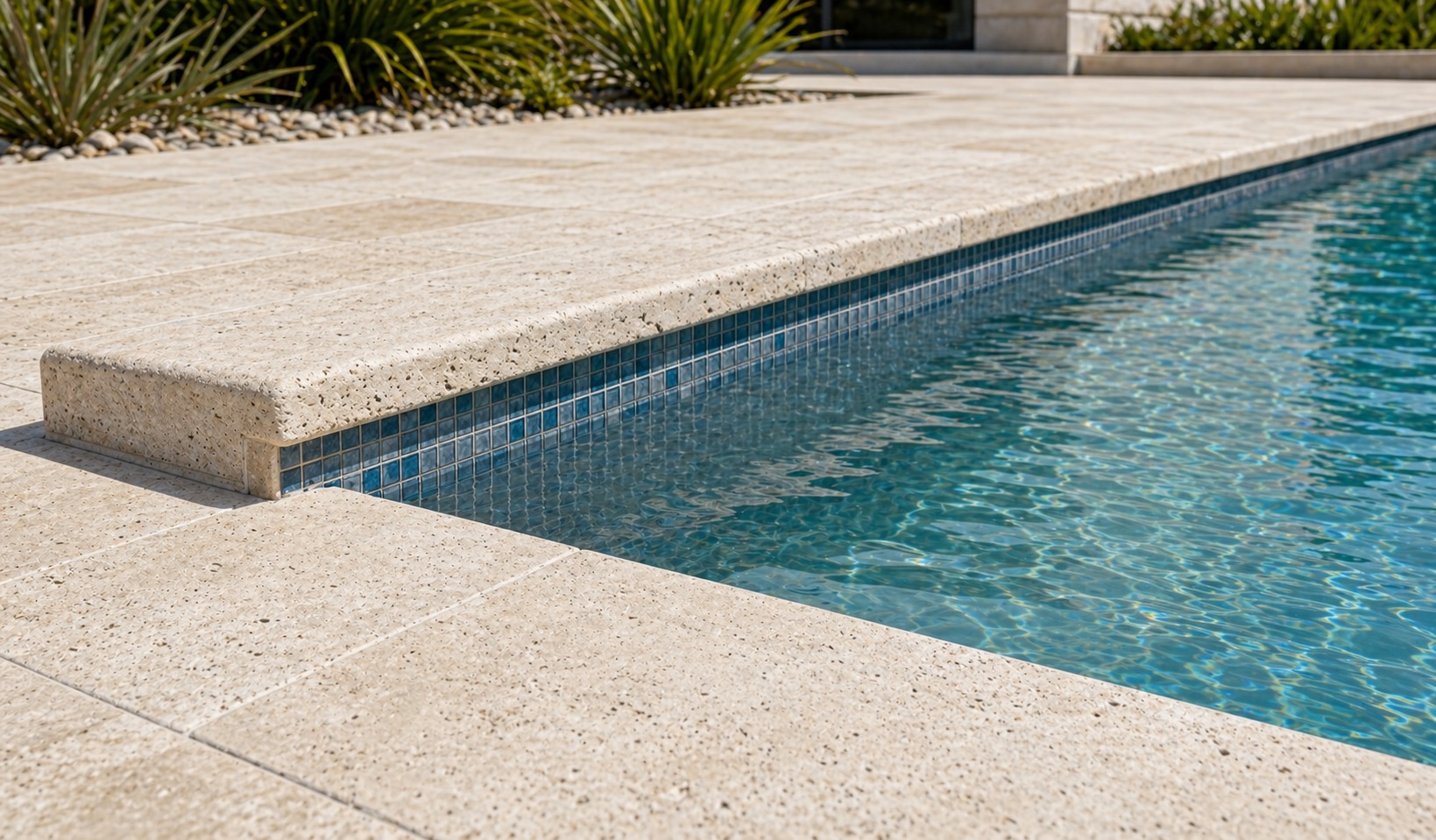
- Want a coping edge? Many homeowners look specifically at travertine pool coping bullnose eased edge pool tile pool edge stone travertine stone details for smoother transitions.
- Quick Q&A: Is travertine a good pool coping material? In most cases, yes, especially when sealed and installed with attention to joints and water runoff. For broader coping and deck considerations, see travertine pool deck pros and cons.
- Quick Q&A: How do you manage sealing for travertine? We treat sealing as part of the system, not an afterthought. Start with sealing travertine pool decks.
What Travertine Pool Decking and Copings Do Well in 2026
When people ask about Travertine Pool Decking and Copings Pros and Cons, they are usually weighing look, comfort, and safety around water. In 2026, travertine continues to appeal because it combines a natural, premium appearance with performance traits that homeowners can manage through proper finishing and maintenance.
1) Natural beauty that looks intentional
Many guides describe travertine as aesthetically pleasing and versatile, which is why it is used not only for pool decks but also for pool coping. You can match the stone to your pool finish, surrounding hardscape, and landscape materials by selecting travertine colors and tile styles.
2) Slip-resistant potential when sealed and maintained
Multiple sources highlight that travertine can provide a slip-resistant surface around pools. That said, slip performance is not only about the stone, it is about sealing, cleaning habits, and choosing appropriate finishes.
3) Better barefoot comfort compared with some alternatives
Across the research, travertine is commonly described as heat resistant and cooler underfoot than some other deck options. This matters for summer use, especially for areas that are walked immediately after swimming.
4) Durable when installed correctly
Durability is repeatedly listed as a key advantage, particularly for pool surroundings and deck applications. We generally focus on correct base preparation, drainage, and installation details because these factors influence how stone performs over time.
Travertine Pool Decking Pros (Including Pool Coping and Pool-Edge Stone)
The pros of Travertine Pool Decking and Copings Pros and Cons are most compelling when you want a cohesive stone look from deck to coping. If you are building a complete pool-edge system, travertine can be used for the main deck surface, coping, and transitions.
Non-slip surface potential
Travertine’s porous texture is frequently linked to slip resistance, particularly in pool surroundings. With sealing and appropriate tile or paver finishes, we often see homeowners use travertine in splash zones with confidence.
Heat resistance and “cooler feel”
Several guides describe travertine as staying cooler underfoot and managing heat better than some alternatives. This is one of the main reasons travertine deck pavers are paired with pool installations where bare feet are common.
Durability with proper installation and joint care
Durability is repeatedly noted, and some sources also mention the ability to replace individual pavers if needed. That is a practical advantage because it reduces the pressure to replace an entire deck after isolated wear.
Design options: tile styles, colors, and finishes
For 2026 projects, design flexibility matters, especially when matching coping profiles to decking patterns. Research materials reference travertine tile styles and colors, which means you can plan a deck layout and coping line that look consistent.
Cost range example for travertine pool decking (pavers)
One research source lists a typical price range for Travertine Pool Decking (pavers): $5 to $30 (unit pricing not specified in the research excerpt). We recommend using the range as a starting point and then confirming final numbers with installation, edging, and sealing included.
Travertine Pool Decking Cons (What Can Go Wrong If You Skip the Details)
For Travertine Pool Decking and Copings Pros and Cons, the cons are straightforward. The stone’s natural properties create performance requirements, and the biggest failure pattern we see is treating travertine as “install and forget.”
1) Porosity can lead to staining
Multiple guides state that travertine is porous. In real pool areas, that means liquids from water chemistry, pool treatments, and everyday spills can affect the surface if the stone is not protected with sealing and proper cleaning.
2) You usually need to seal travertine
Sealing is repeatedly described as important for preserving appearance and reducing chemical or water absorption. If you want long-term results, we plan sealing as part of the ownership routine for both travertine pool deck coping bullnose eased edge pool tile pool edge stone travertine stone details and the main deck field.
3) Maintenance to keep the surface looking good
Beyond sealing, we expect regular cleaning and attention to debris. Leaves, algae, and residue can sit on the surface and affect traction and appearance, especially around swim and splash zones.
4) Slipperiness risk in the wrong conditions
Some sources specifically discuss whether travertine can become slippery, which is tied to sealing, buildup, and maintenance. If traction issues appear, there are practical remedies and safety steps.
Sealing and Maintenance: The Real “Cons” Management Plan
If Travertine Pool Decking and Copings Pros and Cons have a single controlling factor, it is sealing and maintenance. In 2026, homeowners are increasingly asking for care plans at the time of selection, not after installation, because sealing impacts both stain resistance and slip performance.
Why sealing matters (porous stone, pool chemistry, and water absorption)
Research guidance explains that sealing helps protect travertine from staining and reduces water and chemical absorption. For a pool-edge system, that protection needs to cover both the deck and coping lines, including smoother profiles such as bullnose and eased-edge transitions.
What sealing options and maintenance typically involve
One sealing-focused guide frames sealing options and ongoing maintenance as a combined process. We approach it as a schedule, not a one-time treatment, because the protection layer can wear and performance changes with time and foot traffic.
Seasonal maintenance approach for 2026
Seasonal maintenance tips commonly include cleaning routines and sealing cadence. We recommend planning cleaning around weather patterns, pool usage, and debris seasons, then aligning resealing timing with how the surface has performed.
- Clean buildup that can reduce traction, especially around travertine pool coping bullnose eased edge pool tile pool edge stone travertine stone transitions.
- Use a consistent cleaning routine to reduce staining risk.
- Follow a resealing cadence so the deck and coping keep their protective performance.
If travertine becomes slippery, what you can do
Some research material addresses how to fix slippery travertine pool decks. Practically, we focus on removing the cause (buildup, improper cleaning, inadequate protection) and restoring traction, then adjusting maintenance to prevent recurrence.
For a full step-by-step look at remedies, see how to fix slippery travertine pool deck.
Travertine Pool Decking and Copings Cost Factors: Budgeting Without Surprises
Cost is part of Travertine Pool Decking and Copings Pros and Cons whether you are choosing travertine coping for a high-end pool edge or surfacing the full deck. The research provides a few concrete cost signals, but the main takeaway is that total cost includes more than the stone.
Example pricing: travertine pavers
One research source lists Travertine Pool Decking (pavers): $5-30. Because the unit (square foot or other) is not specified in the excerpt, we treat it as a directional figure for stone and material budgeting.
Additional cost drivers to include in your plan
- Sealing products and labor, because porous stone needs protection.
- Installation details for coping lines, including edge profiles and transitions.
- Maintenance planning, since routine care affects long-term appearance and traction.
- Design choices like tile styles, colors, and the use of specialty coping profiles (for example, bullnose or eased edges).
Deck versus coping: plan for both as a system
Many homeowners price deck stone and coping stone separately, then discover that the combined appearance and performance depends on how they align. In 2026, we recommend budgeting travertine coping alongside your deck material so the pool-edge stone details look consistent and function correctly.
Travertine Compared With Popular Pool Deck Options
To fully understand Travertine Pool Decking and Copings Pros and Cons, it helps to compare the stone to other common surfaces around pools. One research comparison evaluates travertine vs concrete pool deck around heat and slip considerations.
Travertine vs concrete: common differences homeowners notice
Guidance in the research describes travertine as often cooler and more slip-resistant when sealed, while concrete may heat up and feel tougher for bare feet. Concrete can also be less forgiving if you want a natural, varied look.
How pavers compare as an alternative
Another research guide covers whether pavers are good around a pool, including cost and installation considerations. We recommend using that as a decision checkpoint if you are comparing materials with similar goals (look, traction, and easy repairs).
For an alternative perspective, see pool deck pavers: everything you need to know.
Which choice is best depends on your routine
In practice, the best-performing option is the one you can maintain. If you are willing to seal and clean travertine consistently, travertine coping and decking can offer strong performance traits. If you want minimal maintenance, you may prefer another approach, but you will want to evaluate traction and heat factors for your climate in 2026.
Who Travertine Pool Decking and Copings Work Best For
Travertine Pool Decking and Copings Pros and Cons become a clear decision when you match the stone to your household. Based on the research themes, travertine tends to fit best when homeowners care about appearance, accept routine care, and want a safer feel near the water line.
We recommend travertine if you want a cohesive high-end look
If you want the same material language from deck to pool coping, travertine is well-suited. It can be used across pool surroundings, including visible edge details and coping profiles.
We recommend travertine if you will maintain it
Because travertine is porous, sealing and cleaning are not optional if you want to reduce staining and keep traction stable. Homeowners who plan maintenance tend to experience fewer performance complaints.
We recommend travertine if you plan for traction and comfort
Research repeatedly points to slip resistance and heat management when travertine is properly sealed. We also recommend thinking about how you will use the area (barefoot movement, swim traffic, and how water is managed at the surface).
We caution against travertine for “low-maintenance-only” expectations
If you want to install once and never schedule sealing, travertine pool deck coping lines may become less predictable over time. The pros are real, but the trade-offs are directly tied to upkeep.
Frequently Asked Questions
Is travertine pool decking worth it in 2026?
For Travertine Pool Decking and Copings Pros and Cons decisions in 2026, travertine is often worth it when you plan sealing and routine cleaning. The stone can look premium, stay more comfortable underfoot, and support slip resistance when properly protected.
Do travertine pool copings need sealing?
Yes, sealing is a key part of Travertine Pool Decking and Copings Pros and Cons for both coping and deck surfaces. Travertine is porous, so sealing helps reduce staining and water or chemical absorption that can affect appearance and performance.
Is travertine slippery on pool decks?
Travertine can become slippery if maintenance or sealing is inconsistent, which is why slip performance is repeatedly mentioned in Travertine Pool Decking and Copings Pros and Cons discussions. Proper sealing, cleaning, and surface selection help support better traction around pools.
What is a good edge profile for travertine pool coping, bullnose or eased edge?
Many homeowners look for travertine pool coping bullnose eased edge pool tile pool edge stone travertine stone details because smoother transitions can feel better underfoot and create a clean visual line. The best choice depends on your pool shape, drainage design, and how foot traffic moves over the edge.
How do I fix slippery travertine pool deck surfaces?
If you notice slipperiness, review sealing coverage, cleaning practices, and surface buildup first, since these factors are central to Travertine Pool Decking and Copings Pros and Cons. Research guidance includes step-by-step fixes and safety considerations to help restore traction.
How much do travertine pool decking pavers cost?
One research reference lists Travertine Pool Decking (pavers) at $5 to $30, but total project cost depends on installation, edging, and sealing requirements. We recommend treating it as a starting point and confirming final numbers with your installer in 2026.
Conclusion
Travertine Pool Decking and Copings Pros and Cons are easier to weigh when you treat the project as a complete pool-edge system. In 2026, travertine remains attractive for its natural look, heat and slip-related comfort benefits, and durable potential, but the main trade-off is porosity, which makes sealing and maintenance essential for both deck surfaces and travertine coping details.
If you want performance you can count on, we recommend planning sealing from day one, choosing coping and edge profiles that match how people walk around the pool, and keeping a consistent maintenance routine so the pros stay real over time.