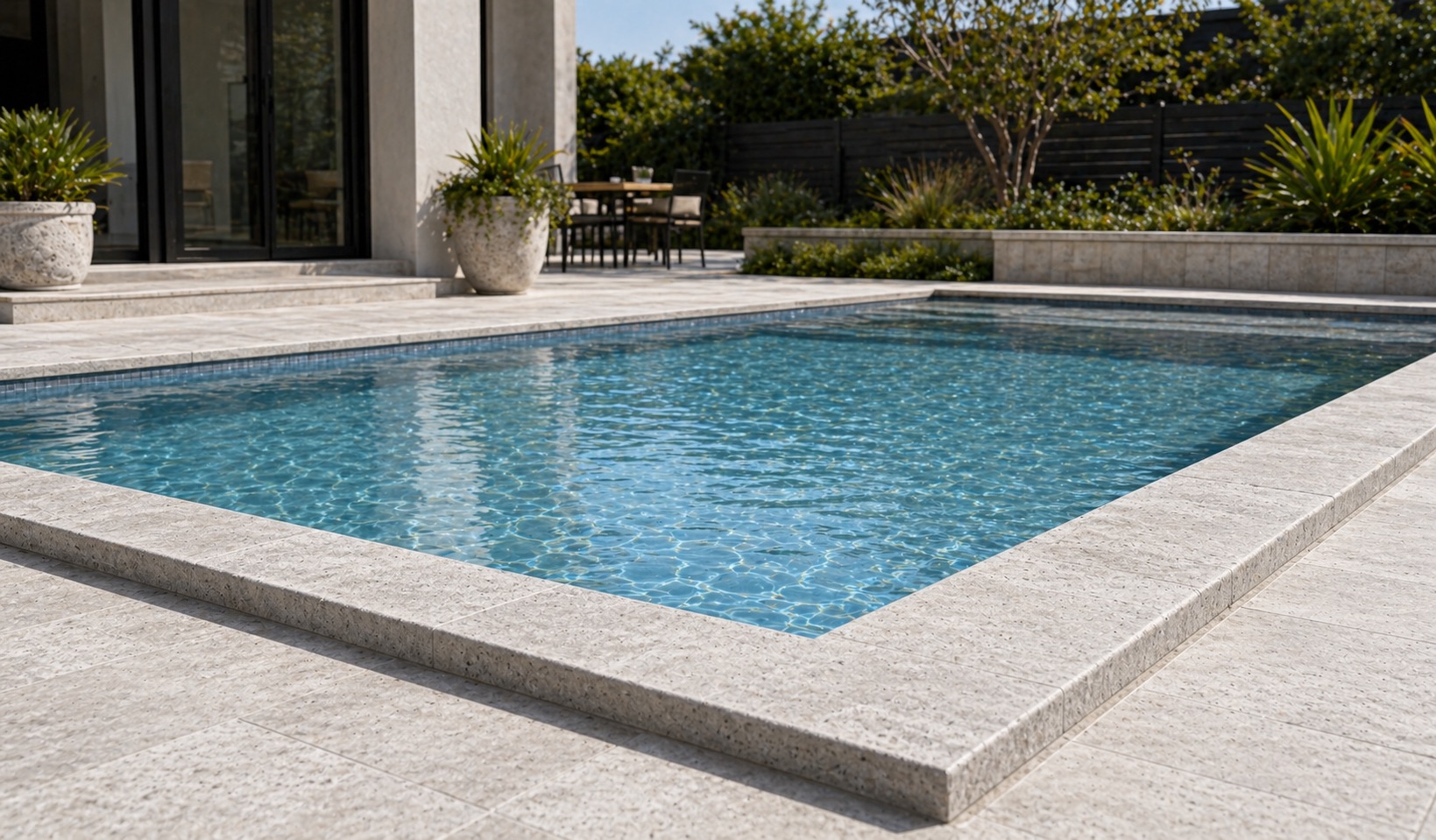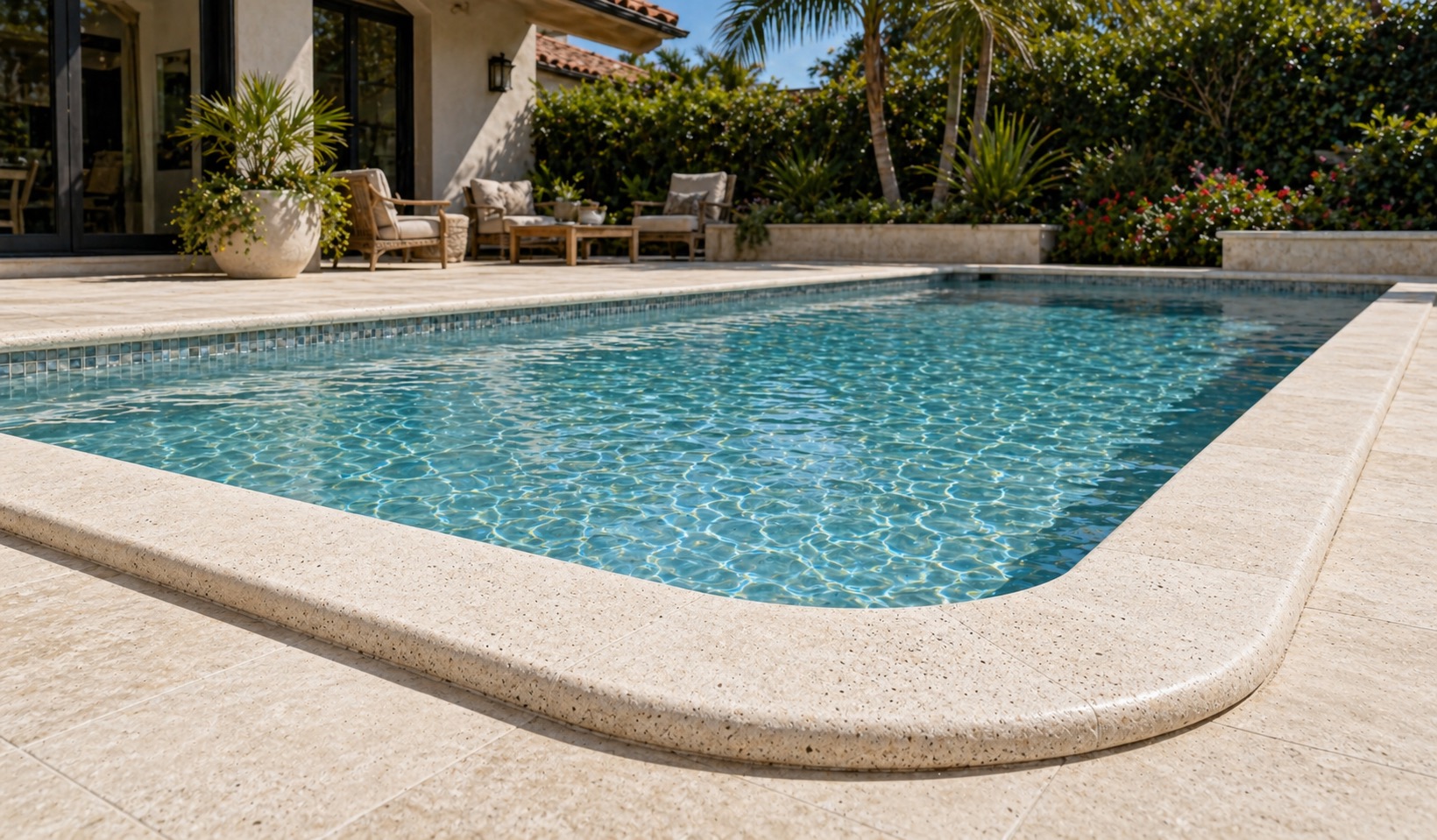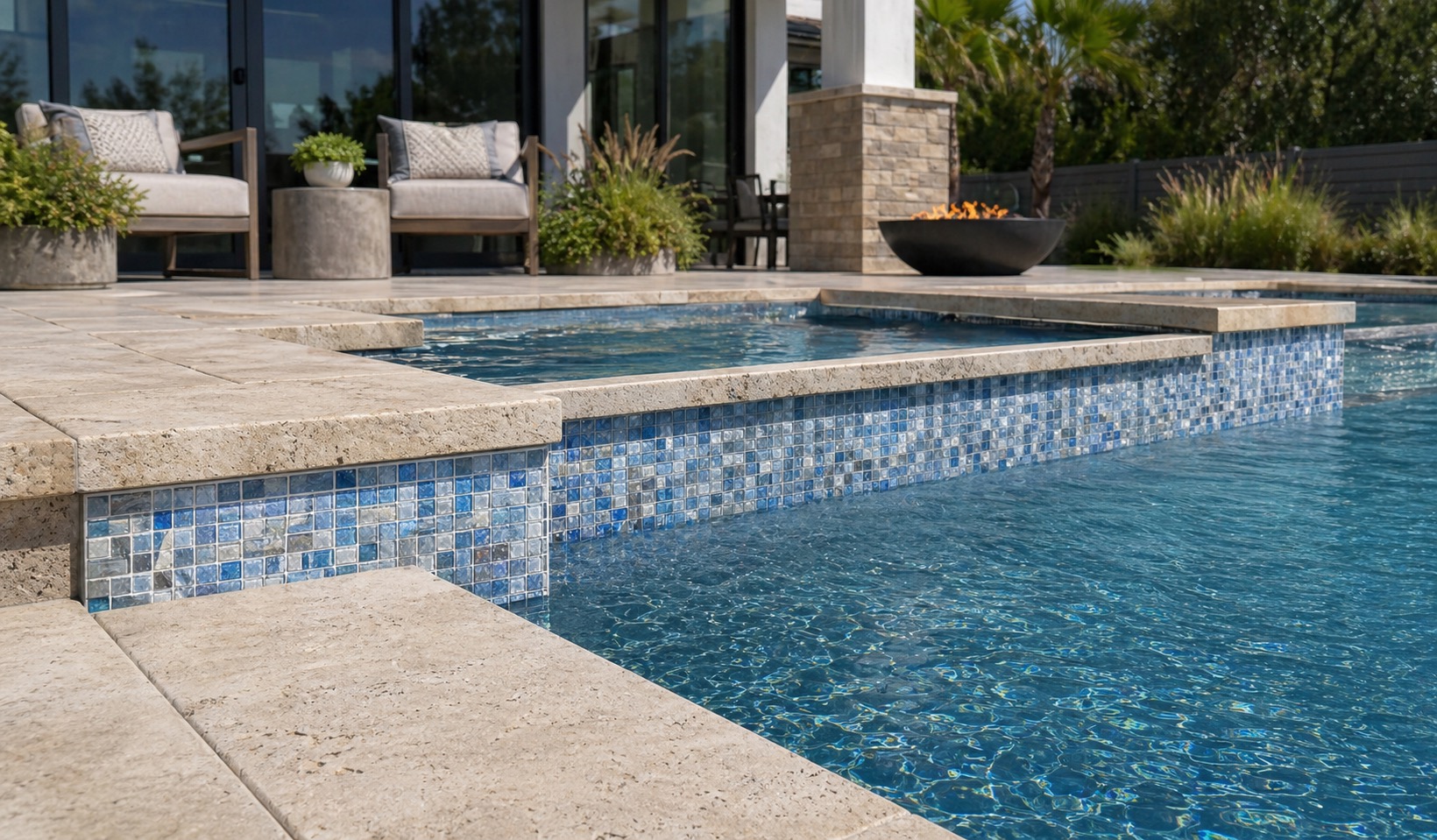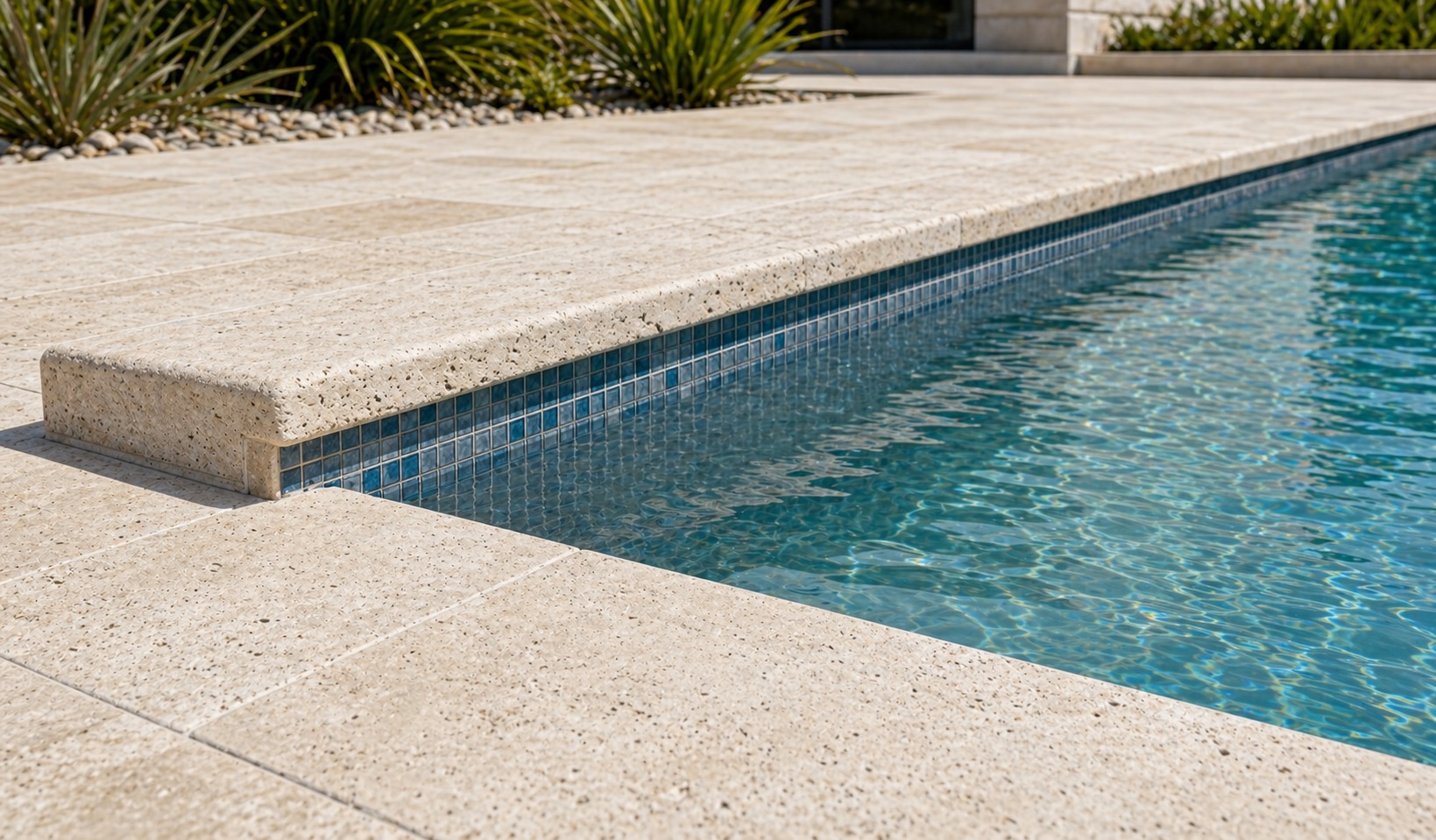
Choosing coping thickness is not just a measurement exercise. It is one of the decisions that determines whether a pool perimeter feels solid, drains correctly, and looks intentional once the project is finished. Homeowners often focus on color and edge profile first, but thickness is what quietly supports both performance and appearance.
In 2026, the right travertine coping thickness is usually the thickness that matches the actual pool edge conditions, the selected profile, and the installation method. That is why good projects start with support and reveal planning instead of copying a number from another pool.
Key Takeaways
| Question | Quick Answer |
|---|---|
| What should you check first? | Pool edge measurements, support conditions, deck height, and coping profile. |
| Why does thickness matter? | It affects stability, visual reveal, drainage behavior, and resistance to cracking or movement. |
| Is one thickness right for every pool? | No. New builds and remodels often need different solutions. |
| Does profile affect thickness planning? | Yes. Bullnose, eased edge, and straight edge all change how the coping reads and sits. |
| What is the real goal? | A coping line that looks clean, feels stable, and holds up in wet outdoor use. |
Why Thickness Matters More Than Most Homeowners Expect
Travertine coping sits at the most exposed part of the pool perimeter. It bridges water, structure, and deck. If that stone is undersized for the edge condition, the problems usually show up in visible ways: weak-looking reveals, slight movement, chipped corners, and water behavior that feels inconsistent around the perimeter.
Thickness is also closely tied to comfort and design. A profile that looks elegant in a sample can feel too thin once installed around a large modern pool, while a heavier coping can make the same pool look more grounded and intentional. That is especially obvious if you are comparing profile directions like eased edge vs bullnose travertine pool copings or building a cleaner modern perimeter with modern straight edge travertine coping for minimalist decks.
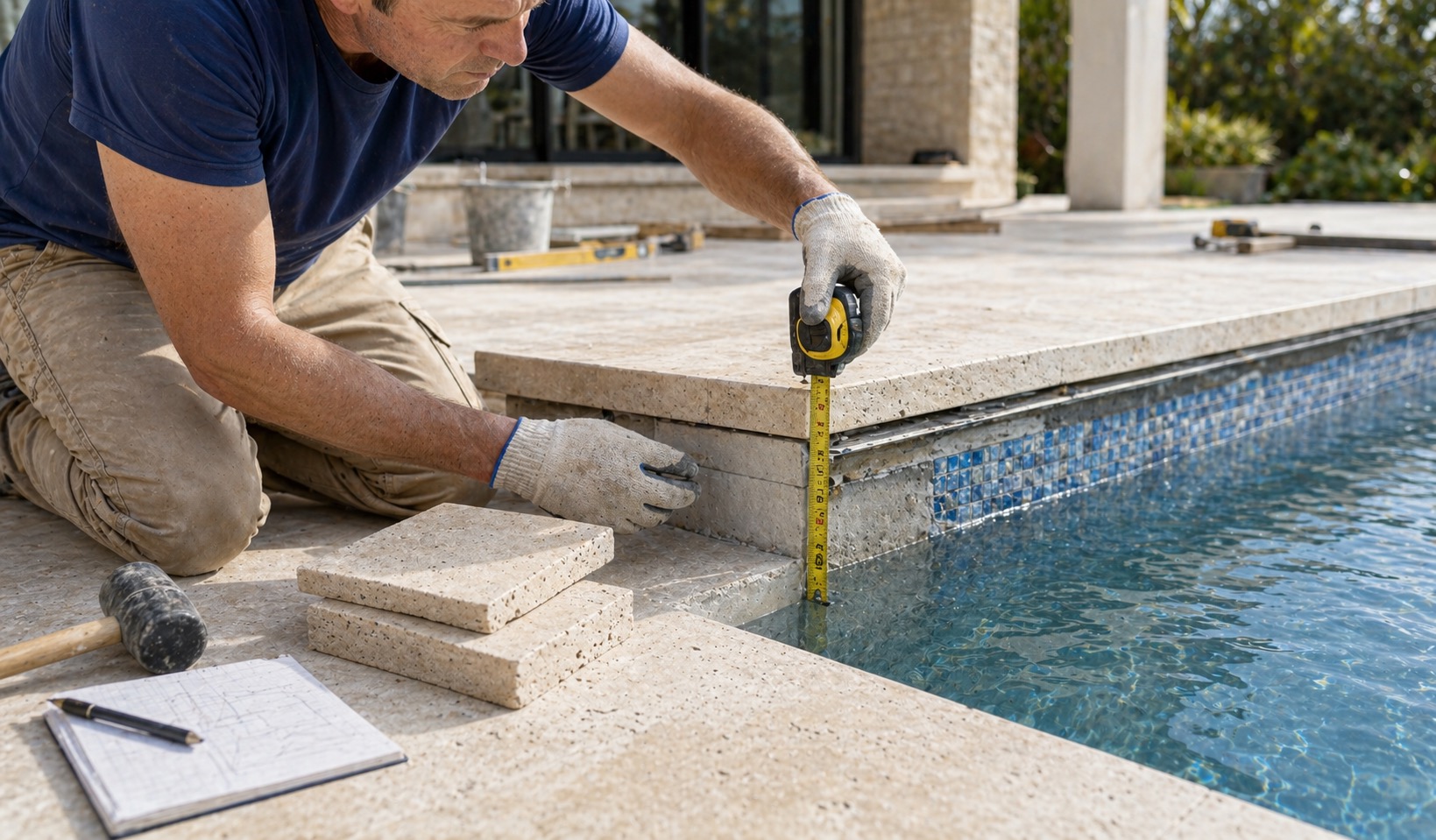
Start With Real Pool Edge Conditions
Before deciding on thickness, confirm the conditions the coping will actually sit on:
- the width and geometry of the beam or support edge
- how high the surrounding deck finishes relative to the pool edge
- whether the perimeter includes long straight runs, curved sections, or raised areas
- where water tends to sit or flow after use
- whether the project is a new build or a renovation
This is where many mistakes happen. A homeowner sees a coping dimension on another project, assumes it will translate directly, then ends up with an awkward lip or a perimeter that feels underbuilt.
Thickness and Profile Work Together
The same thickness does not read the same way across every edge profile.
Bullnose
Bullnose profiles use a rounded front edge, so the thickness has to support that softer geometry without making the coping look bulky. If you are leaning classic or comfort-forward, eased edge vs bullnose travertine pool copings is part of the decision.
Eased edge
Eased edge coping keeps a cleaner front line while softening the corners. Because it reads more controlled visually, thickness planning becomes more noticeable. Too thin and the line can look weak. Too heavy and it can lose some of its refinement.
Straight edge
Straight edge coping tends to show installation inconsistencies fastest because the geometry is sharper. That is why thickness and support quality matter even more when you want a minimalist or architectural result.
New Builds and Remodels Need Different Thinking
In a new pool build, thickness can usually be coordinated earlier with the beam, deck elevation, and tile layout. In a remodel, the coping often has to adapt to existing conditions. That means you may need to balance ideal design intent against what the perimeter can actually support cleanly.
Renovation work often raises extra questions:
- Does the existing edge allow a heavier coping?
- Will the new thickness change the reveal too much?
- Does the deck height need adjustment to make the coping line feel resolved?
- Are any existing movement or cracking issues pointing to a support problem rather than just a stone problem?
Those questions matter even more if the project is already dealing with the kinds of issues covered in travertine pool coping repair guide 2026 cracked chipped or loose coping explained.
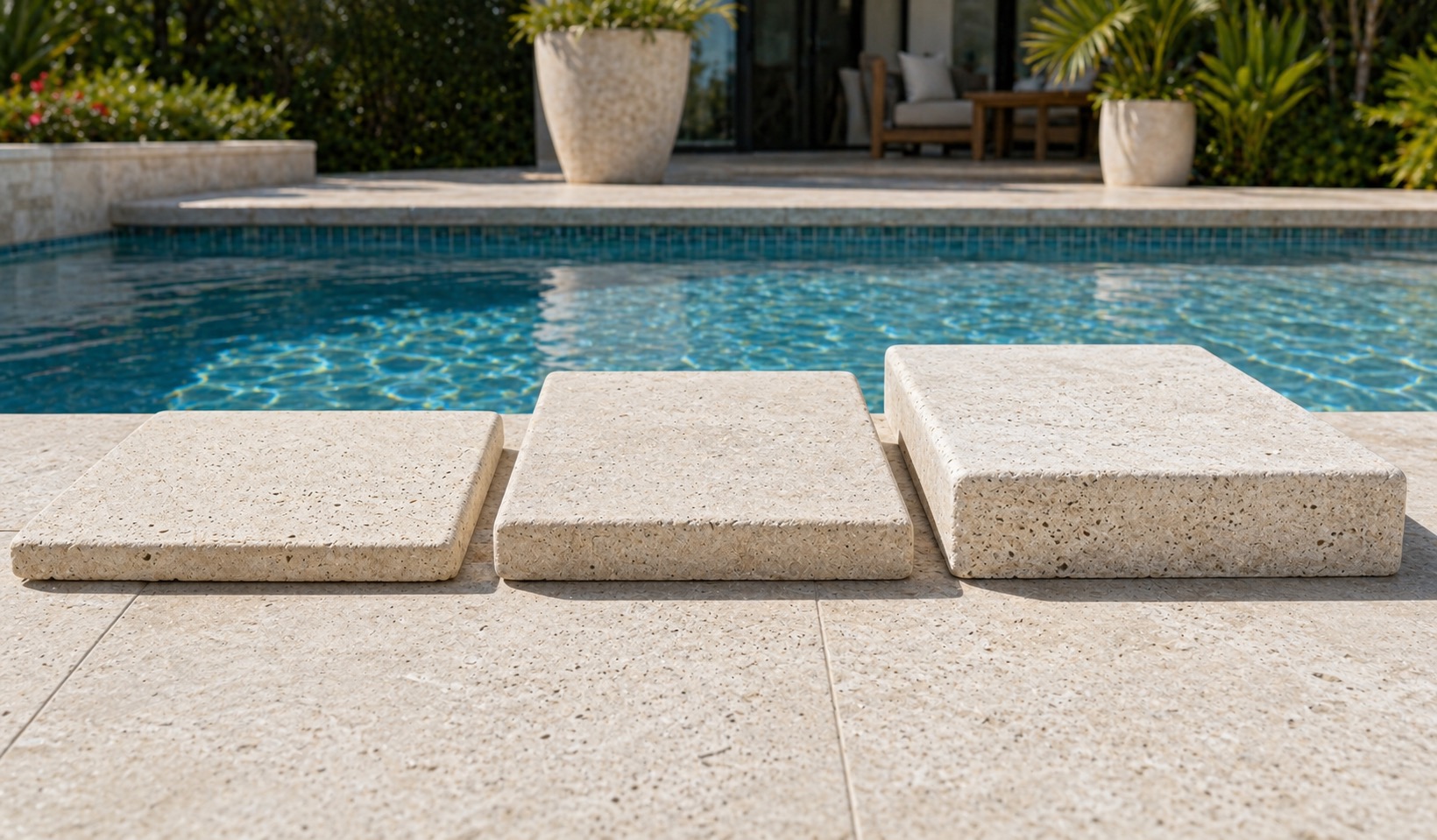
Thickness Also Influences Visual Weight
Homeowners often notice this only after installation: coping thickness changes the personality of the pool. A slightly heavier coping can make the edge feel more premium and architectural. A lighter coping can feel cleaner and quieter if the pool is smaller or the project is trying to stay visually minimal.
That is why thickness is not only a technical decision. It also interacts with color and style. For example:
- lighter coping colors can tolerate a bit more visual mass without feeling heavy
- cooler modern palettes often benefit from tighter, cleaner reveals
- classic rounded edges can support a softer, more substantial appearance
If color direction is still open, travertine pool coping colors and design ideas 2026 bullnose eased edges and sty helps frame that part of the decision.
A Practical Way to Choose
The simplest way to choose the right coping thickness is to work through four checkpoints:
- Confirm the actual support and beam conditions.
- Decide the edge profile and overall design intent.
- Compare the desired reveal against surrounding deck elevation.
- Choose the thickness that gives the best balance of support, look, and water handling.
That process is more reliable than chasing a generic “best thickness” number.
Final Recommendation
The right coping thickness for pools is the one that fits the pool edge honestly and supports the design you are actually building. If the perimeter needs crisp architectural lines, thickness should support that precision. If the project is more traditional or comfort-driven, thickness should reinforce that softer edge language without feeling undersized.
In 2026, the best results come from treating thickness as part of the full coping system: support, profile, reveal, drainage, and long-term durability all at once.
Related Reading
- Eased edge vs bullnose travertine pool copings? (2026 guide for a clean, safe pool edge)
- Travertine Pool Coping Colors and Design Ideas (2026): Best Picks for Bullnose, Eased Edge, and Cohesive Pool Edge Stone
- 2026 Resort-Style Edges: Pairing Travertine Coping With Glass Pool Tile and Contemporary Layouts