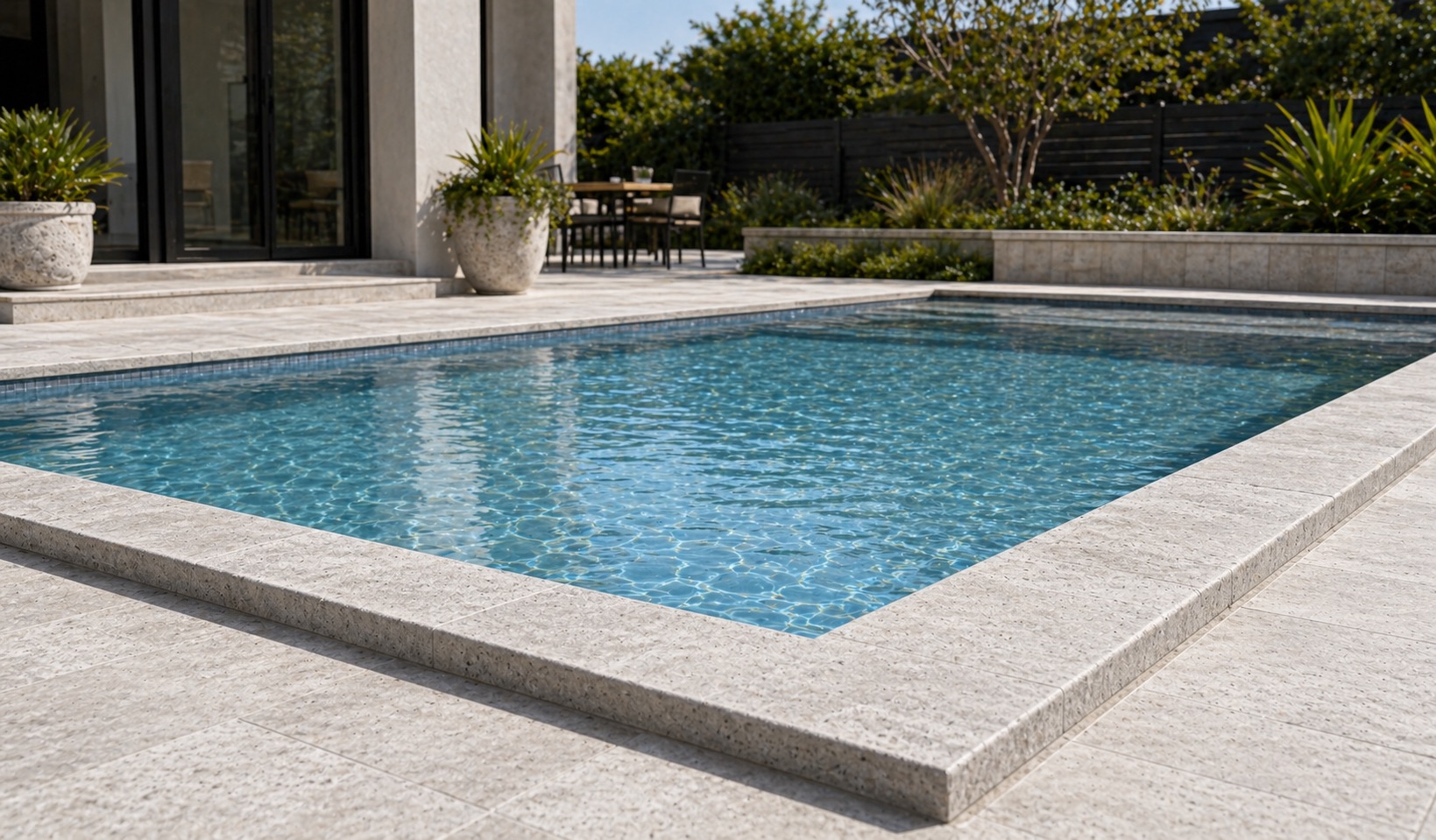
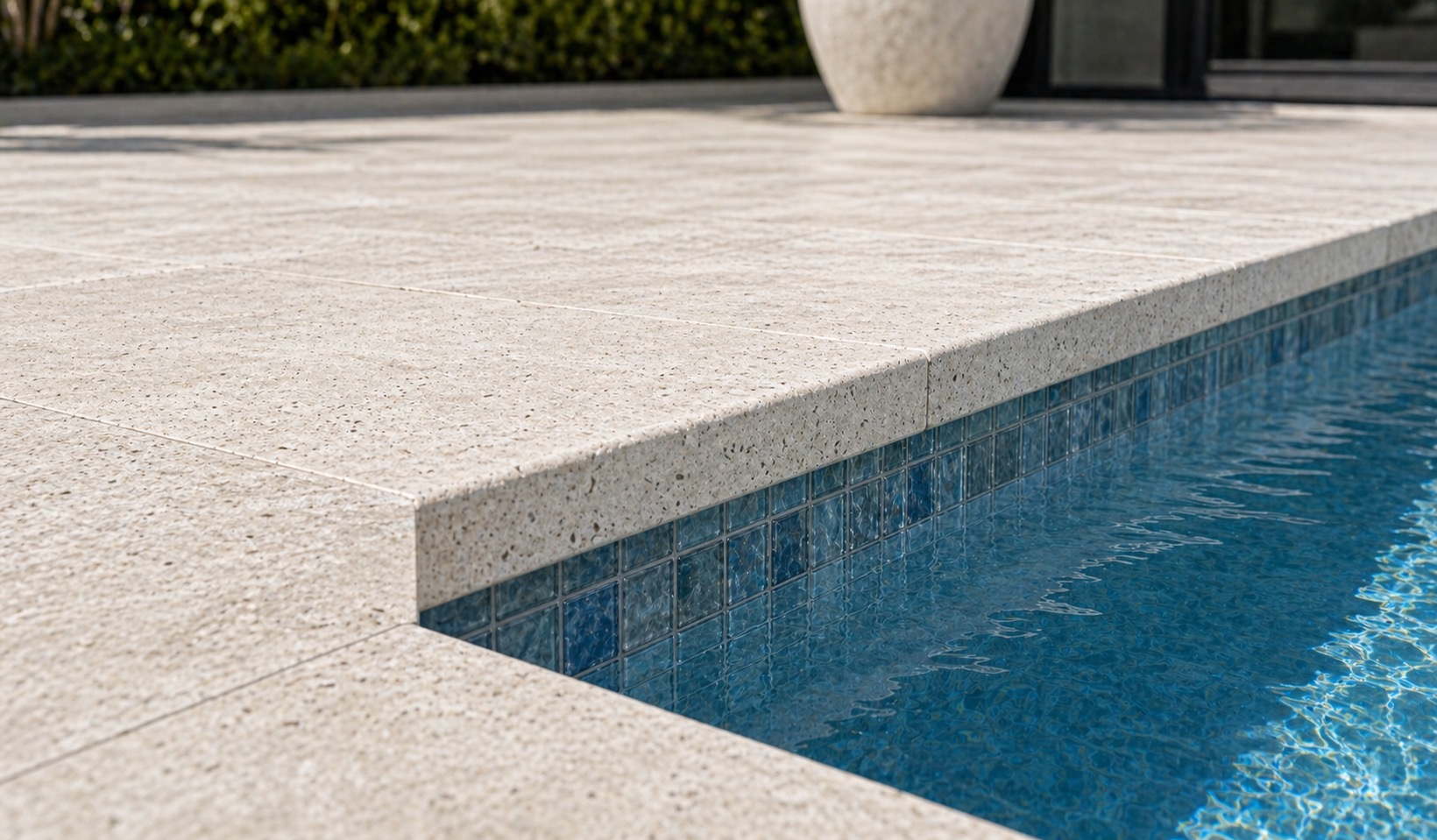
Straight-edge travertine coping is one of the clearest ways to make a pool look more modern without changing the entire material palette. The appeal is simple: it removes visual softness from the edge and gives the perimeter a cleaner, more architectural line.
That does not mean it works on every pool. Straight-edge coping looks strongest when the rest of the deck, tile, and landscaping are disciplined enough to support it. On a minimalist project, the edge becomes part of the architecture, not just a trim piece.
Key Takeaways
| Question | Quick Answer |
|---|---|
| Why choose straight-edge coping? | It gives the pool a sharper, calmer, more contemporary perimeter. |
| What type of pool suits it best? | Rectangular or geometric pools with restrained deck patterns and cleaner material palettes. |
| What colors work best? | Ivory, silver, and quieter warm neutrals usually support minimalist layouts best. |
| What matters besides profile? | Thickness, support quality, finish, and visual consistency across the deck. |
| Is it only about style? | No. Straight-edge coping still has to handle wet use, heat, and long-term structural stability. |
Why Straight Edge Feels More Modern
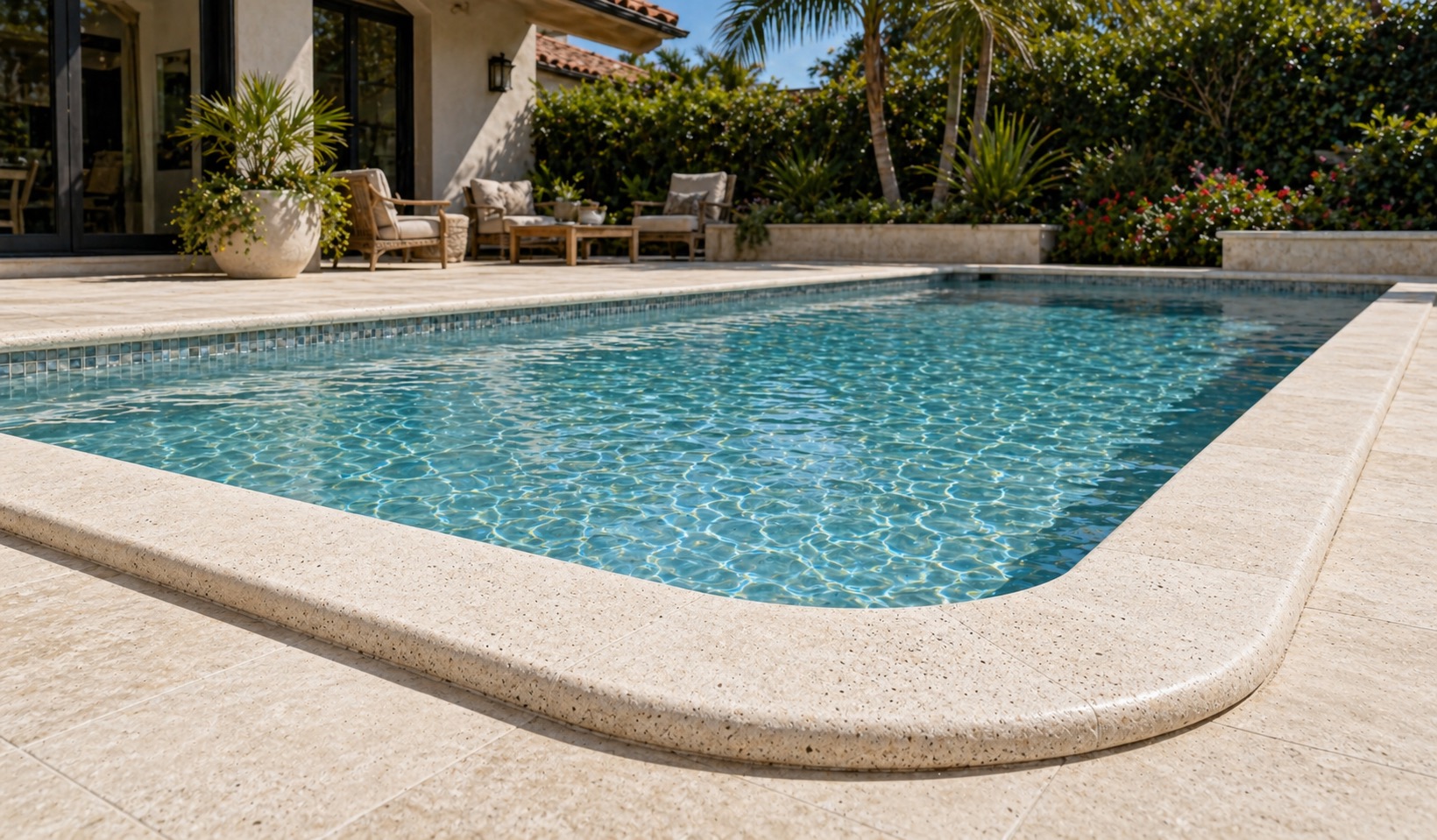
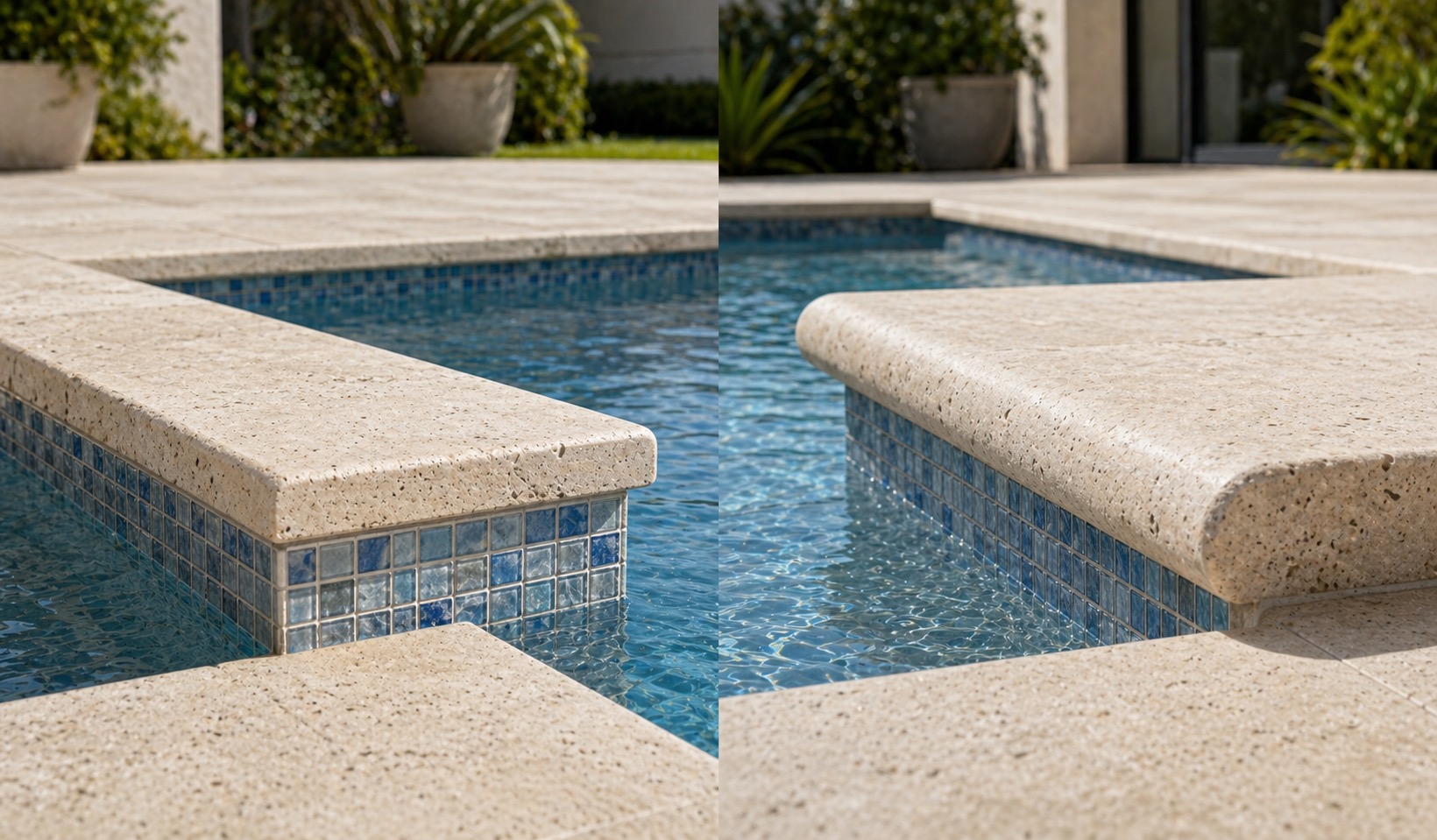
Bullnose and eased-edge profiles soften the pool perimeter. Straight-edge coping does the opposite. It makes the perimeter line feel more deliberate and more geometric, which is exactly what many minimalist decks need.
That is why straight-edge coping often overlaps conceptually with eased edge vs bullnose travertine pool copings, but it pushes even further toward a clean architectural result.
Minimalist Decks Need Quiet Materials
Minimalist pool design does not mean boring. It means reducing visual noise so the geometry and material quality do more of the work. Straight-edge travertine succeeds in those spaces because the stone still has natural character, but the profile keeps the line controlled.
It works best when paired with:
- large or orderly deck layouts
- restrained waterline tile
- simple planting palettes
- furniture that does not compete with the pool perimeter
Color Direction Matters More on Straight Edges
A straight edge makes the coping line more visible, which means color inconsistencies or noisy stone selection stand out faster than they do on softer profiles.
That is why minimalist coping usually performs best in:
- ivory families for brighter, cleaner compositions
- silver families for cooler, more contemporary pools
- tightly blended neutrals when the house architecture is more transitional
If the project is still balancing profile and color, travertine pool coping colors and design ideas 2026 bullnose eased edges and sty and best silver travertine coping for modern pool designs 2026 are the closest comparison reads.
Straight Edge Still Has to Feel Good in Real Use
Minimalist does not excuse bad performance. Straight-edge coping still sits in a wet, high-contact zone, so finish and support matter just as much as the silhouette.
What to watch:
- edge sharpness should feel refined, not harsh
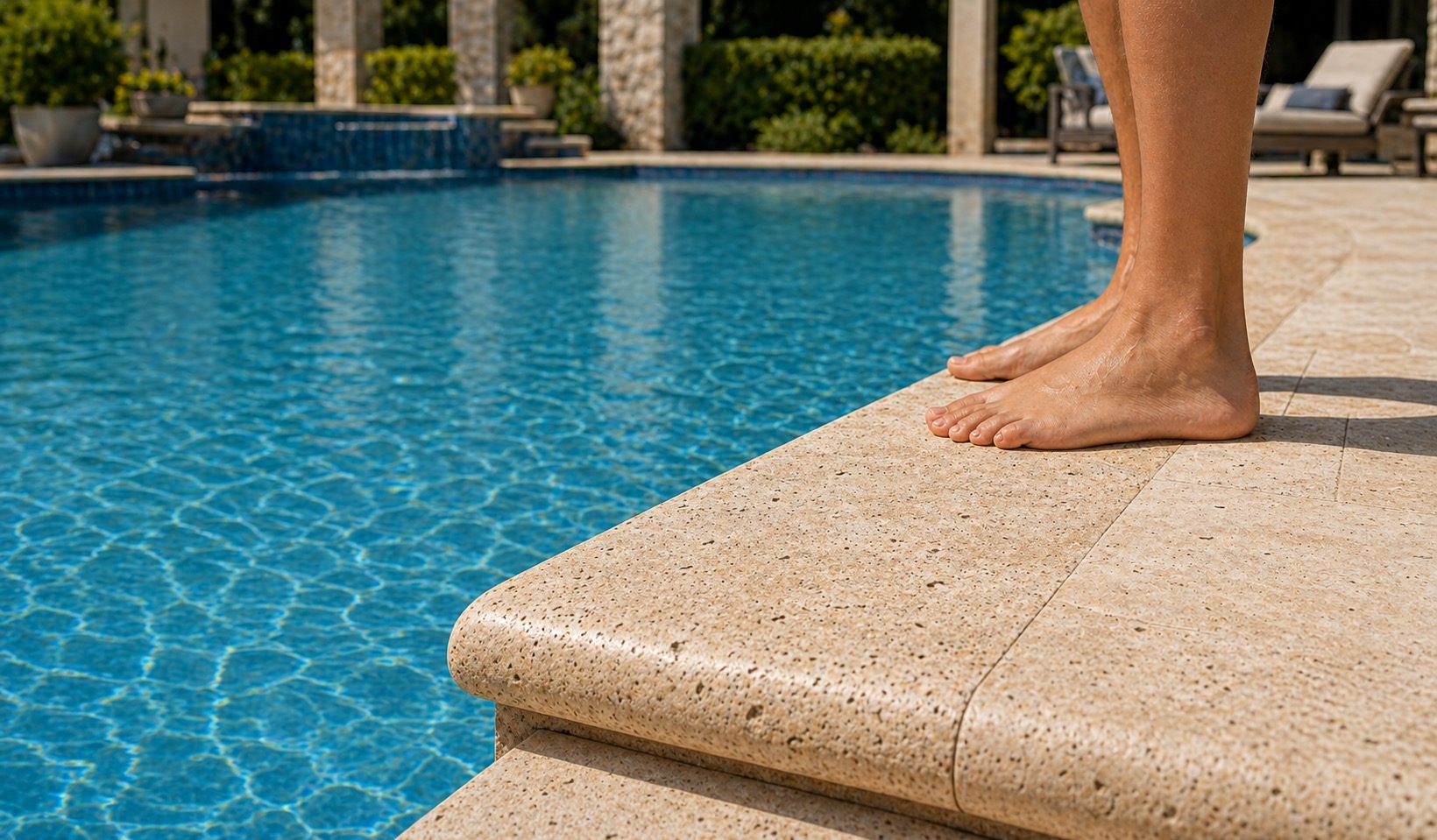
- the finish should support wet-area traction
- the coping should have enough thickness to avoid looking thin or fragile
- joints should stay tight and visually quiet
If the coping thickness is still undecided, how to choose the right coping thickness for pools should be part of the same specification process.
Where Straight Edge Works Best
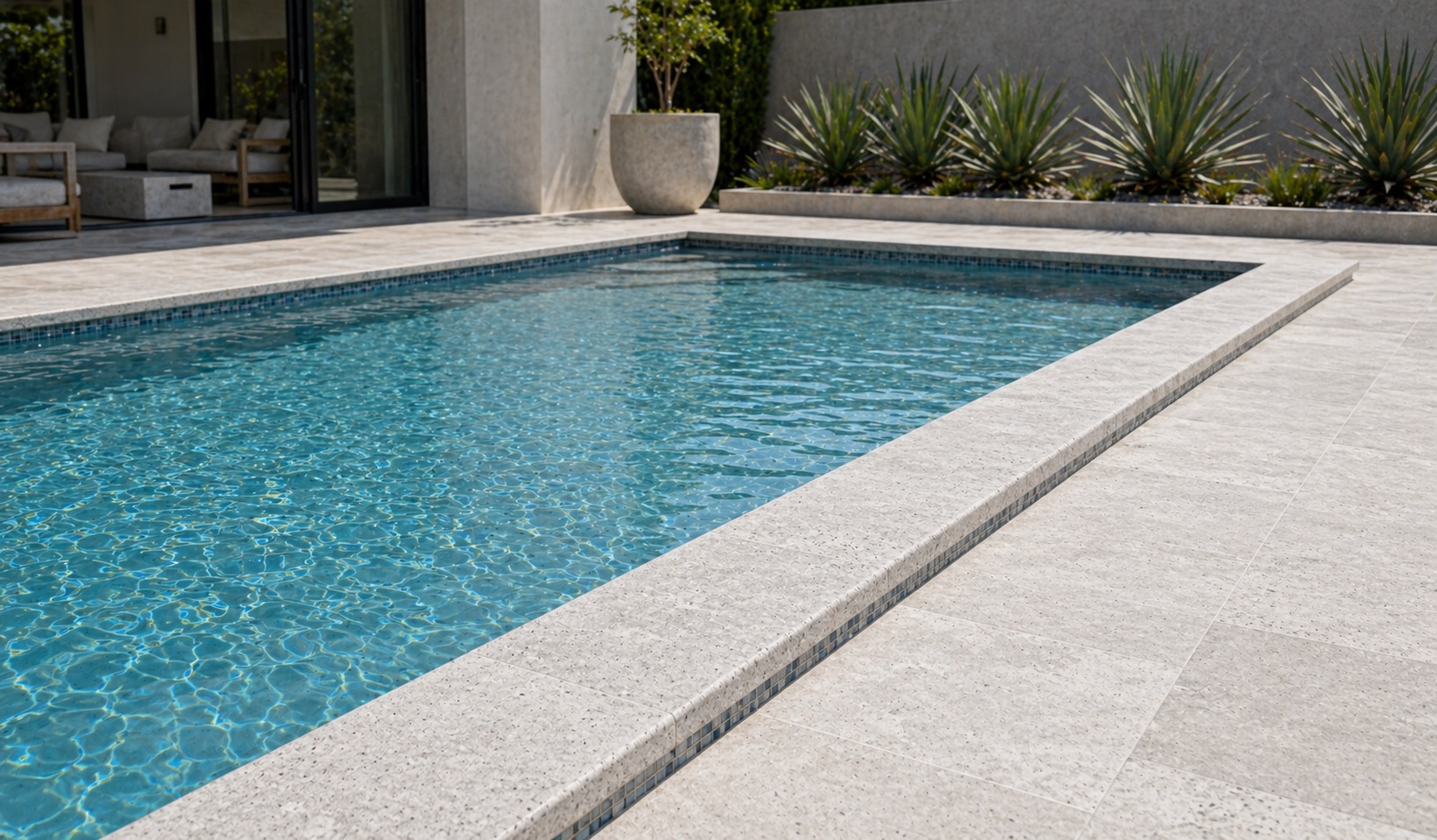
Straight-edge travertine coping is usually the strongest fit when:
- the pool is rectangular or highly geometric
- the deck layout is large-format or visually calm
- the house already leans contemporary
- the project wants a sharper frame around the water
It is usually a weaker fit when the backyard is more traditional, heavily curved, or built around softer classical detailing.
Final Recommendation
Modern straight-edge travertine coping works when the project is truly trying to feel disciplined and architectural. The profile is only one part of that result, but it is a powerful one. If the color, thickness, deck layout, and material sorting support the same design language, straight-edge coping can make a pool feel substantially more refined.
In 2026, it remains one of the best choices for homeowners who want a minimalist pool edge without giving up the texture and value of natural stone.