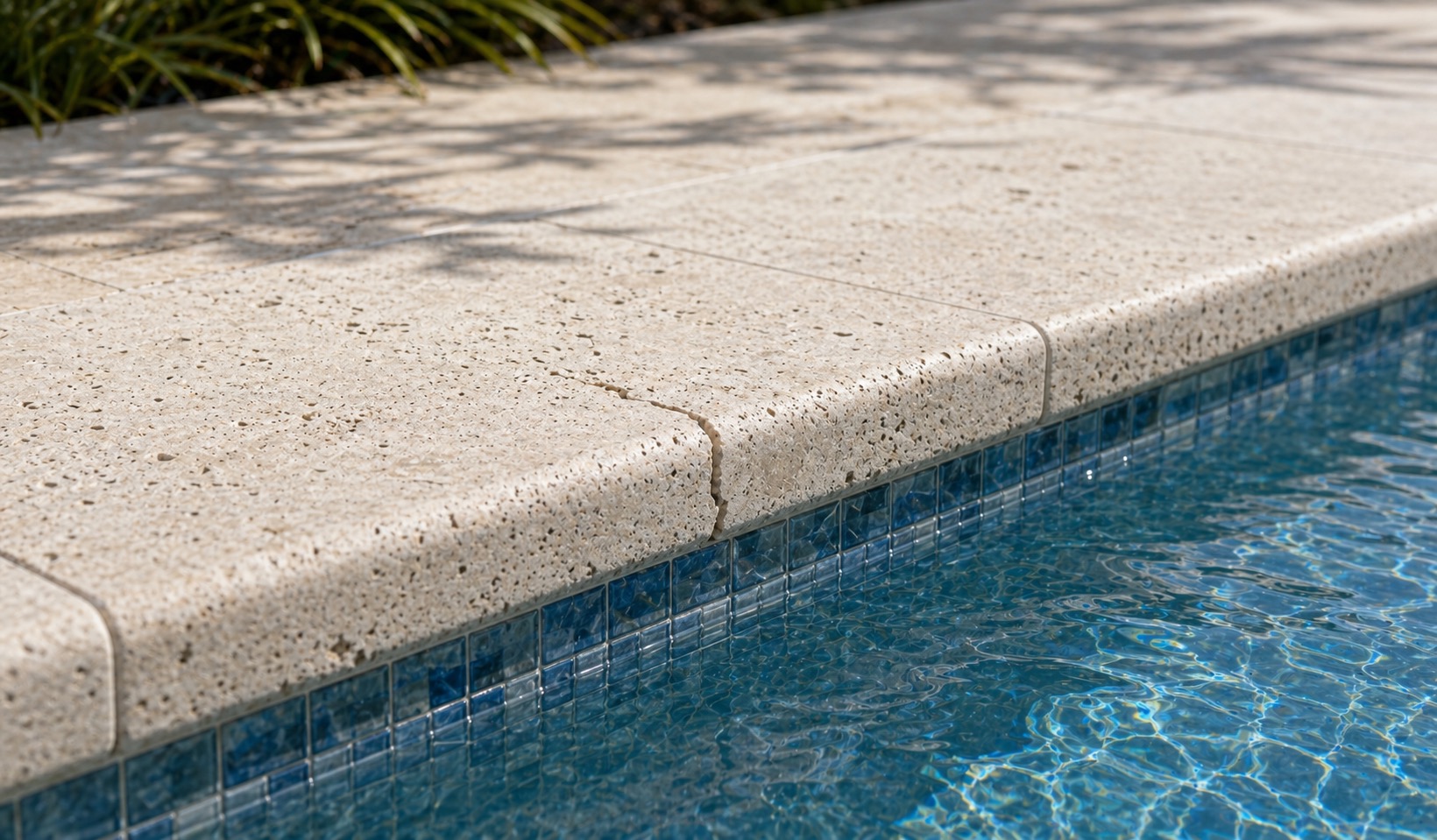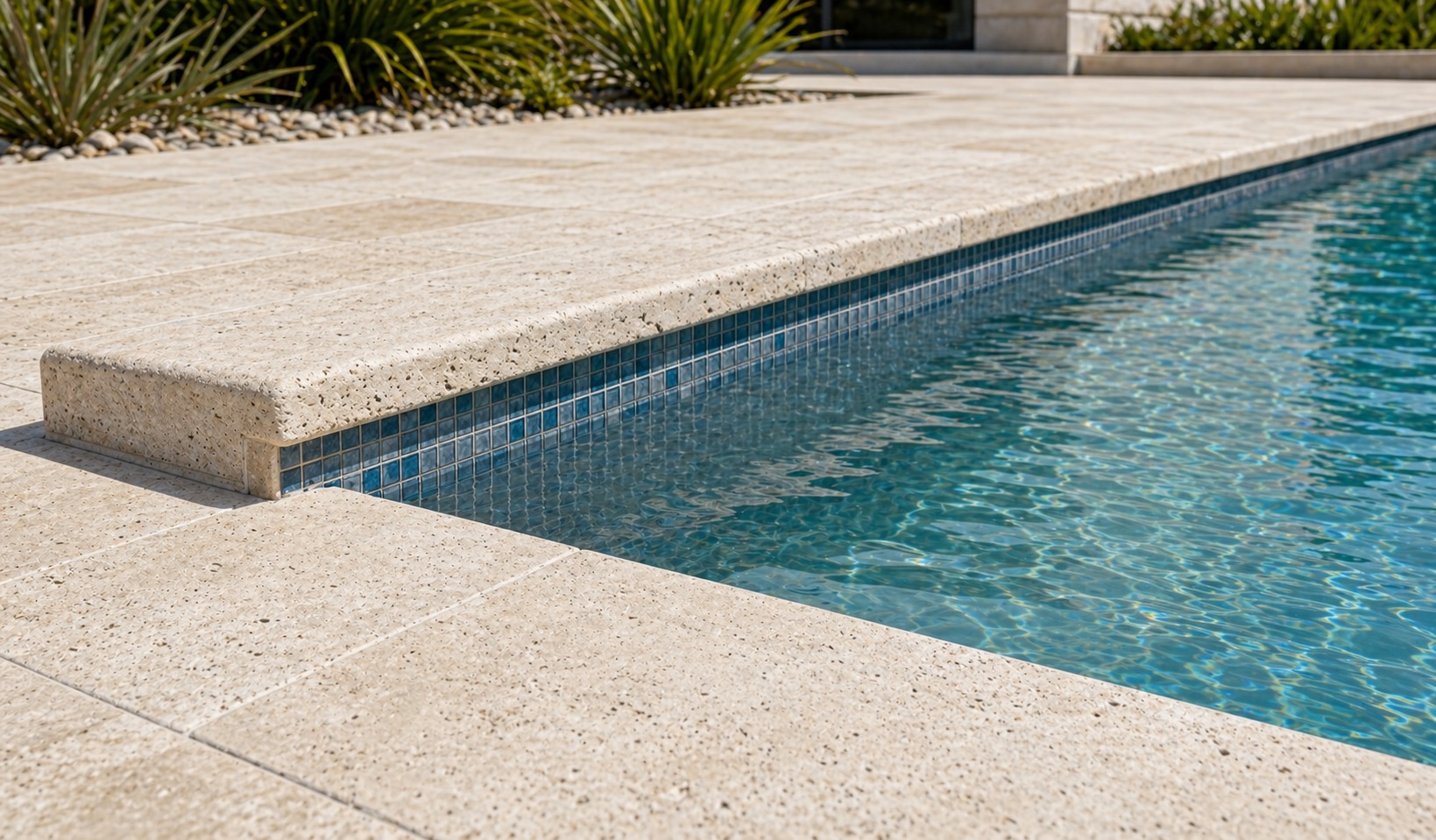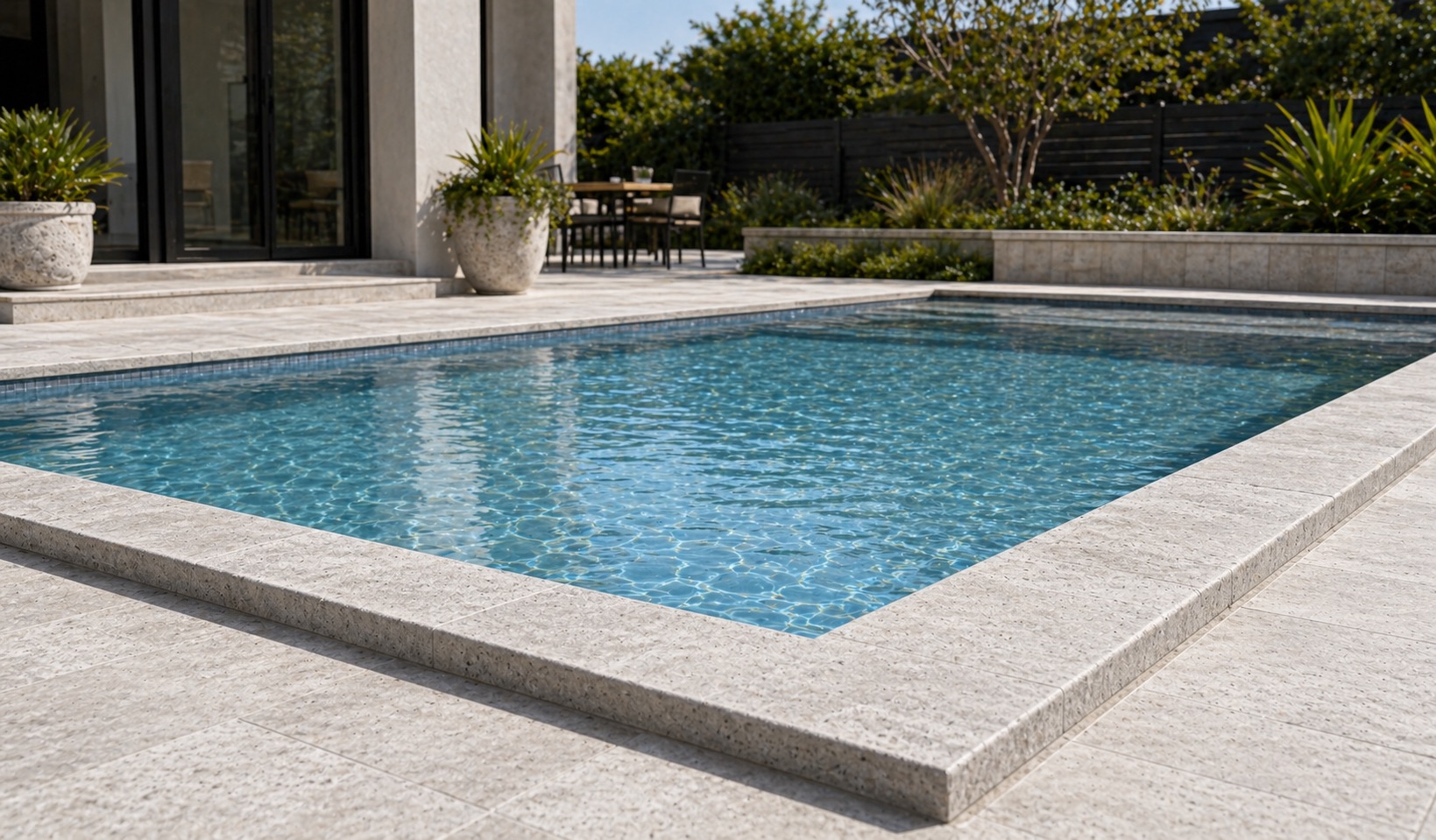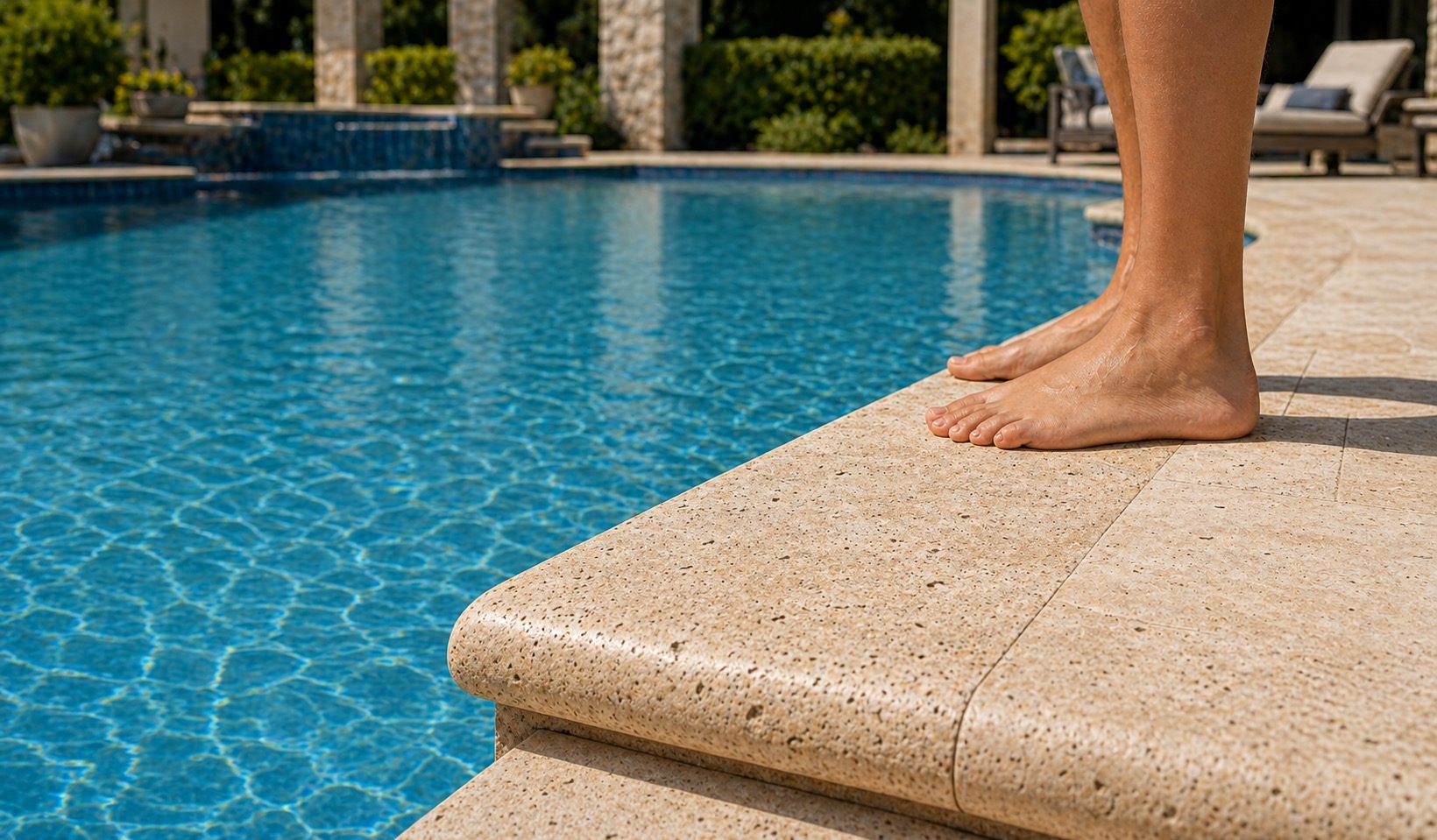
If you live in a hot climate, one of the first questions you ask about any pool material is simple: will it burn your feet in the summer? That is exactly why homeowners keep searching for answers about travertine coping. The short answer is that travertine can warm up in direct sunlight, but it generally stays more comfortable underfoot than many denser or darker pool-edge materials.
For homeowners choosing a pool coping material in Arizona, Texas, Florida, Nevada, or Southern California, comfort matters just as much as looks. This guide explains why travertine performs well in the heat, what affects surface temperature, and how to choose coping that still feels good during long summer afternoons.
Key Takeaways
| Question | Quick Answer |
|---|---|
| Does travertine coping get hot in direct sun? | It gets warm, but it usually stays cooler and more barefoot-friendly than many concrete, brick, and dark stone alternatives. |
| Why does travertine stay comfortable? | Its lighter colors, porous structure, and natural thermal behavior help reduce harsh surface heat buildup. |
| Which travertine colors are best for hot climates? | Lighter tones like ivory, cream, and light silver are the safest choices for lower heat absorption. |
| Does finish matter? | Yes. Honed and tumbled finishes often feel more forgiving underfoot than dense polished surfaces. |
| Is travertine a good choice for hot-weather pools? | Yes. It remains one of the most practical and comfortable natural-stone options for sunny pool environments. |
Why Homeowners Worry About Hot Pool Coping
Pool coping is one of the highest-contact surfaces around the pool. People step on it while entering the water, sit on it while dangling their feet, and cross it repeatedly during the hottest part of the day. That makes temperature performance a real buying factor, not just a detail.
In hot climates, homeowners are usually comparing travertine against poured concrete, pavers, brick, and other natural stones. The concern is not whether every material gets some sun exposure. The concern is which one stays tolerable when the deck has been baking for hours.
Does Travertine Coping Get Hot in the Sun?
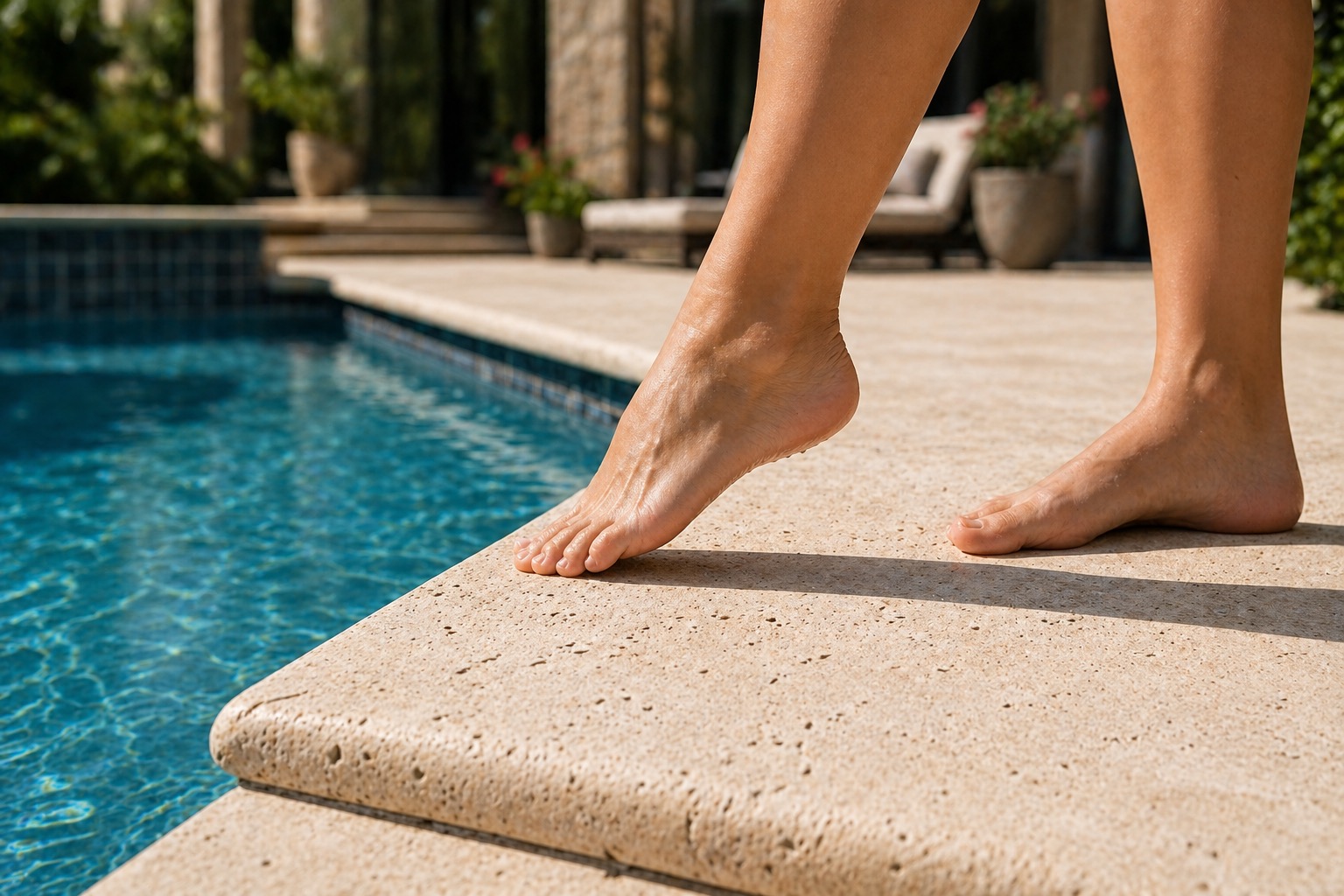
Travertine coping does absorb heat in direct sunlight, but in most pool settings it does not retain surface heat as aggressively as many alternative materials. That is one reason it remains popular for pool coping, pool decks, and outdoor living spaces in warm-weather regions.
What most homeowners notice in practice is this: travertine may feel warm, but it is less likely to feel punishing. For families who use the pool in bare feet, that difference is substantial.
Why Travertine Stays Cooler Than Many Alternatives
Travertine performs well in the sun because of a few overlapping material properties.
1. Lighter colors reflect more heat
Ivory, cream, and light beige travertine reflect more sunlight than darker pool-edge materials. That means less heat is absorbed into the surface in the first place. If heat comfort is the priority, lighter travertine is the safest direction.
2. The stone is naturally porous
Travertine has a naturally open structure, which helps reduce the dense heat retention you often feel with some concrete products and darker stones. It is not magic, but it changes how the surface behaves during long sun exposure.
3. It is widely used in hot-climate outdoor design for a reason
Travertine keeps showing up in hot-weather pool projects because the performance is proven in actual use. Homeowners are not just choosing it for appearance. They are choosing it because they want a coping and deck surface that works in summer.
If you are comparing profiles at the same time, eased edge vs bullnose travertine pool copings can help you choose the right edge style once you have settled on the material itself.
What Makes Travertine Feel Hotter or Cooler?
Not every travertine installation performs the same way in the sun. A few variables matter:
Color
Lighter stone stays more comfortable than darker blends. If the project is in a high-heat market, bright ivory and soft cream tones are usually the best fit.
Thickness
Thickness affects the visual weight and structural feel of the coping more than the immediate barefoot temperature, but it still matters for long-term performance. how to choose the right coping thickness for pools is useful if you are balancing heat comfort with durability.
Finish
Tumbled and honed travertine are generally better suited to sunny pool environments than highly polished finishes. They tend to feel more natural underfoot and create a less slick, less harsh surface experience.
Surrounding materials
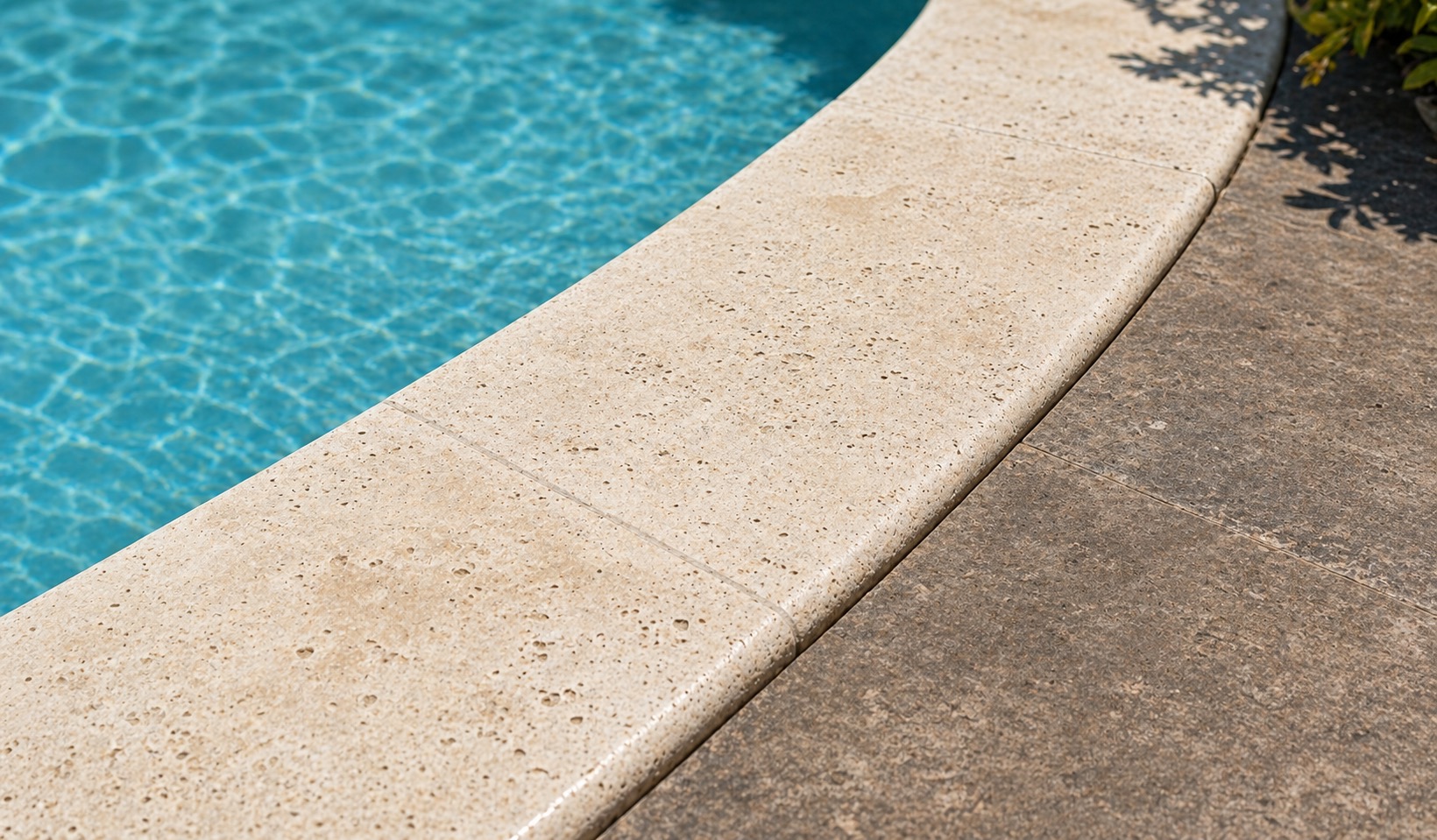
Even if the coping stays comfortable, the adjacent deck may not. If the surrounding deck is a dark paver or a heat-retaining poured surface, the pool area can still feel hotter overall.
Is Travertine Better Than Concrete Around a Pool in Hot Climates?
For many homeowners, yes. Standard concrete can get very hot under direct summer sun, especially in exposed pool areas with little shade. Travertine often feels more forgiving and more premium at the same time.
That is one reason the material keeps strong visibility in high-end backyard projects. It solves a real comfort problem while also delivering the upscale look people want around the waterline.
If you want a broader material comparison, travertine-pool-decking-and-copings-pros-and-cons-2026-what-works-best-for-your covers where travertine wins and where it requires maintenance discipline.
Best Travertine Choices for Sunny Pool Areas
If the goal is to keep the coping comfortable in direct sun, prioritize the following:
- light ivory or cream travertine
- honed or tumbled finish
- properly installed coping with good drainage
- coordinated deck materials that do not trap excess heat
Homeowners who want a brighter, classic look should review top-5-ivory-travertine-coping-options-for-backyard-patios. If the project leans more contemporary, best-silver-travertine-coping-for-modern-pool-designs-2026 is the right comparison.
Does Travertine Still Need Shade or Water Cooling?
Sometimes, yes. In extreme summer conditions, any pool-edge material will benefit from practical cooling strategies:
- partial shade structures
- umbrellas near lounging areas
- rinsing the coping with water before heavy use
- choosing lighter colors across the whole deck
These are comfort upgrades, not proof that the material is failing. Even premium pool materials perform better when the surrounding design also respects the climate.
Final Recommendation
If your main concern is whether travertine coping gets too hot in the sun, the practical answer is reassuring: it gets warm, but it is still one of the better-performing pool-edge materials for hot climates. That is exactly why it remains such a common recommendation for sunny backyard pools.
For homeowners who want comfort, upscale appearance, and stronger product longevity, travertine stays one of the smartest coping choices available.
If you are choosing material now, start with lighter tones, the right finish, and a profile that matches the rest of your pool design. That combination gives you the best chance of ending up with a coping surface that looks refined and still feels usable in peak summer heat.