Resort-style pool design is easy to describe and harder to execute. Most homeowners know the look when they see it: crisp waterline tile, refined coping, clean deck transitions, and an edge that feels more like a boutique hotel than a basic backyard pool. The problem is that the visual language falls apart quickly if the coping, tile, and surrounding layout are not specified together.
In 2026, the strongest contemporary pool edges use travertine coping as the stabilizing material. Glass tile delivers shimmer and color depth, but travertine gives the perimeter weight, touchability, and a more forgiving transition where wet feet actually land.
Key Takeaways
| Question | Quick Answer |
|---|---|
| Why pair travertine with glass tile? | Travertine adds warmth and tactile comfort while glass tile adds light, color, and contrast. |
| Which coping profile fits resort-style pools best? | Eased edge or straight edge usually fit contemporary layouts best, while bullnose reads softer and more traditional. |
| Which colors work best? | Silver, ivory, and refined warm neutrals are the most dependable depending on whether the layout is cool-modern or warm-modern. |
| What usually ruins the look? | Random color matching, weak thickness planning, and treating wet-area performance like an afterthought. |
| Is this only about style? | No. The best-looking edge still has to handle water, traffic, maintenance, and heat exposure. |
Why Travertine Works So Well With Glass Tile
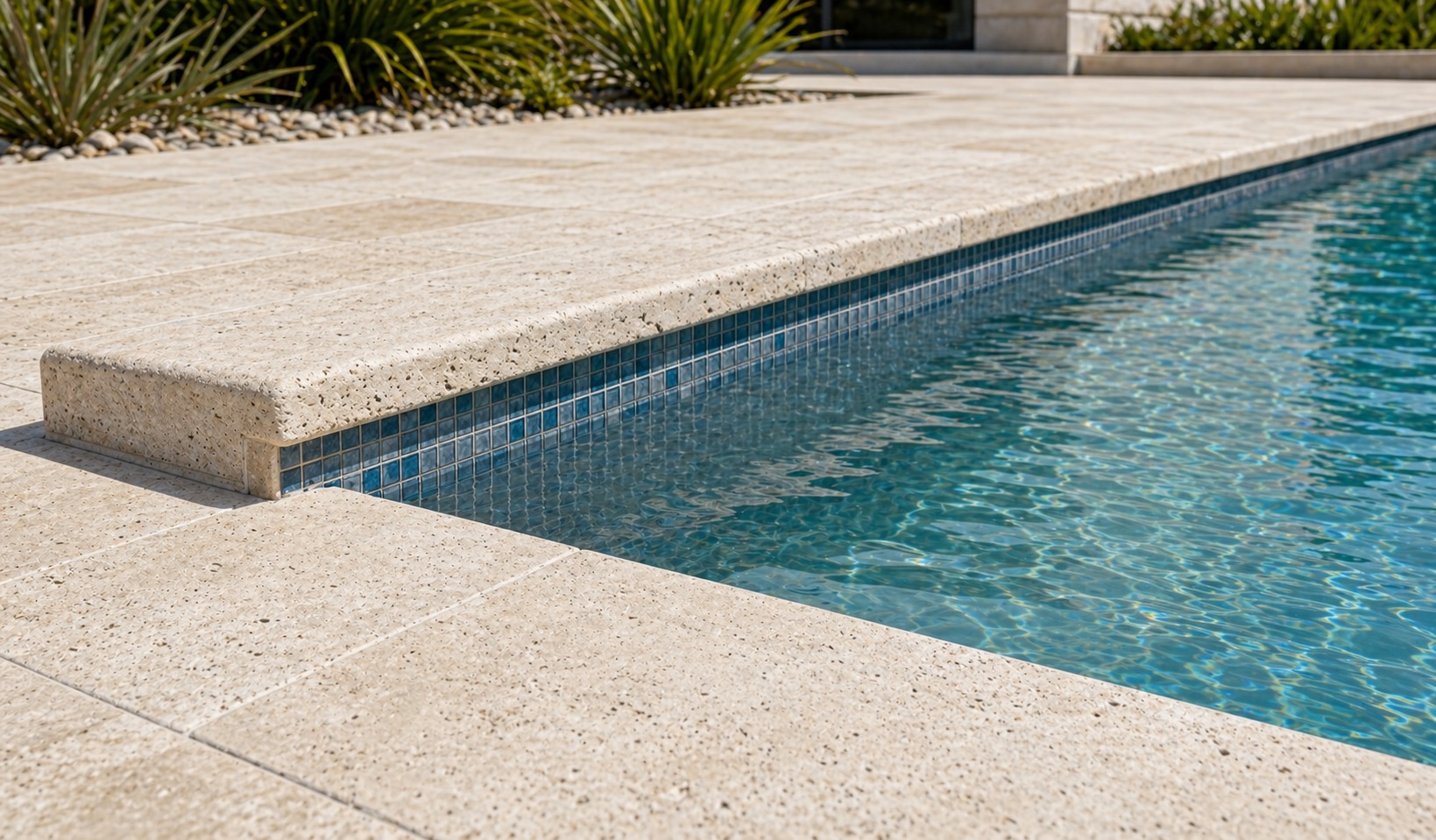
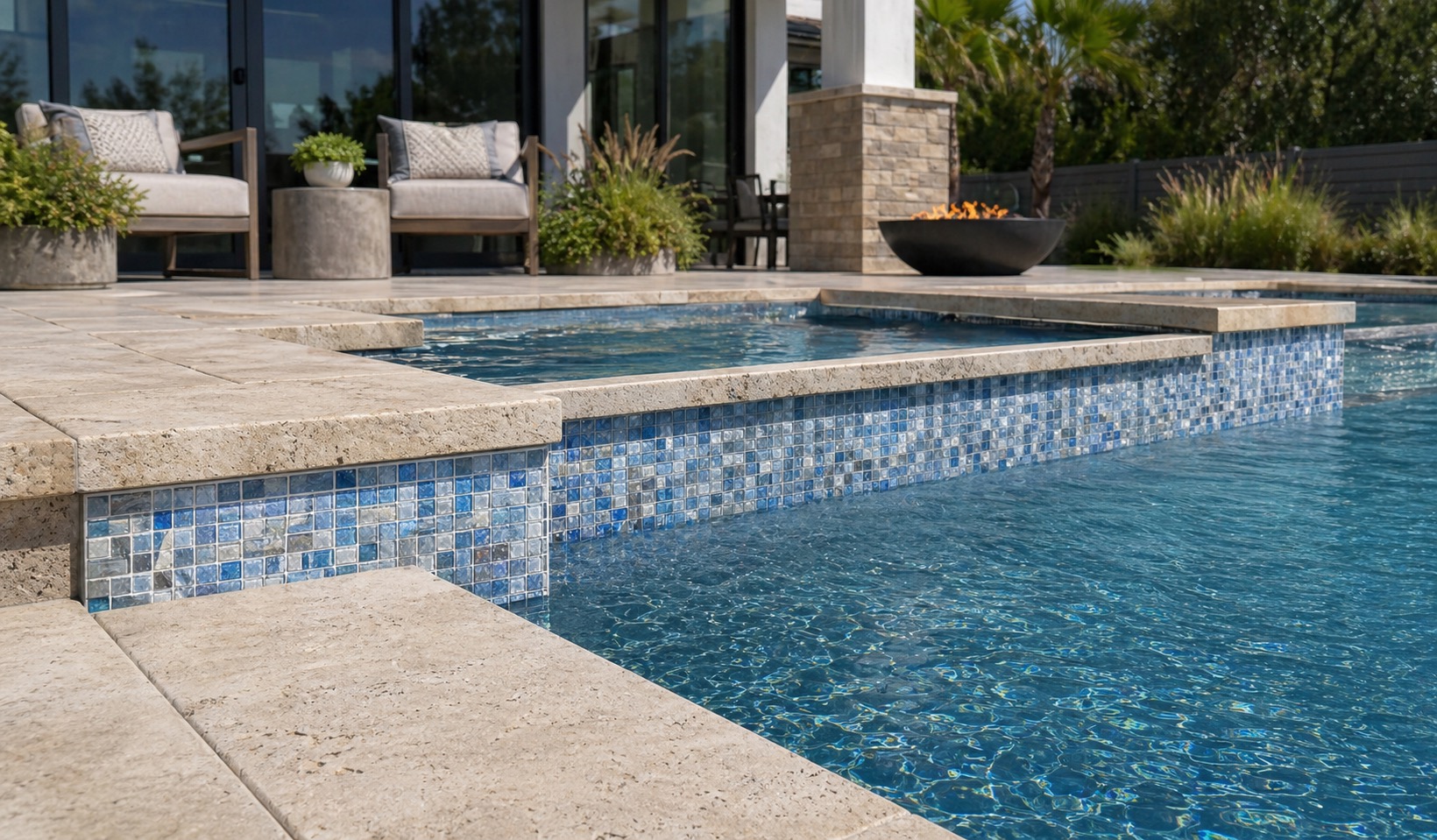
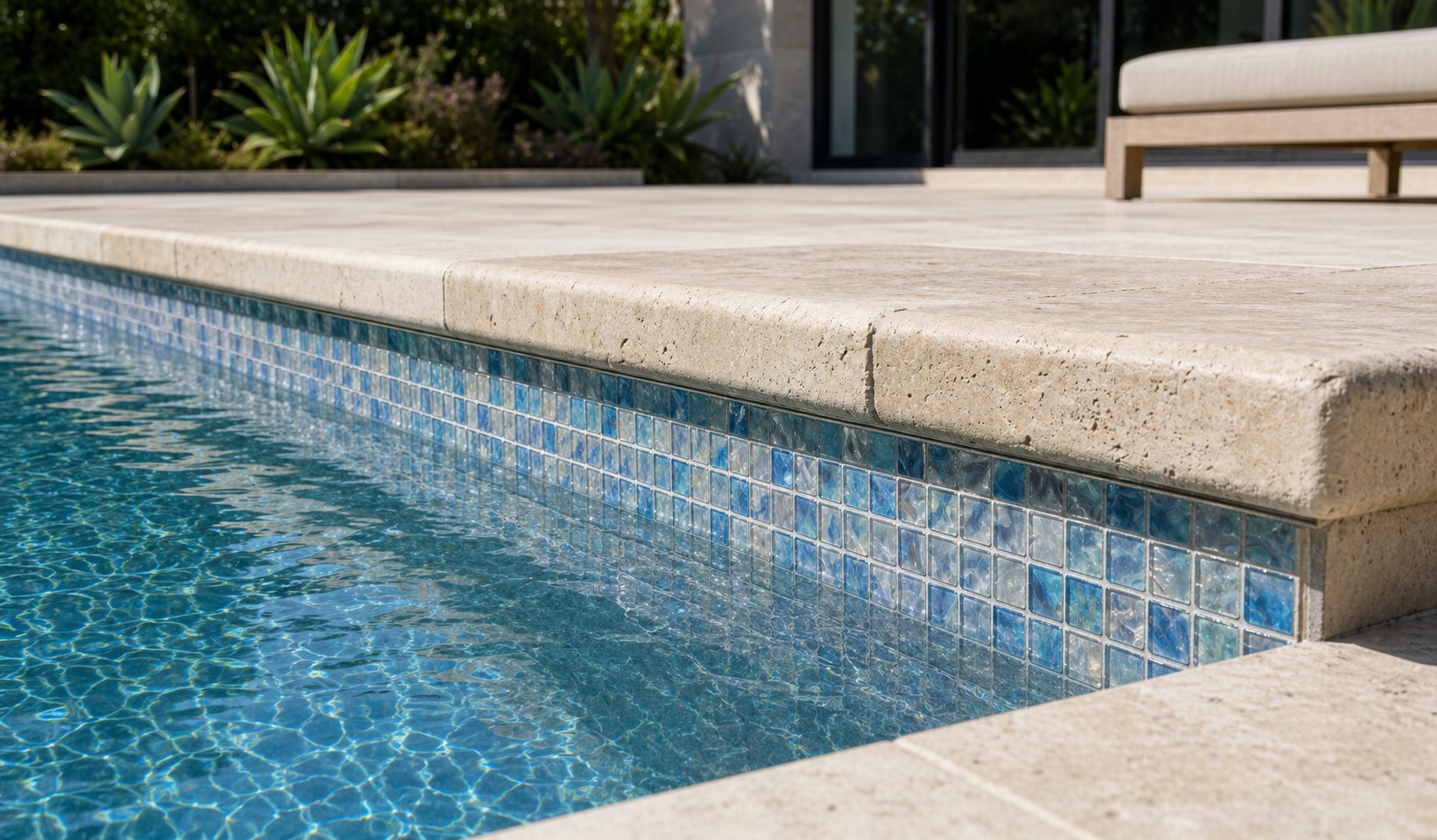
Glass tile catches light and creates motion at the waterline, but by itself it can feel too slick, too cold, or too decorative if the surrounding perimeter does not ground it. Travertine solves that problem. It gives the pool edge a natural matte counterbalance that keeps the overall design from feeling overly glossy.
That pairing matters most in contemporary layouts where the waterline is visually prominent. Glass tile can supply the jewel-box detail. Travertine coping can keep the edge usable, stable, and visually believable.
This is also why many homeowners end up cross-shopping travertine pool coping colors and design ideas 2026 bullnose eased edges and sty and modern straight edge travertine coping for minimalist decks when building a more resort-like pool perimeter.
Choose the Edge Profile Before You Finalize the Tile
Too many projects pick tile first and only later ask what coping edge should sit above it. That reverses the design logic. The coping profile controls the shadow line of the pool perimeter, which means it has enormous influence on how refined the finished edge feels.
Eased edge
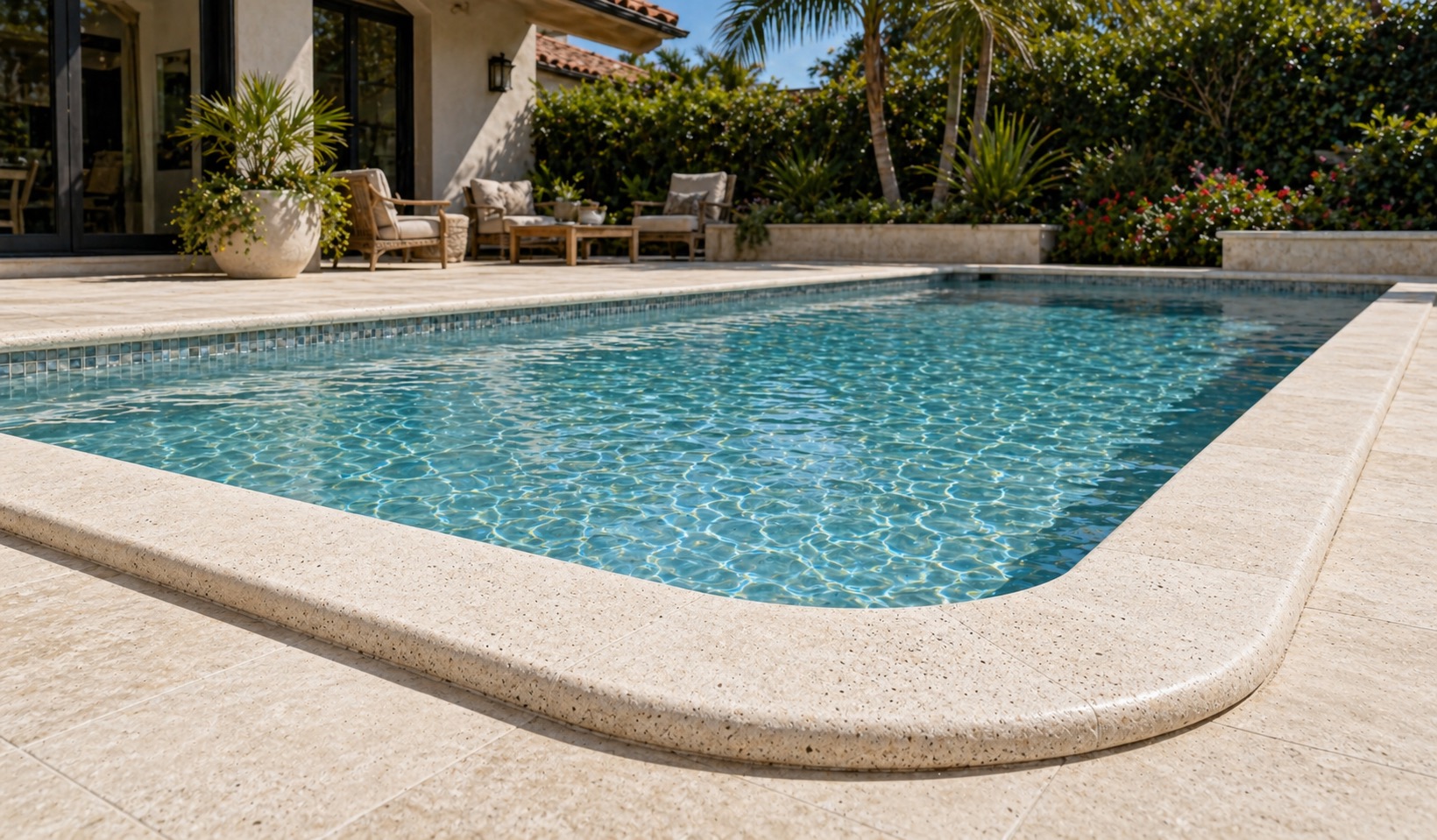
Eased edge coping is usually the strongest all-around choice for resort-style designs. It stays visually crisp without feeling aggressive at the touch point. If you want the pool to feel current but not severe, this is often the safest move.
Straight edge
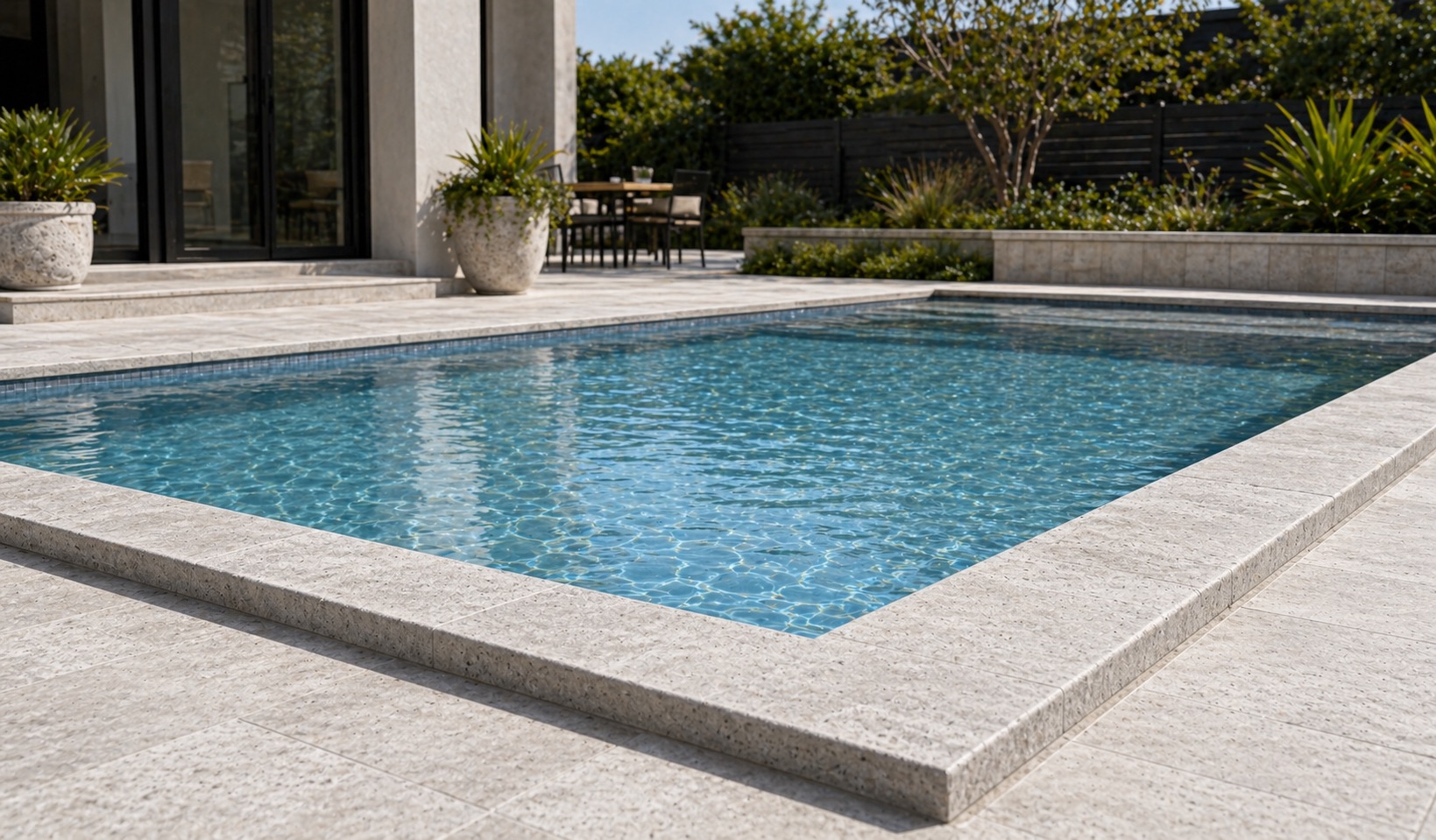
Straight edge coping is better for very geometric pools where every line is meant to look controlled and architectural. It pairs especially well with large-format glass tile and quieter deck patterns.
Bullnose
Bullnose can still work, but it shifts the pool away from boutique-hotel sharpness and toward a softer, more traditional mood. That is not wrong, but it changes the design intent. If you need a side-by-side breakdown, eased edge vs bullnose travertine pool copings is the right comparison.
Match Color Temperature, Not Just Material Names
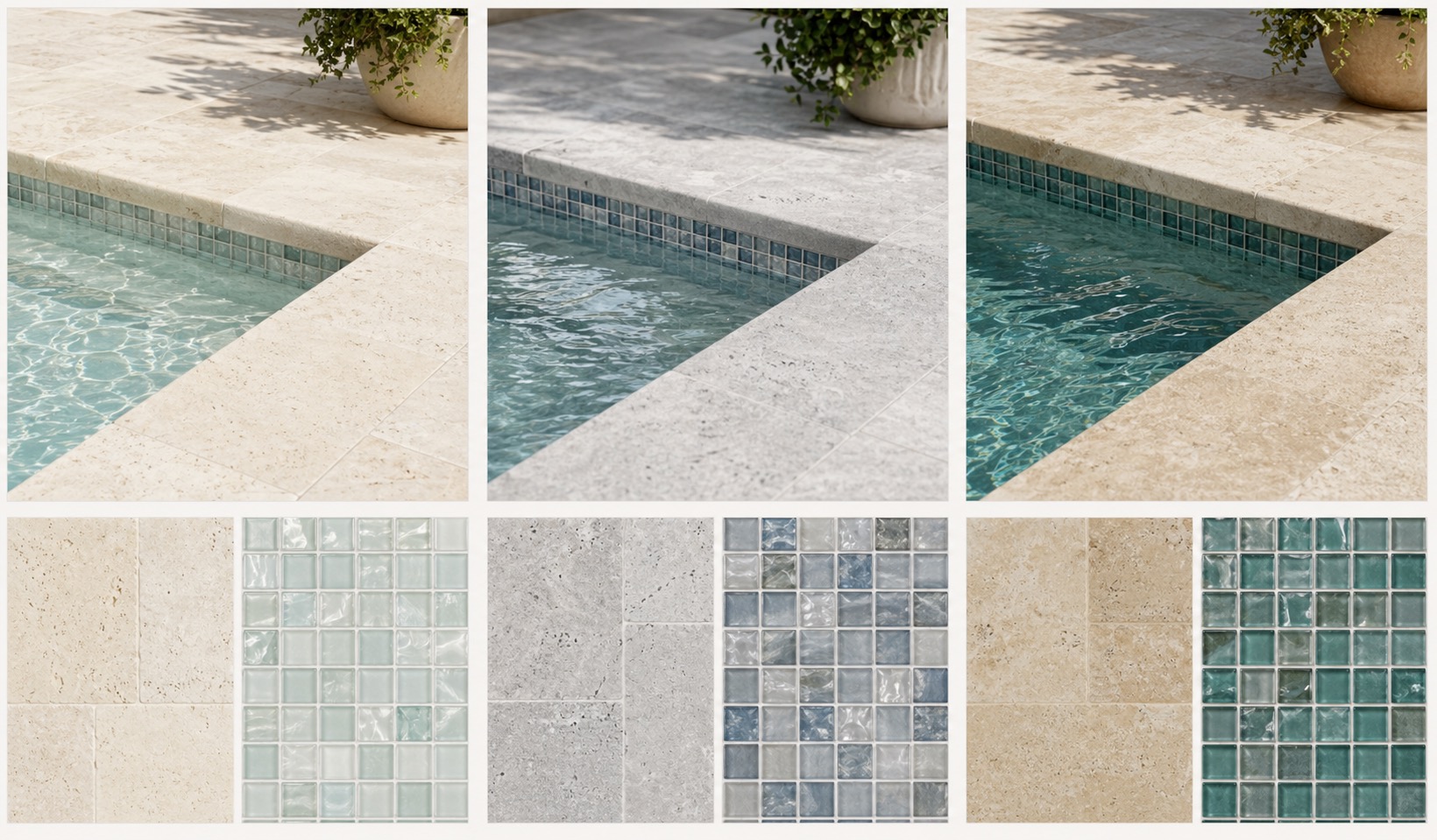
Travertine and glass tile need to agree on visual temperature. A cool silver coping and blue-gray tile can look elegant together. A warm walnut coping and jewel-blue tile can also work, but only if the surrounding deck and furniture support that warmer story.
The safest resort-style pairings are usually:
- silver travertine with blue, teal, or smoke glass tile
- ivory travertine with pale aqua or soft blue glass
- light warm neutral travertine with muted sea-glass tones
For homeowners specifically considering cooler palettes, best silver travertine coping for modern pool designs 2026 is a useful next step.
Thickness and Support Matter More in Modern Layouts
Contemporary pool edges look precise, which means installation mistakes stand out faster. A poorly supported coping line can telegraph slight movement, uneven joints, or chipped edges much more obviously in a clean modern layout than in a rustic one.
That is why thickness should be decided deliberately, not copied from another project. If the pool edge has longer straight runs, sharper geometry, or tighter joints, support quality becomes even more noticeable over time. Before locking in the spec, review how to choose the right coping thickness for pools.
Do Not Ignore Heat, Wet Traffic, and Maintenance
Resort-style design still has to survive real use. Around a pool, the edge is not only seen. It is stepped on, splashed, leaned against, and exposed to constant sun. Travertine earns its place in these projects partly because it can stay more comfortable than many alternatives in heat-exposed settings, which is why does travertine coping get hot in the sun has become one of the most useful homeowner questions on the site.
Maintenance also matters. A luxury look breaks down fast if the coping shows preventable staining, film buildup, or inconsistent sealing. The point of a resort-style perimeter is calm visual control. That requires upkeep discipline.
When This Look Works Best
This approach usually performs best when:
- the pool shape is clean and intentional
- the deck layout is not visually chaotic
- the coping profile matches the architectural language of the house
- tile is used to accent rather than overpower the perimeter
- the project budget allows proper detailing and finishing
If the broader deck system is still undecided, travertine pool decking and copings pros and cons 2026 what works best for your is the better first read before dialing in the edge aesthetics.
Final Recommendation
The best 2026 resort-style pool edges are not built by chasing flashy tile. They are built by letting travertine coping carry the architectural perimeter while glass tile adds depth and light at the waterline. Choose the coping profile early, match visual temperature carefully, and spec the thickness and support as seriously as the aesthetics.
When those decisions line up, the result looks cleaner, feels more premium, and stays convincing long after the installation photos are gone.